
The Liberal government released its spending plan this week and Prime Minister Carney said the higher expenditures compared to predecessor Justin Trudeau’s government are needed to boost private spending.
The Conservatives, who have been critical of the Liberals for not tabling a budget in the spring, noted that the document shows an 8 percent increase compared to spending under Trudeau.
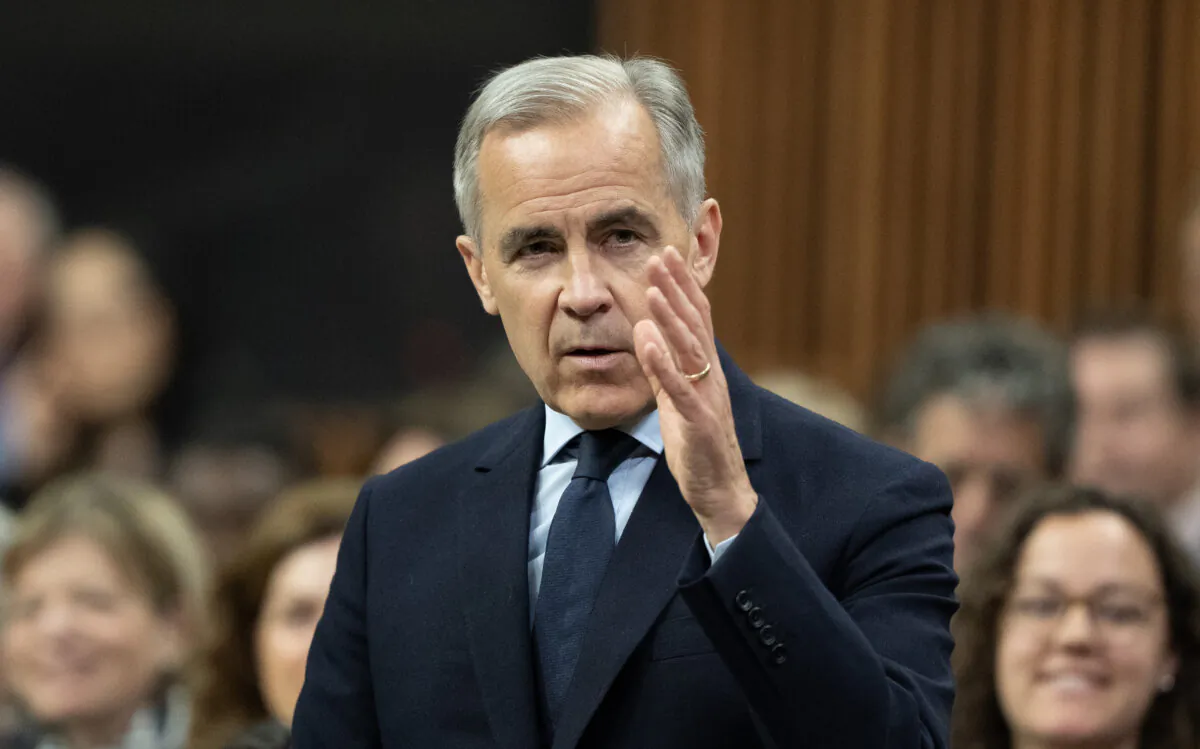
Prime Minister Mark Carney defended the Main Estimates as he took part in debate in the House of Commons on May 29.
After Carney provided his response to the speech from the throne delivered by King Charles III earlier this week, Conservative Deputy Leader Melissa Lantsman raised concerns about increased spending.
“He literally said on Tuesday morning that he would cap government spending, and he said it again today, at 2 percent, and by the afternoon, he drops a bill in the House of Commons to raise spending by 8 percent,” said Lantsman. “So how is the prime minister going to reconcile what he said on Tuesday morning with what he did on Tuesday afternoon?”
The throne speech read Tuesday morning, May 27, said that the government’s operating budget has been growing by 9 percent every year and that measures would be introduced to bring it below 2 percent. The prime minister repeated this in the House on May 29.
Carney thanked Lantsman for her question and said it goes to the “heart of the transformation this government intends.”
“The first is to shift the core of spending from day-to-day spending, operational spending, to investment spending, in other words, spending that catalyzes investment, particularly investment in the private sector,” said the prime minister.
The Main Estimates for 2025-26 were tabled by Treasury Board President Shafqat Ali on May 27. It includes $486.9 billion in spending, a rise of 8 percent over the previous government’s Main Estimates for 2024-25 ($449.2 billion).
The estimates are part of the parliamentary financial cycle and are required for the government to obtain the authorization to spend taxpayer dollars. They provide a breakdown of funding for each federal entity.
Promises made by the Liberal Party during the election campaign have not been factored in. The costed Liberal platform proposed $129 billion in new spending.
For example, Carney had promised an initial $150 million budget increase for public broadcaster CBC. Main Estimates for 2025-26 do indicate an increase in funding but not as prominent. CBC’s funding is raised by $42 million to reach over $1.42 billion.
Funding for the Department of National Defence also increases by $1.79 billion to reach over $35.6 billion.
There is also a sizeable increase in the amount spent on consultants, or “professional and special services.” The Main Estimates for 2024-25 had expenditures of over $19 billion in that category and that amount has climbed to over $26 billion for 2025-26.
This is area that Lantsman touched on in response to Carney’s allocution in the House. She said this “record” spending on consultant equates to $1,400 per family per year, which is higher than what the tax cut proposed by Carney would save Canadians.
The Liberal government tabled a ways and means motion on May 27 to introduce affordability measures, including a reduction of income taxes. This would entail a drop of one percentage point, from 15 percent to 14 percent, to the tax rate on the first $57,375 of an individual’s income.
The prime minister said in his speech in the House on May 29 this will save a two-income family up to $840 a year.
Parliamentary votes on the Main Estimates and ways and means motion will come at a later date. According to House procedures, estimates will be sent to committees for review and reported back to the House, and eventually become part of an appropriation bill to be adopted and then referred to the Senate.
With the beginning of a new Parliament, committees do not yet have members and have not started to hold meetings.
 Friends Read Free
Copy
Facebook
Tweet
Friends Read Free
Copy
Facebook
Tweet