Prime Minister Mark Carney says Canada is prepared to invest $1 trillion in the United States if Ottawa receives the trade deal it hopes for with Washington.
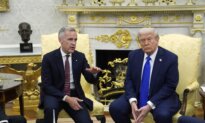
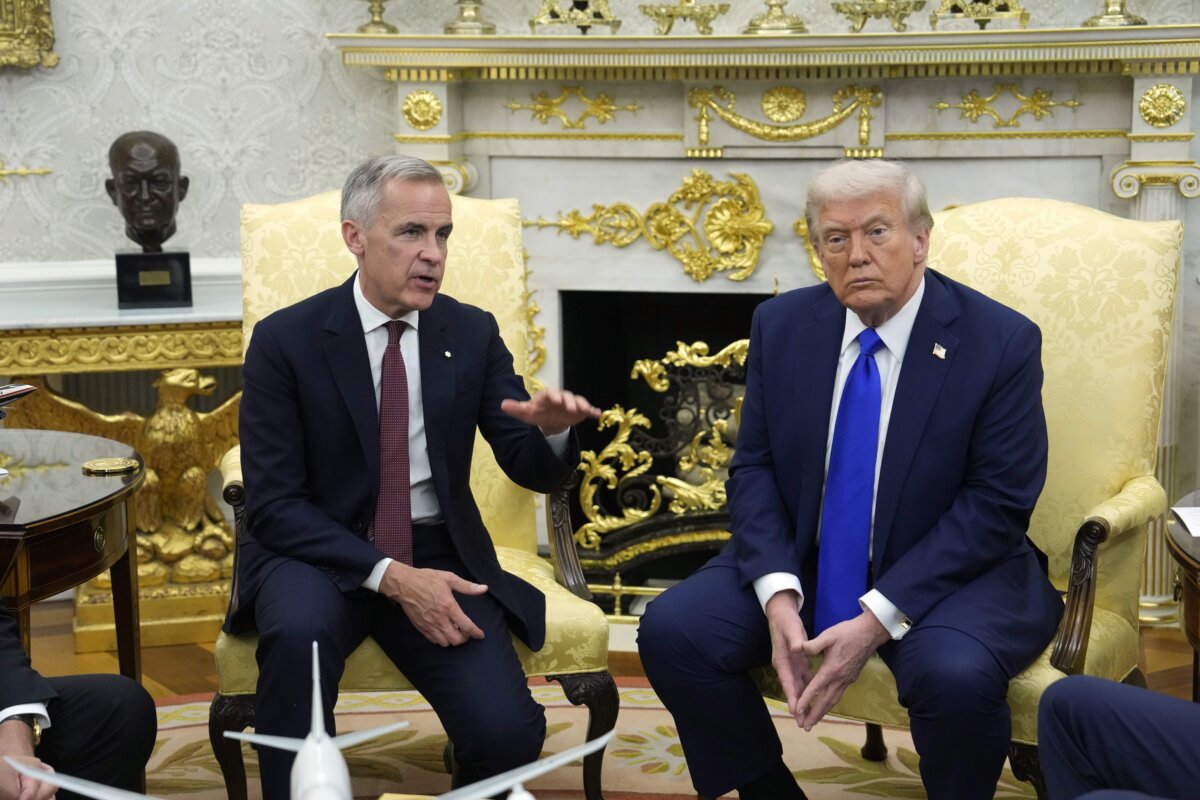
Carney made the remarks during an Oct. 7 visit to the White House to meet with U.S. President Donald Trump, where the two leaders said they would discuss bilateral trade, foreign affairs, and border security.
“We are the largest foreign investor in the United States—half a trillion dollars in the last five years alone, probably a trillion in the next five years if we get the agreement that we expect to get,” Carney said without elaborating.
“There are areas where we compete, and it’s in those areas where we have to come to an agreement that works. But there are more areas where we are stronger together, and that’s what we’re focused on,” he added.
Canada currently faces 35 percent tariffs on exports not covered under the United States-Mexico-Canada Agreement (USMCA), along with sectoral tariffs on steel, aluminum, copper, automobiles and softwood lumber. Carney has said 85 percent of trade between the United States and Canada remains tariff-free under the USMCA.
Trump suggested during the media-permitted portion of meeting that he’s ready to make some deals with Canada, though no details were provided. “We’ll make some deals, and we’ll do some things that are good for both of our countries and markets,” he said, remarking that Canadians would “love” the United States again.
The United States has made several deals with other regions in recent months that lessen U.S. tariffs in exchange for investment into the United States, including with Japan, South Korea, and the European Union.
South Korea committed to investing around US$350 billion into U.S.-based projects, while the EU agreed to purchase US$750 billion in American energy and invest US$600 billion into the United States in return for a tariff rate of 15 percent for most EU goods. The deal with Japan included an agreement to invest US$550 billion in the United States.
While these major economies were making deals with Trump, Carney did not meet his goal of reaching an agreement with the United States by July 21. Then on Aug. 1, Trump raised Canada’s baseline tariff rate from 25 percent to 35 percent.
Carney said in early August the United States essentially now has a system where trading partners pay for access to the American market.
“America is in effect, charging for access to its economy through a combination of higher baseline tariffs, unilateral trade liberalization by its partners and new commitments to invest in the United States,” Carney said during an Aug. 5 announcement in Kelowna, B.C. on additional government support for the softwood lumber industry. “We understand that overall, Canada is in a strong position. Despite our size, Canada is already the second largest foreign investor in the United States.”
Reacting to Carney’s meeting with Trump, Tory Opposition Leader Pierre Poilievre characterized the $1 trillion promise as a major “concession.”
“Today the prime minister made his biggest concession of all. He promised to push a trillion dollars of investment out of Canada into the United States of America, which would drive down Canadian wages and Canadian jobs,” Poilievre said in the House of Commons Oct. 7.
“He made a massive trillion dollar concession before the deal was even signed and without getting anything in return. A trillion dollars of exit investment means closing mines and factories in Canada and opening them in the U.S.,” Poilievre added.
Leader of the Government in the House of Commons Steven MacKinnon responded by saying Carney is seeking the best deal for the country.
“I know that the hopes of all Canadians accompany our prime minister to those meetings where he will very, very clearly defend the rights of Canadian workers and of the Canadian economy,” MacKinnon said.
 Friends Read Free
Copy
Facebook
Tweet
Friends Read Free
Copy
Facebook
Tweet