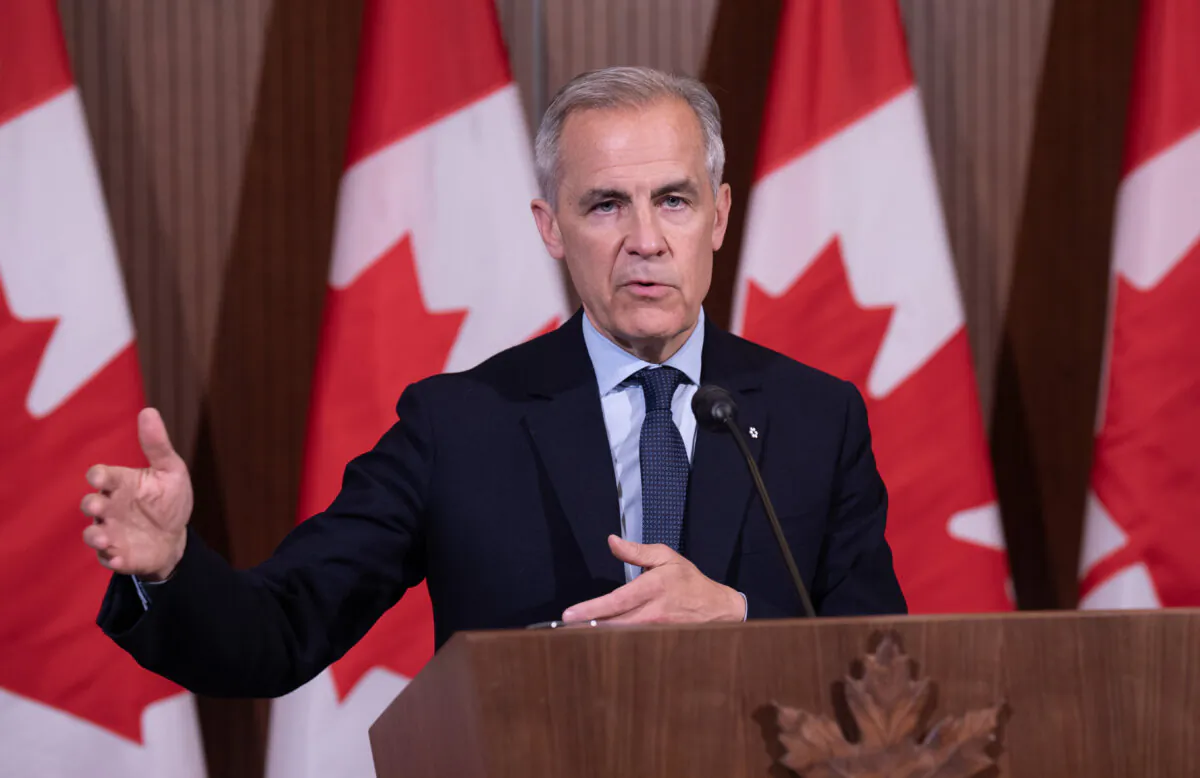

After the U.S. doubled its global steel and aluminum tariffs from 25 percent to 50 percent, Prime Minister Mark Carney says Canada is still determining how it will respond to the measures.
“We will take some time—not much, some time—because we are in intensive discussions right now with the Americans on our trading relationship,” Carney told reporters in the House of Commons on June 4.
The prime minister noted the newest tariffs are part of global measures not specifically targeted at Canada, while saying that the levies are “bad for American workers, bad for American industry, and, of course, for Canadian industry as well.”
Canada is a major provider of steel and aluminum to the United States, and 40 percent of Canada’s steel imports come from the United States, with trade between the two countries amounting to $20 billion per year. Canada represents around 75 percent of U.S. aluminum imports.
U.S. President Donald Trump’s 50 percent tariffs on steel and aluminum went into effect at midnight on June 4, days after he announced the tariff rates would be increasing.
Trump first implemented 25 percent tariffs on steel and aluminum on March 12, which led Ottawa to launch retaliatory tariffs targeting CA$30 billion in U.S. goods. The retaliatory measures targeted steel products, and other items like computers and sports equipment, with a 25 percent surtax.
The steel and aluminum sectors in Canada employ a total of 150,000 workers, with the country’s steel production being centred in Hamilton, Ont., and the province of Quebec the leader for aluminum.
Industry Minister Mélanie Joly told reporters in the House of Commons on June 4 that the U.S. tariff hike was “completely unacceptable,” and that the government would “continue to fight against” the measures. When asked about applying counter-tariffs, Joly said the government is “looking at different scenarios right now,” and needs more time to make a decision.
Conservative Leader Pierre Poilievre said on social media that the doubling of the tariffs is “wrong and unjustified” and said the government must take a “strong stance in response to these tariffs that gets a deal as soon as possible, protects our sovereignty & jobs.”
NDP Interim Leader Don Davies has called on the federal government to introduce measures to protect workers whose jobs may be impacted by the increase in U.S. tariffs. He wants the government to bring in emergency reforms to the employment insurance program, make the use of Canadian steel mandatory in all government infrastructure projects, and give tax incentives to private businesses to encourage the use of Canadian products.
In March, Ottawa began requesting that recipients of federal grants switch to using Canadian steel and aluminum instead of U.S. products, with then-Industry Minister Anita Anand saying the government funding was a “testament to the value the government saw in your project or ecosystem for the Canadian economy,” and that all Canadians are now expected to “do more.”
In a statement released over the weekend, the Canadian Steel Producers Association said that the Trump administration was “essentially closing” the United States to the Canadian steel industry by doubling the tariffs.
“Steel tariffs at this level will create mass disruption and negative consequences across our highly integrated steel supply chains,” the group said.
 Friends Read Free
Copy
Facebook
Tweet
Friends Read Free
Copy
Facebook
Tweet