
Prime Minister Mark Carney says he’s not planning to hold a snap election to reach a majority as the House of Commons returns from holiday break.
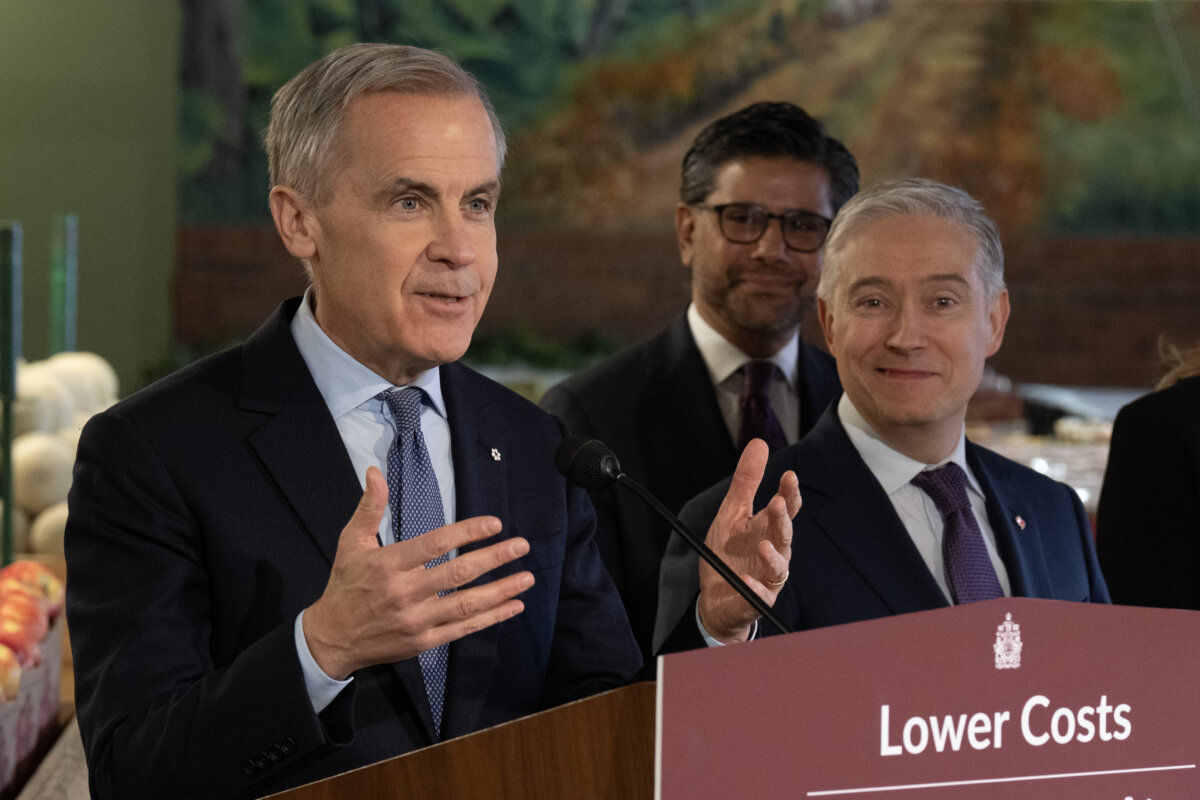
Carney made the comment to reporters on Jan. 26 after the announcement of new affordability measures aimed to help Canadians with the cost of living, including an increase of the Goods and Services Tax (GST) credit.
“Of course we’re not. We’re not, we’re focused on results for Canadians,” Carney said after being pressed by reporters on whether he intends to call a snap election.
Carney had not directly answered an initial question on the matter, instead saying his government is focused on solutions for Canadians and that he sees it as an opportunity to collaborate with the Opposition.
Liberals made significant efforts to reach a majority in the fall sitting by poaching opposition MPs. Two Tory MPs defected to the Liberals, while other MPs from different parties publicly rejected offers to cross the floor.
Liberals briefly came within one seat of a majority before Liberal MP Chrystia Freeland resigned from her seat on Jan. 9. The Liberal Party currently has 170 seats, while at least 172 seats are needed to form a majority government.
Carney made his announcement in an Ottawa grocery store and said nothing should be drawn from the setting about a potential election campaign. “You can’t draw that conclusion at all,” Carney told a reporter who remarked that the last campaign had a lot of grocery store stops and talk about affordability.
New measures announced by Carney include increasing the amount of the GST credit, now rebranded the Groceries and Essentials Benefit, by 25 percent for five years starting this July. There will also be a one-time payment equivalent to a 50 percent increase of the credit this year.
The credit is currently sent on a quarterly basis to low- and modest-income individuals and families.
The prime minister also announced various measures aimed to help reduce the cost of food, including using $500 million from the Strategic Response Fund to help businesses deal with supply chain disruptions.
When asked by reporters, Carney said these new measures are not a form of electioneering.
“Not at all,” he said. “It’s a fundamental issue, it’s a matter of purchasing power, of affordability for 12 million Canadians.”
The prime minister also avoided weighing in on whether the measure will be inflationary, saying that this veers into the Bank of Canada’s territory and that one “should be careful” discussing the matter.
“It’s an issue of offer and demand and of balance between the two. Increasing the purchasing power of 12 million Canadians is a good policy. It will improve their situation, this is clear.”
Conservative Leader Pierre Poilievre has made affordability a key policy plank and has blamed Liberals for the increased cost of living, calling for the removal of different taxes impacting food processing and transportation. He noted on Jan. 26 the GST credit boost is a revival of a policy from former Prime Minister Justin Trudeau but suggested he would not oppose it.
“Notably, in 2022 the former Liberal Prime Minister announced a similar policy – a one-time doubling of the same credit. The cost of living crisis has only gotten worse since then,” said a Jan. 26 statement from Tory MPs Sandra Cobena and Vincent Ho.
Election Speculation
Speculation about the Liberals’ intention to launch a snap election in the coming months has increased in recent days following two speeches by Prime Minister Carney.
While in Davos for the annual meeting of the World Economic Forum on Jan. 20, Carney told an audience of government and business leaders that they need to stop complying with how the world is shaping up as great power rivalry replaces the rules-based order.
Carney accused unspecified powers of using “coercion” to reach their aims while at the same time saying that Canada has struck a “new strategic partnership” with China to diversify its partnerships.
The prime minister received accolades from some world leaders, but his speech was heavily criticized by the Trump administration, which doesn’t view Canada getting closer to China positively.
U.S. Commerce Secretary Howard Lutnick said the speech could hurt the upcoming free-trade deal review between the United States, Mexico, and Canada, while also suggesting Carney made the speech for domestic political aims.
“I think if we take it correctly we should look at it as just political noise coming out of a prime minister, and maybe this is working for his election, right? Because I don’t think it can be real,” Lutnick told Bloomberg News on Jan. 22.
Carney had run his 2025 election campaign on a platform of standing up to U.S. President Donald Trump, with themes similar to those he used in Davos about the world undergoing a “rupture.”
The prime minister left Davos and arrived in Quebec City on Jan. 22 for the Liberal cabinet retreat, which took place at the Citadelle of Quebec, military fortifications built by the British in the 19th century to resist a potential American invasion.
In an address to the nation from the Citadelle, Carney spoke of national unity and strength and promoted progressive values.
On the second day of the retreat, the Liberal Party announced a record fundraising year in 2025. “That momentum is helping grow our party, and ensuring we’re ready to win, whenever the next election arrives,” national party director Azam Ishmael said.
 Friends Read Free
Copy
Facebook
Tweet
Friends Read Free
Copy
Facebook
Tweet