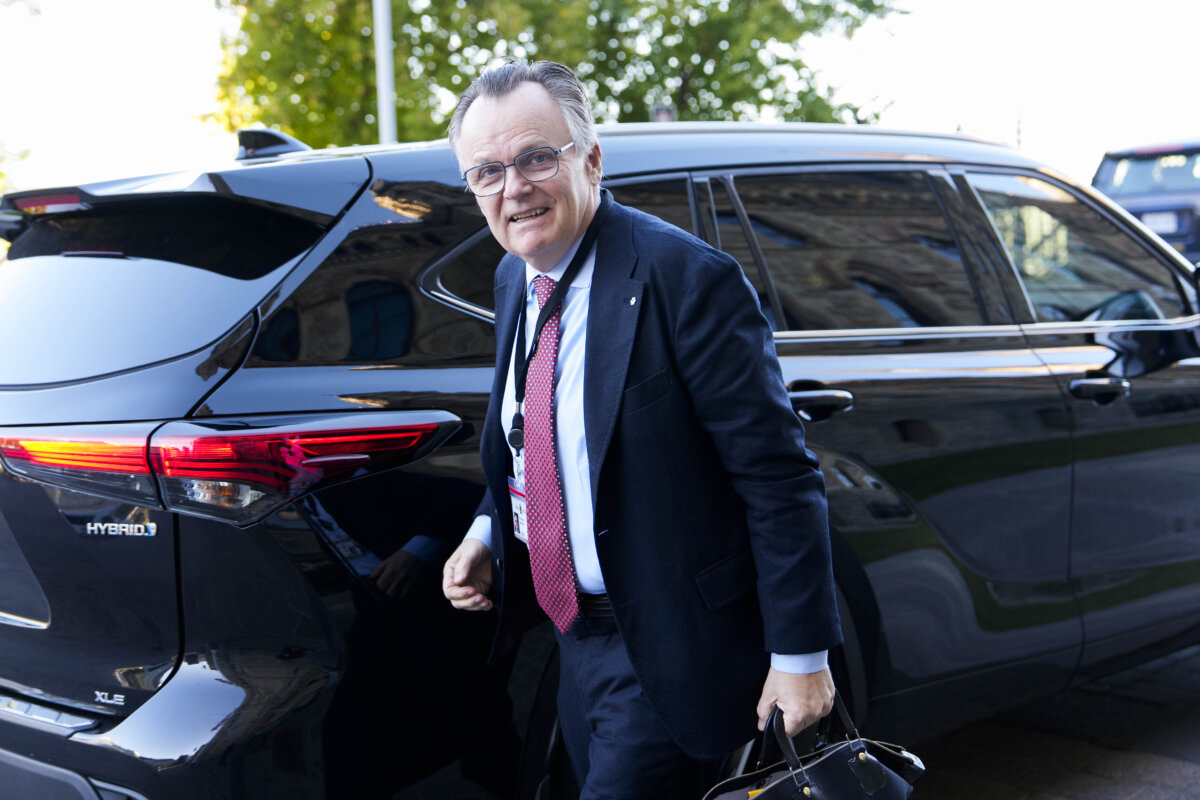

The prime minister’s right-hand man told MPs Mark Carney holds himself to the highest ethical standards and his ethics screen is “rigorous.”
Carney’s chief of staff, Marc-André Blanchard, made the comment while appearing before the House of Commons ethics committee on Nov. 20. His appearance was part of the committee’s review of the Conflict of Interest Act, to determine whether conflict-of-interest screens and blind trust rules should be amended.
An ethics screen, also known as a conflict-of-interest screen, serves as a formal compliance measure for politicians, to help prevent potential conflicts between their private interests and their public responsibilities.
Public office holders, such as the prime minister, are subject to the Conflict of Interest Act and are required to divest their controlled assets or place them in a blind trust. Opposition MPs have voiced concerns about potential conflicts of interest since Carney entered politics, noting his comprehensive past experience on corporate boards and his sizeable assets.
Blanchard’s testimony came a day after Privy Council Clerk Michael Sabia testified before the ethics committee. Blanchard and Sabia are responsible for administering Carney’s ethics screen.
“The screen that is applied for the prime minister is among one of the most rigorous that I’ve seen in my career,” Blanchard told MPs, noting he was chairman and CEO of Montreal law firm McCarthy Tétreault and worked at CDPQ, Quebec’s institutional investment arm, where he had to apply “many ethics screens.”
Opposition MPs asked Blanchard if it would have been more straightforward for Carney to sell his assets rather than placing them in a blind trust. They noted that since Carney knows what he put into the blind trust, he would likely know how certain decisions he makes as prime minister could influence his investments.
“As clerk of the privy council said to you yesterday, and as the ethics commissioner has said to you, you need to find a balance between attracting the best talent to politics and having ethical rules that follow the highest standards,” Blanchard responded.
Blanchard told MPs that Canadians chose Carney as prime minister because of his experience in both the public and private sectors.
“In fact, they did not elect him in spite of his vast global private sector experience, but precisely because of it,” Blanchard added.
The details of Carney’s conflict-of-interest screen were released in July. Carney’s declaration said he and the ethics commissioner agreed the screens would be aimed at “preventing any opportunity” to further his interests or to “improperly further those of Brookfield Asset Management, Brookfield Corporation, and Stripe Inc.,” where he was employed prior to entering politics.
The content of the blind trust included a number of shares and stock options in payment processor Stripe, Brookfield, and others, as well as shares in more than 500 companies held in an investment account managed by a third party.
Bloc Québécois MP Luc Thériault asked Blanchard whether Carney is banned from communicating with people on the list of companies in his disclosure. Blanchard did not directly answer the question, but said Carney is “well aware of his obligations.”
Thériault also asked Blanchard whether he told Carney not to speak with Brookfield. Again, Blanchard did not give a direct answer, but noted that Carney “imposes the highest standards to himself.”
Conservative MP Michael Cooper noted that Carney had met with the CEO of Brookfield on Aug. 11, only one month after the ethics screen was put in place. Blanchard repeated that Carney is “well aware of his ethical requirements and he follows them,” saying there was no need to impose the screen.
Noé Chartier contributed to this report.
 Friends Read Free
Copy
Facebook
Tweet
Friends Read Free
Copy
Facebook
Tweet