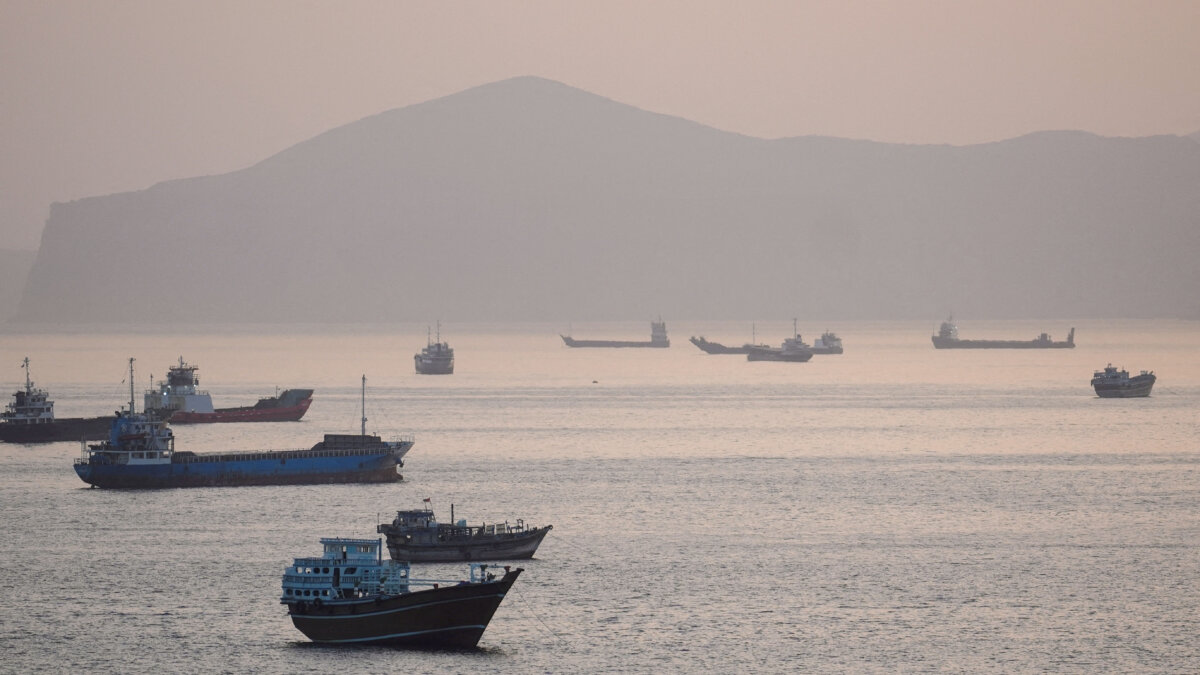

As negotiations to ensure the safety of international shipping through the Strait of Hormuz continue, China’s export sector and Beijing’s ability to act as a regional mediator are being tested.
The Chinese regime has maintained contact with Iran over maritime security and energy supply concerns, according to sources within the Chinese Communist Party (CCP), with particular focus on access through the strategic waterway.
The Strait of Hormuz, a critical chokepoint for global oil and gas shipments, has long been a vital artery for China. U.S. President Donald Trump said on March 15 that 90 percent of China’s oil comes through the strait.
Trade Routes Disrupted
For exporters in Zhejiang Province, one of China’s manufacturing hubs, the impact was immediate.
A longtime foreign trade businessman based in Ningbo, who spoke to The Epoch Times on condition of anonymity out of fear of reprisal, told The Epoch Times that supply chains have been strained by the uncertainty facing traditional maritime routes.
“Many shipping routes are basically unusable now, and logistics costs have surged,” he said. “In April, exports from Zhejiang dropped by more than 60 percent.”
Some companies have attempted to reroute goods overland through Central Asia into the Middle East, but the costs are often prohibitive, according to the businessman.
“Land transport is too expensive,” he added. “Margins on small goods are already thin—now companies are losing money on nearly every order.”
Beijing’s Diplomatic Efforts Meet Resistance
Behind the scenes, Beijing has sought to position itself as a diplomatic intermediary. However, those efforts appear to have gained little traction.
According to an insider within the CCP’s foreign policy circle who spoke to The Epoch Times on condition of anonymity, Iranian officials responded to the CCP’s outreach by urging Beijing to pressure the United States to lift restrictions in the strait.
“The Iranian Foreign Ministry basically said that even if they allowed Chinese ships through, the United States wouldn’t,” the insider told The Epoch Times. “[So] Iran wants the CCP to talk to the United States.”
Since late February, Chinese diplomats have engaged both Tehran and Washington, but neither side has offered a meaningful response, the insider revealed.
The U.S. military, meanwhile, has been enforcing a naval blockade on all Iranian ports since April 10.
Trump has also called on Beijing to assist in keeping the Strait of Hormuz open. However, the insider said that Iran does not necessarily listen to China.
The situation has raised broader questions about Beijing’s ability to act as a power broker in the Middle East.
Another insider from within the CCP told The Epoch Times, also on the condition of anonymity, that Beijing has been cautious in its dealings with Tehran, despite supplying goods that could have military applications.
“Xi Jinping wants to maintain good relations with Trump,” the insider said, referring to the upcoming Trump–Xi meeting. “But Trump wants to see concrete actions.”
Economic and Human Costs Mount
The economic toll is already becoming visible in China.
China COSCO Shipping Holdings, one of the country’s largest shipping firms, reported a nearly 50 percent drop in net profit in the first quarter of 2026, according to Chinese financial news outlet Securities Times.
At sea, the situation has become increasingly dire for crews stranded near the strait.
A shipping industry worker in Zhejiang Province told The Epoch Times, also on condition of anonymity, that dozens of Chinese ships have been stuck around the Strait of Hormuz for more than two months, with deteriorating living conditions on board.
“I heard there’s a ship from Shandong Province where someone died,” the worker said. “Crew members fell seriously ill after eating contaminated food.”
Food supplies are running low on some ships, and efforts by shipping companies to seek assistance from Chinese authorities have not yielded any results, he added.
Wang Yibo contributed to this report.
 Friends Read Free
Copy
Facebook
Tweet
Friends Read Free
Copy
Facebook
Tweet