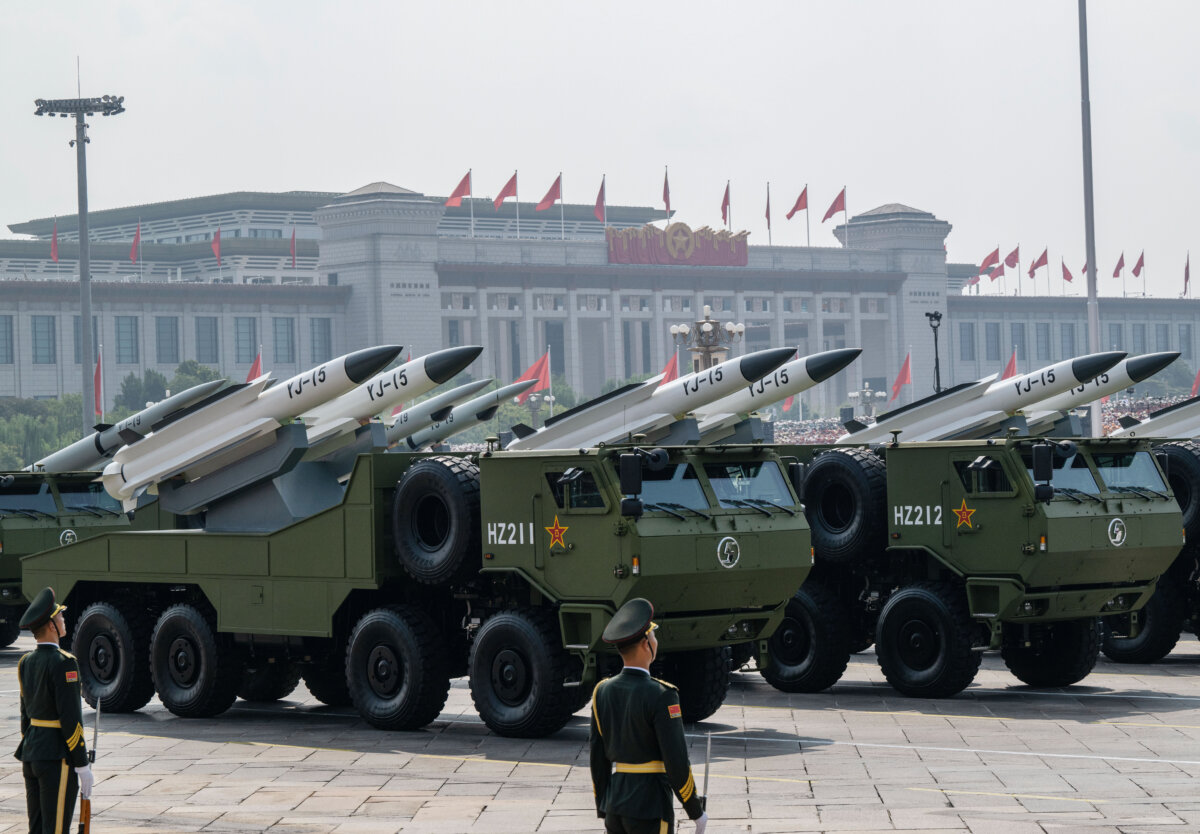

China’s expanding nuclear arsenal and military reach gravely threaten Indo-Pacific stability, with analysts stressing that sharing missile defense data and intelligence among Washington, Tokyo, and Canberra is critical to countering the regime.
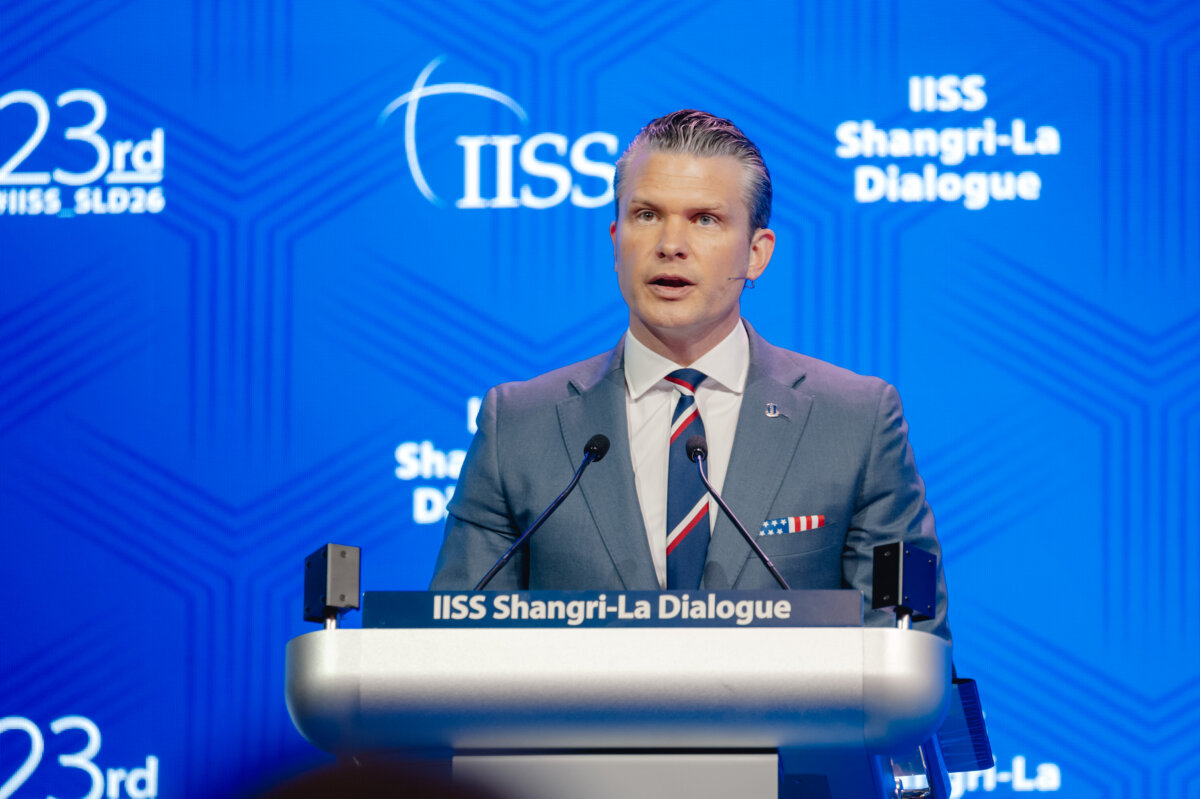
Japanese Defense Minister Shinjiro Koizumi warned on May 31 that attempts to unilaterally change the status quo in the Indo-Pacific by force or coercion are intensifying.
“The boundary between peacetime and contingency is becoming increasingly unclear,” Koizumi said on the final day of the Shangri-La Dialogue in Singapore.
Without explicitly naming China, Koizumi said a certain country possesses a massive nuclear arsenal and strategic bombers, yet Japan—which lacks such weapons—is being accused of “new militarism.”
His remarks appeared to be a pointed response to allegations made by China’s Foreign Ministry on May 12 that Tokyo is pushing such an agenda.
The dialogue, marking its 23rd year, ran from May 29 to 31, bringing together defense ministers, military chiefs, and security strategists from more than 40 countries to address Indo-Pacific security challenges.
Chinese Defense Minister Dong Jun skipped the event for the second straight year, leaving scholars from China’s National Defense University as Beijing’s only delegation.
In a sideline meeting, Koizumi and U.S. Defense Secretary Pete Hegseth agreed to accelerate joint missile production and advance a trilateral defense data-sharing network with Australia.
Nuclear Shadow
Su Tzu-yun, an assistant professor at Tamkang University’s Graduate Institute of International Affairs and Strategic Studies in Taipei, said Beijing’s expanding nuclear forces and power projection are gradually reshaping the strategic balance across the Indo-Pacific.
Analysts estimate that China’s nuclear stockpile may have reached 600 warheads, marking the most rapid increase among nuclear-armed states in recent years.
“The threat is that the regime could leverage its nuclear arsenal, bombers, and long-range missiles to deter U.S. allies like Japan from intervening in a Taiwan Strait or East China Sea conflict,” Su told The Epoch Times.
Taiwan is a self-governed democracy that the Chinese Communist Party (CCP) has never controlled but has vowed to annex by force.
Su said Beijing aims to cast a nuclear shadow over Taipei to compound its conventional threats, a strategy designed to paralyze any U.S. intervention during an invasion.
“China’s military buildup increases the likelihood of a localized clash spiraling into a nuclear standoff between Washington and Beijing,” Su said.
Shu Hsiao-huang, a research fellow at Taiwan’s Institute for National Defense and Security Research, said China’s tactical nuclear weapons development raises the risk of a limited confrontation escalating into full-scale war.
Tactical nuclear weapons feature shorter ranges and lower yields for battlefield deployment, a sharp contrast to strategic nuclear weapons designed for long-range strikes against cities and command centers.
“Should China deploy tactical nuclear weapons, other nations could retaliate with long-range ballistic missiles, instantly raising the specter of a wider nuclear war,” Shu told The Epoch Times.
Shu said China’s H-6 strategic bombers, armed with the JL-1 air-launched ballistic missile, could threaten U.S. installations as far as Guam and potentially Hawaii, significantly undermining regional stability if left unintercepted.
“The Chinese People’s Liberation Army advances in nuclear delivery systems have deeply alarmed Washington,” Shu said.
“Beyond U.S. installations in the Pacific, China’s suborbital hypersonic glide vehicles pose a serious threat to the U.S. East Coast because they could complicate missile defense efforts.”
Gray-Zone Operations
Shu also dismissed Beijing’s accusations of Japanese new militarism as groundless.
“Tokyo is focusing entirely on bolstering its maritime and air defenses, a sharp contrast to the aggressive ground-force expansion that fueled its World War II invasions,” Shu said.
“Japan’s defense posture is firmly anchored within its democratic framework, stripping such charges of any credibility.”
Shu said it is the CCP that is actively undermining Indo-Pacific peace with sustained gray-zone operations—aggressive and coercive actions that are designed to intimidate an opponent yet remain below the threshold of warfare.
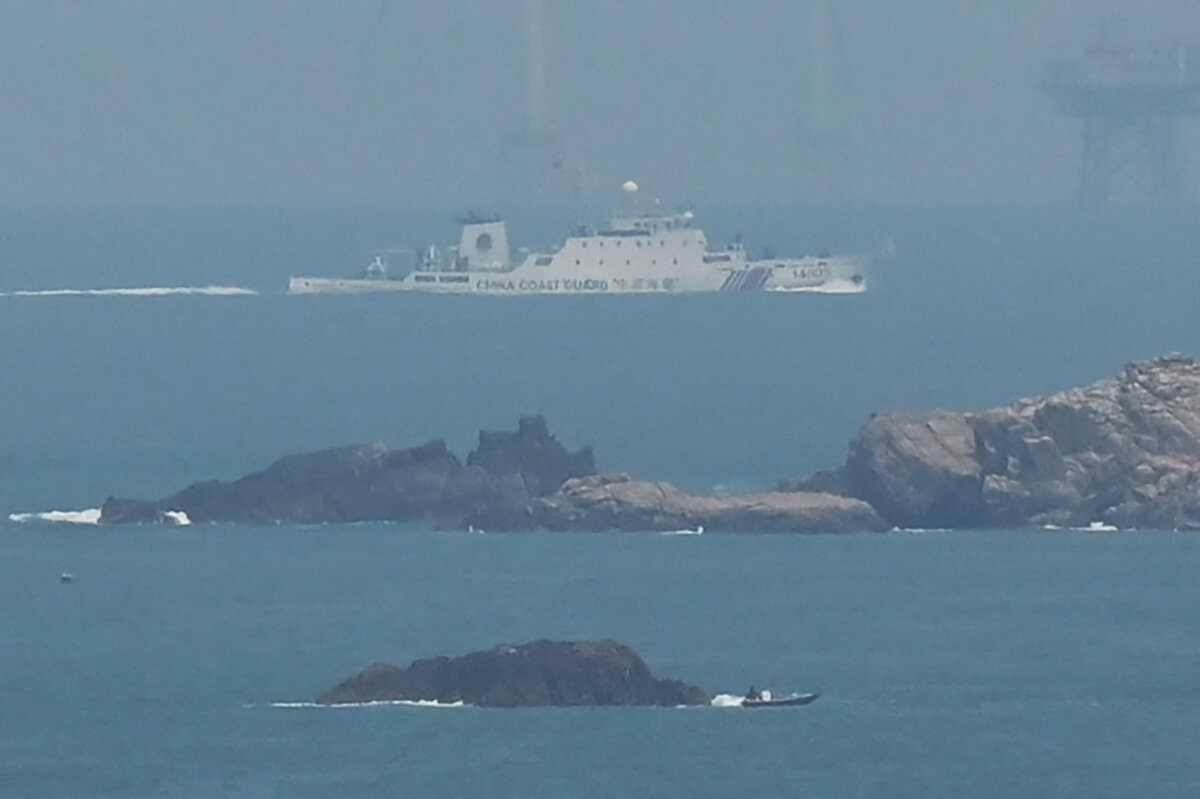
“These operations include expanding the military encirclement of Taiwan and encroaching on the Senkaku Islands,” Shu said.
The Senkaku Islands are a disputed territory in the East China Sea, administered by Japan but also claimed by Beijing and Taipei.
In recent years, Chinese carrier strike groups have frequently entered the Pacific Ocean for exercises geared toward countering the U.S.-led military presence, according to Shu.
“Beijing is effectively executing a two-pronged strategy: attempting to hold U.S. forces at bay while simultaneously teaming up with Moscow to put Japan directly in the crosshairs,” he said.
Echoing Shu’s assessment, Su said the Chinese coast guard has already set records for persistent deployments around the Senkaku Islands, demonstrating Beijing’s intent to establish a “new normal” in the region.
“That coercion is now sweeping across the first island chain, with China escalating air and naval deployments directly through the Miyako and Tsushima straits,” Su said.
The first island chain, encompassing Japan, Taiwan, and the Philippines, is widely seen by analysts as a strategic buffer limiting China’s ability to project military power into the Pacific.
Beyond maritime incursions, Su said Beijing’s gray-zone tactics include tightening rare-earth export controls to exert hybrid pressure on Tokyo.
Trilateral Missile Defense
Su said the deepening U.S.-Japan-Australia defense ties will significantly deter the Chinese regime.
“Joint missile production replenishes the critical interceptors and precision munitions needed to thwart the CCP,” Su said.
“Sharing missile data also allows Washington, Tokyo, and Canberra to instantly track the movements of Chinese missiles, warplanes, naval fleets, and drones.”
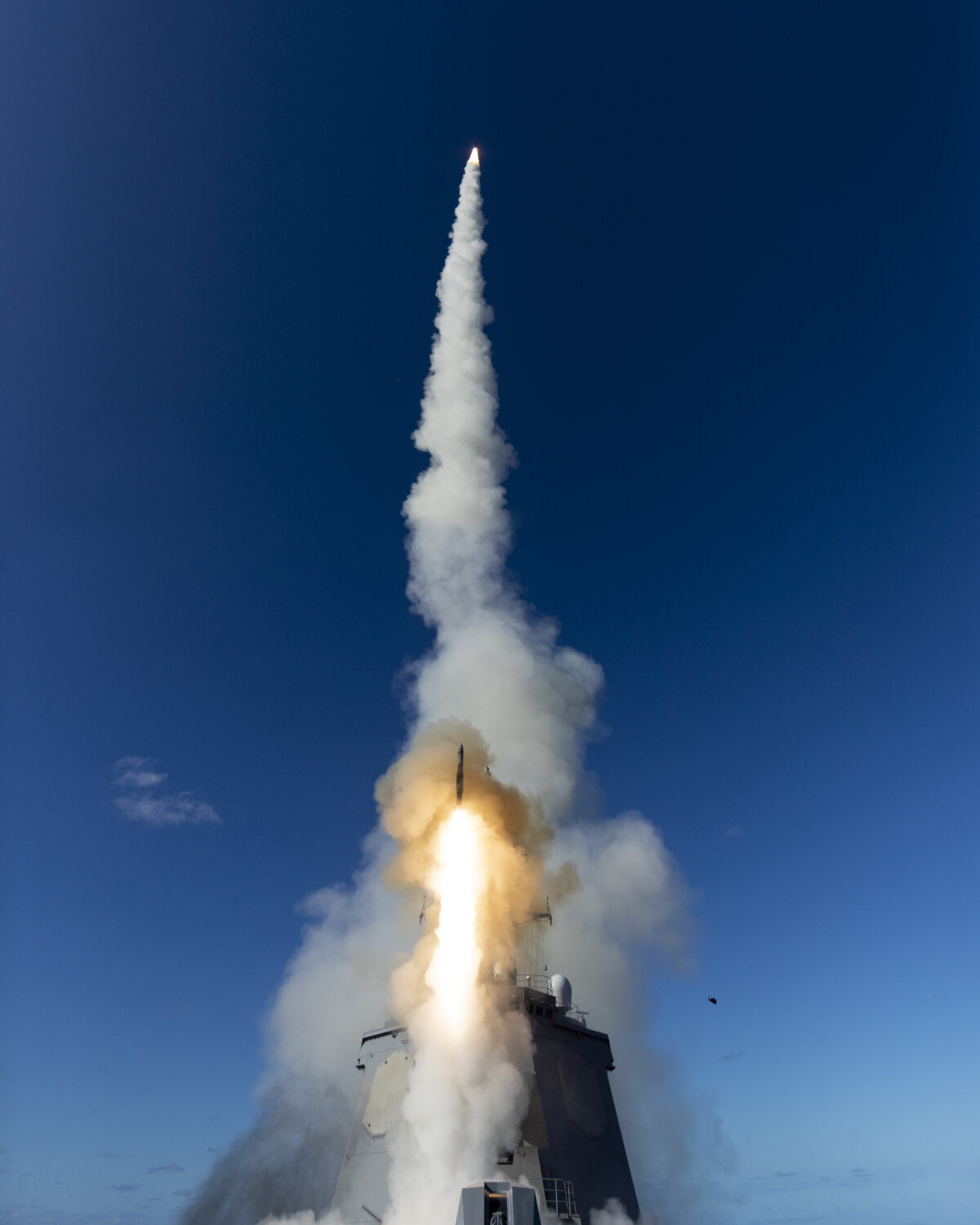
Su said this coordination prevents regional allies from facing Beijing’s pressure alone, effectively blocking China’s attempts to divide Indo-Pacific nations.
“If the U.S., Japan, and Australia link their missile defense networks, any regional military move by Beijing would trigger a massive, unified response,” Su said.
Shu said the initiative specifically counters Beijing’s anti-access or area denial strategy, which aims to assert expansionist territorial claims and deter outside forces from intervening.
“To counter this posture, Washington and its Indo-Pacific partners are working to seamlessly fuse their command-and-control systems,” Shu said.
“This essentially NATO-izes the region’s defense architecture, forging a collective shield to neutralize the mounting threat China poses.”
 Friends Read Free
Copy
Facebook
Tweet
Friends Read Free
Copy
Facebook
Tweet