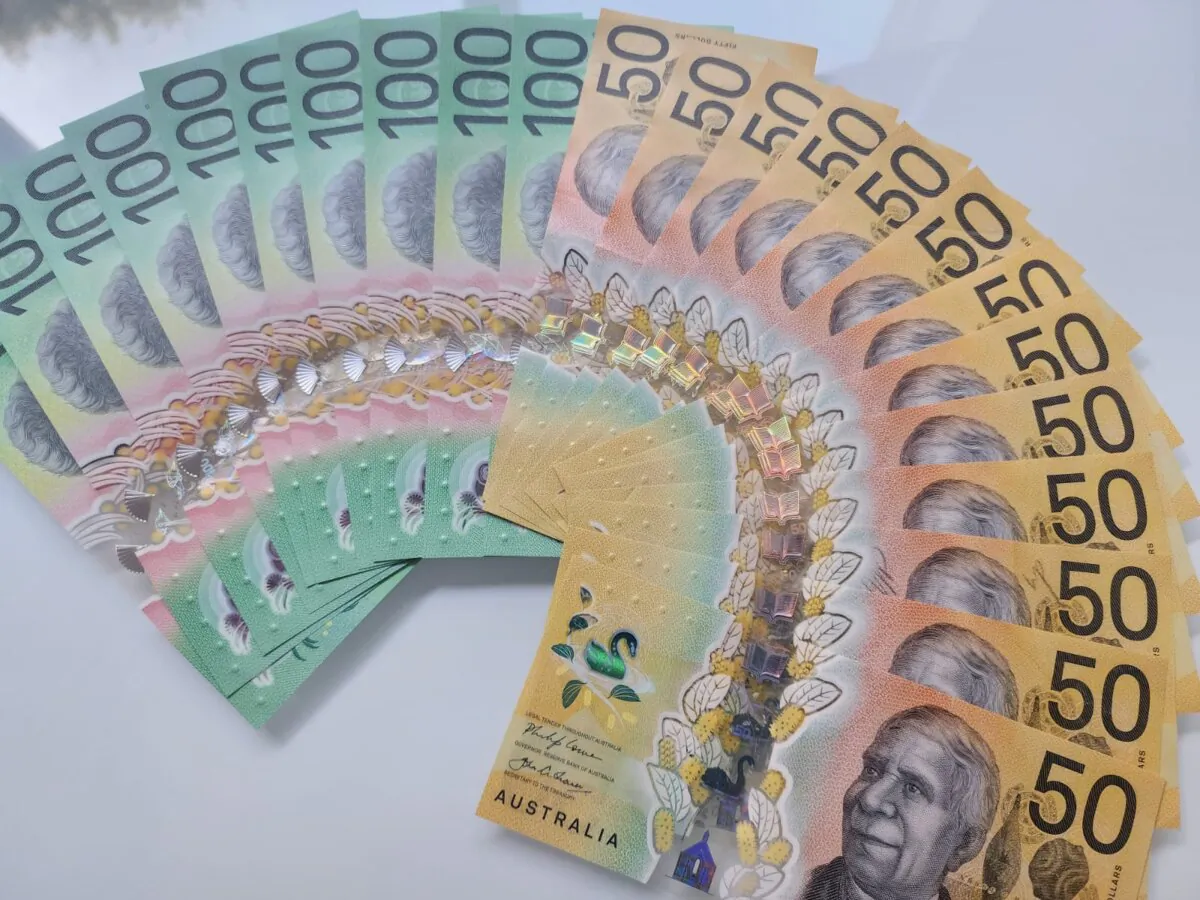

Authorities have revealed details of a money laundering network linked to Chinese nationals that used international students’ bank accounts to move large sums of illicit cash.
In a recent podcast, Victoria Police shed light on Operation Taipan, which led to the conviction of three Chinese men—Thao Zhou, Wei Wang, and Boliang Liu—for laundering large amounts of cash and cryptocurrency for criminal organisations between 2020 and 2021.
The combined amount of money launder by the trio was around $96.79 million (US$68.9 million).
All three was sentenced in 2024 and are expected to face deportation after serving their prison terms.
Police said the group relied on a complex web of bank accounts to move money across Melbourne while avoiding detection, specifically using accounts connected to international students who were about to leave Australia.
Sergeant David Crowe, who led Operation Taipan, said the offenders contacted students via a “Chinese diaspora app” and paid them $5,000 (US$3,500) in exchange for their banking details.
“They were advertising in there saying, ‘Have you finished your degree, you’ve got an Aussie licence, you’ve got Aussie bank accounts, you don’t need it anymore. We’ll give you five grand. We’re totally legit, don’t worry about it. It’s totally good,’” he said.
“So they were acquiring accounts that way. Uni students will sell their account, buy themselves a new iPhone and leave the country.”
Police said through this method, the syndicate obtained access to nearly 220 bank accounts, which were later used to receive and transfer cash deposited at ATMs across Melbourne.
Despite the suspects’ attempts to avoid police monitoring, detectives eventually identified them through surveillance at ATMs.
“It was a very frustrating period for us. We had someone that would essentially turn up to an ATM anywhere on the southern side of the metropolitan area of Melbourne and just pump money into it,” said Detective Acting Inspector Andrew Beans.
“He would sometimes be there for an hour, and so a phenomenal amount of money [was deposited].”
Police estimated that at its peak in April 2021, the illegal operation accounted for almost 16 percent of cash deposits in Victoria.
The flow of money was so large that some Melbourne bank branches had to arrange extra cash collections to manage the volume of notes being deposited.

Lavish Lifestyle Raises Suspicions
Police said none of the three men involved in the scheme held regular employment, but investigators noted that Boliang Liu openly displayed signs of unexplained wealth.
Specifically, Liu frequently showcased expensive purchases, including a $2,000 Louis Vuitton “bird shirt,” and several high-end vehicles such as a 2019 Porsche 911 Carrera, Toyota Landcruiser Sahara, BMW X5, and BMW X7.
According to Crowe, investigators also intercepted a phone call between Liu and his father in China in which Liu boasted about the cost of maintaining his lifestyle.
“‘I need $30,000 cash a week to sustain my lifestyle. I’ve got to keep up appearances. I’ve got to, you know, look rich and look successful. And what’s a bloke supposed to do other than money launder these days?’ He was saying all these things,” Crowe recalled.
Police also stated that the proceeds of the operation were used to build a property portfolio, with Liu purchasing multiple properties across Melbourne with cash.
AFP Warns International Students Not to Sell Their Bank Accounts
Separate warnings from the Australian Federal Police (AFP) suggested the exploitation of international students’ personal data may be more widespread.
In November 2025, the AFP-led Joint Policing Cybercrime Coordination Centre (JPC3) said foreign students preparing to return home after studying in Australia were being offered $200 to $500 to provide access to their bank accounts, with the potential to earn a commission—often around 10 percent—on money deposited into them.
The agency noted that criminals were also seeking identity documents such as passports, driver’s licences, and other government-issued identification, which could later be used to open bank accounts in the victim’s name.
AFP Detective Superintendent Marie Andersson said criminals frequently use stolen or purchased identities to impersonate real people and defraud victims.
She said these scams often target vulnerable Australians, including retirees, migrants, and even other students.
Andersson then urged international students not to sell or hand over their bank accounts or identity documents, especially to individuals contacting them through social media, messaging apps, or in person.
“What might look like a harmless favour, or an easy money earner can result in criminal charges, visa cancellations, and permanent bans from returning to Australia,” she said.
“We are seeing criminal networks overseas launder millions through bank accounts belonging to young people, and as a result, they too could be charged with offences like money laundering.
“When students sell their details, they’re not only risking prosecution; they’re also enabling real harm to innocent people.”
 Friends Read Free
Copy
Facebook
Tweet
Friends Read Free
Copy
Facebook
Tweet