Australia’s decision to list Iran’s Islamic Revolutionary Guard Corps (IRGC) as a terrorist organisation was necessary, but without stronger enforcement, it risks being little more than symbolic, a Senate committee has been told.
Appearing before the Senate Committee on Intelligence and Security on Feb. 26, former political prisoner Kylie Moore-Gilbert and representatives of Australia’s Iranian diaspora said gaps in enforcement, visa screening and sanctions compliance were undermining the impact of the ban.
In November 2025, the federal government listed the IRGC as a state sponsor of terrorism after security agencies concluded Iran was linked to anti-Semitic attacks on Australian soil, including the firebombing of Melbourne’s Adass Israel Synagogue in December 2024 and an attack on Sydney’s Lewis’ Continental Kitchen in October 2024.
Prior to that, the government had suspended diplomatic ties with Iran and expelled its diplomats from the country.
Moore-Gilbert, who was detained by the IRGC in 2018 after travelling to Iran for an academic seminar and later rescued via a prisoner swap involving three Iranian operatives arrested in Thailand, said the government must ensure its characterisation of the IRGC was backed by proper resourcing.
“Sanctioning is really a symbolic act, if we’re not actually taking measures to enforce those sanctions,” she told the committee.

Moore-Gilbert pointed to Press TV, the Iranian regime’s mouthpiece, as one example.
Although sanctioned in September 2023 by the federal government with financial penalties and travel bans, it was later revealed the outlet continued operations in Australia with a Sydney-based correspondent.
The academic also raised concerns about visa vetting, citing the case of the daughter of former IRGC commander-in-chief General Yahya Rahim Safavi.
According to Moore-Gilbert, she was granted a student visa in February 2024 and later permanent residency in October 2024—despite Safavi being under Australian sanctions since 2015 and re-listed in 2023 under the Autonomous Sanctions framework.
“So the close family member of someone like that being given PR in Australia raises questions around the character test that’s applied to permanent residency,” she said.
While commending the government for listing the IRGC and expelling Iran’s ambassador last year, Moore-Gilbert urged authorities to integrate sanctions and terrorism listings more coherently.
The Epoch Times reached out to the Department of Home Affairs, which said it could not comment on individual cases due to privacy reasons.
Iranian Diaspora Faces Intimidation
Parisa Glass, representing the international community of Iranian academics, said the IRGC’s influence is being felt well beyond Iran’s borders.
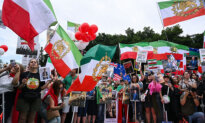
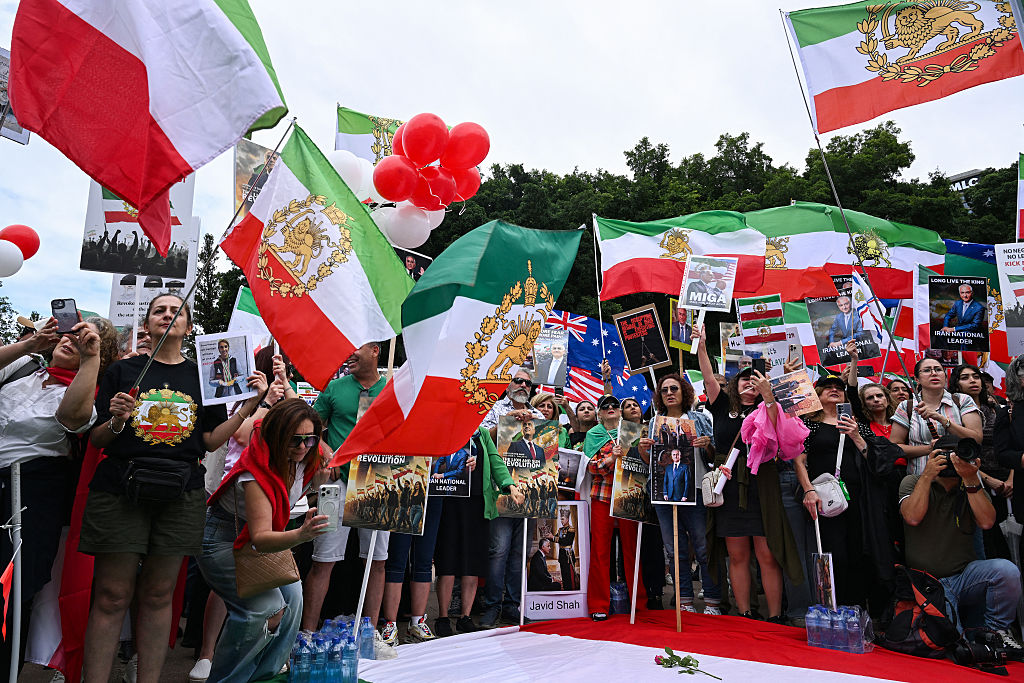
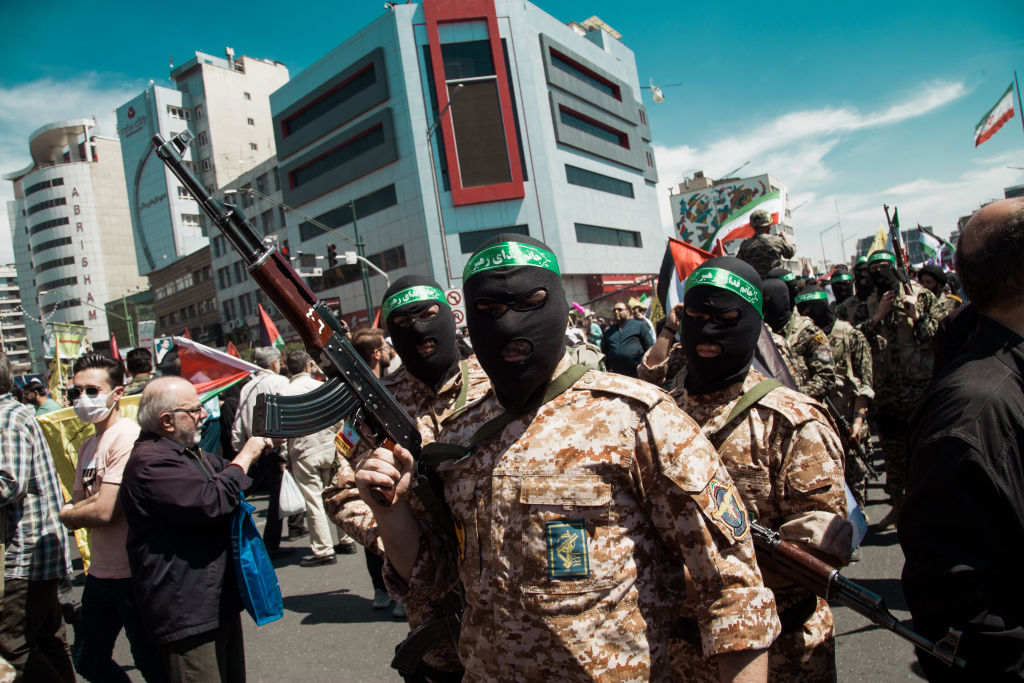
“Over the past two years, members of Iranian diaspora, including academics and students, students living in exile, have encountered IRGC symbols and supporters at public demonstrations,” she said.
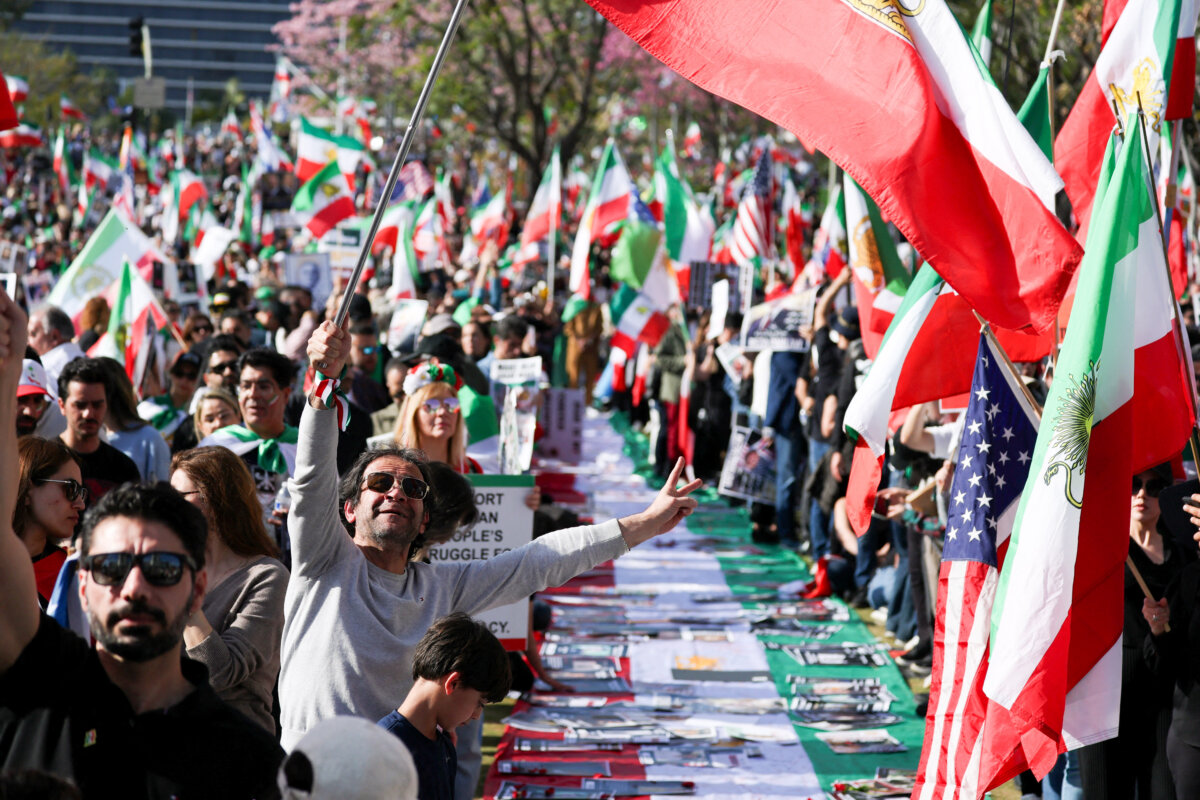
She warned that such displays—particularly at large-scale Palestine protests and diaspora gatherings—had a chilling effect on Iranian-Australians, especially younger exiles with family still in Iran.
Glass said students report threats and intimidation, often via social media, and fear reprisals against relatives in Iran if they speak publicly.
Moore-Gilbert added that intimidation often comes from individuals who do not explicitly identify as IRGC members, making attribution difficult.
“I myself made a complaint to the national security hotline last year when I was approached in person by a supporter of the Iranian regime and implicitly threatened,” she said.
Sarah Rafi, a lawyer and human rights activist with the Australian Iranian Community Organisation, added that many diaspora members had contacted national security hotlines to report concerns but received little support.
Iran’s Hybrid Power Structure Poses Challenges for Australia
Tina Kordrostami, a former Greens leader and now-Sydney councillor told the committee the IRGC’s reach inside Australia was not a mere hypothetical: “It is real and it does exist here.”
She said diaspora communities worldwide had faced 162 to 360 targeted assassinations across 19 countries, arguing that Australia’s listing must be matched by regulatory reform.
Kordrostami described the IRGC as a sprawling, multi-layered structure with economic, intelligence, military and propaganda arms.
“This complexity is precisely what makes it difficult to regulate under traditional security frameworks. We are not dealing with a conventional armed force. We are dealing with a hybrid entity, part military, part intelligence agency, part business network, part ideological machine,” she said.
The councillor said this hybrid model allowed the IRGC to infiltrate business interests, media outlets, cultural delegations and diaspora networks, blurring the line between state and non-state activity.
“Our current legislative settings struggle to account for this hybrid structure,” she said.
“We must ensure our legal frameworks reflect the reality of how the IRGC operates today as a decentralised adaptive network that moves through business, media, culture and diaspora space.”
 Friends Read Free
Copy
Facebook
Tweet
Friends Read Free
Copy
Facebook
Tweet