The Ontario Superior Court of Justice has rejected a Toronto woman’s request for an exemption from federal law that would have allowed her to apply for medical assistance in dying (MAID) solely on the basis of mental illness.
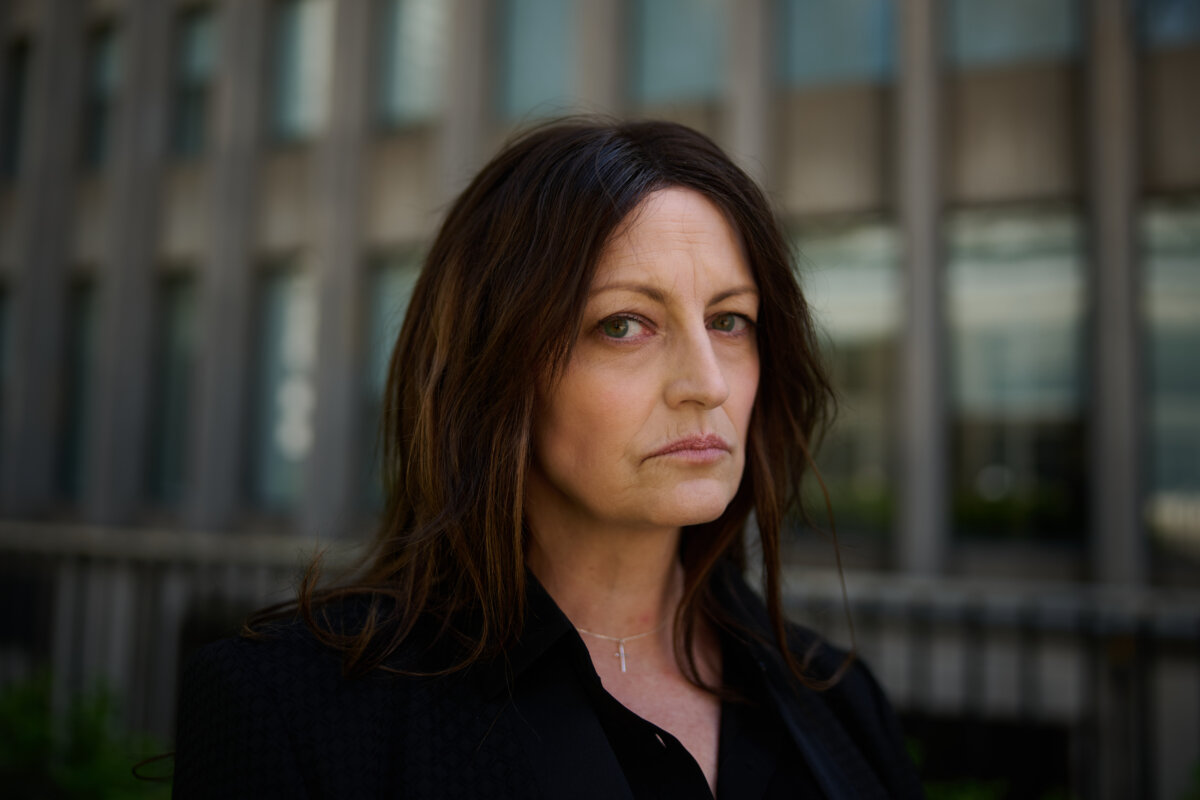
Justice Carissima Mathen dismissed the motion this week, which was filed in May by 49-year-old Claire Brosseau.
Mathen also ordered the Attorney General to respond more quickly to a separate 2024 Charter challenge seeking to overturn the exclusion of people whose sole underlying condition is mental illness from MAID eligibility. The challenge was filed by Brosseau, Dr. Patricia Smith, and Dying With Dignity Canada.
The underlying Charter application has not yet been heard on its merits. Mathen ordered the parties to schedule the next steps in the case within 14 days.
Brosseau’s Motion
Brosseau’s unsuccessful motion argued that waiting for the Charter challenge to be resolved would prolong her suffering from mental illness, which she said she has experienced for decades.
Brosseau, who has been treated for post-traumatic stress disorder, bipolar disorder, substance use disorder and an eating disorder, said the dismissal of her motion was “forcing me to extend my suffering.” She said she should have the same rights as other Canadians to seek access to MAID.
Her lawyers told the court during a July 20 hearing that she had experienced mental-health difficulties since childhood and that her suffering had intensified over the past 35 years.
A spokesperson for the Department of Justice said the government agreed with the court’s decision that the legal requirements for granting a special exemption or pausing the application of the law excluding people whose sole underlying medical condition is mental illness from MAID eligibility had not been met in Brosseau’s case.
MAID Extension
The federal government legalized MAID in 2016 after Parliament passed Bill C-14, amending the Criminal Code in response to a Supreme Court of Canada ruling that found the existing prohibition on assisted dying unconstitutional.
Parliament expanded MAID eligibility in 2021 through Bill C-7 to include people whose natural death is not “reasonably foreseeable.” The legislation temporarily excluded people whose sole underlying medical condition is a mental illness, allowing additional time for expert review, parliamentary consideration and preparation of the health-care system..
The exclusion was subsequently extended twice amid concerns from provinces, territories, and health-care stakeholders that more time was needed to prepare the health-care system for the complex assessments and cases involved. Under the current law, the exclusion is set to expire on March 17, 2027.
Prime Minister Mark Carney said in May that he would not take a position on whether MAID should be expanded to people whose sole underlying medical condition is mental illness until he had reviewed the findings of the parliamentary committee studying the issue.
Justice Minister Sean Fraser has similarly said he would review the committee’s report and the testimony it heard before deciding how the government should proceed.
The Special Joint Committee on Medical Assistance in Dying tabled its report on June 17, recommending that the federal government amend the Criminal Code to indefinitely exclude people whose sole underlying medical condition is a mental illness from MAID eligibility.
Carney has not publicly announced the government’s position on the committee’s recommendation. Fraser said he would take the time necessary to review the recommendations and the evidence underlying them before deciding how the government will respond.
MAID Cases
Questions and concerns about MAID eligibility and assessments have been raised in several cases since the program was expanded in 2021.
In one case, Ontario mother Margaret Marsilla said her 26-year-old son, Kiano Vafaeian, was inappropriately approved for MAID despite not being terminally ill. Vafaeian, who had Type 1 diabetes and partial vision loss as well as mental-health and substance-use issues, died by MAID in British Columbia on Dec. 30, 2025.
Marsilla has said she believes his mental-health struggles were the primary reason he sought MAID and that he should instead have received additional psychological treatment.
Vafaeian was approved under Track 2, which does not require a person’s natural death to be reasonably foreseeable. His family said his approval for MAID in B.C. came after he was repeatedly denied the procedure in Ontario.
Vafaeian’s MAID provider, Vancouver physician Dr. Ellen Wiebe, previously told The Epoch Times that she could not discuss an individual patient’s case. She said, however, that she and her colleagues approve patients who meet the legal requirement of having a “grievous and irremediable medical condition (not psychiatric).” Wiebe has also said she has never provided MAID to someone solely because of mental illness.
Earlier this year, the College of Physicians and Surgeons of Ontario put London, Ont., physician Dr. James MacLean under clinical supervision for a minimum of six months following investigations into his care of patients, including his provision of MAID.
One of the cases involved MacLean assessing a man for MAID outside a Tim Hortons in 2024, and later driving him to a location where he provided MAID. The patient had a history of suicidal ideation, substance use and mental illness, as well as Crohn’s disease. The College found concerns with MacLean’s conduct, including the formality and care of the assessment and whether his actions could have been perceived as influencing the patient’s decision to pursue MAID.
MacLean was also subject to regulatory action following a 2024 MAID procedure involving a cancer patient. He was unable to locate one of the medications required for the procedure, pronounced the patient dead, and left the residence. After the patient began breathing again, MacLean returned and administered the missing medication before pronouncing the patient dead again.
The Canadian Press contributed to this report.
 Friends Read Free
Copy
Facebook
Tweet
Friends Read Free
Copy
Facebook
Tweet