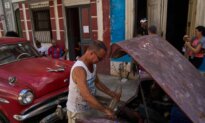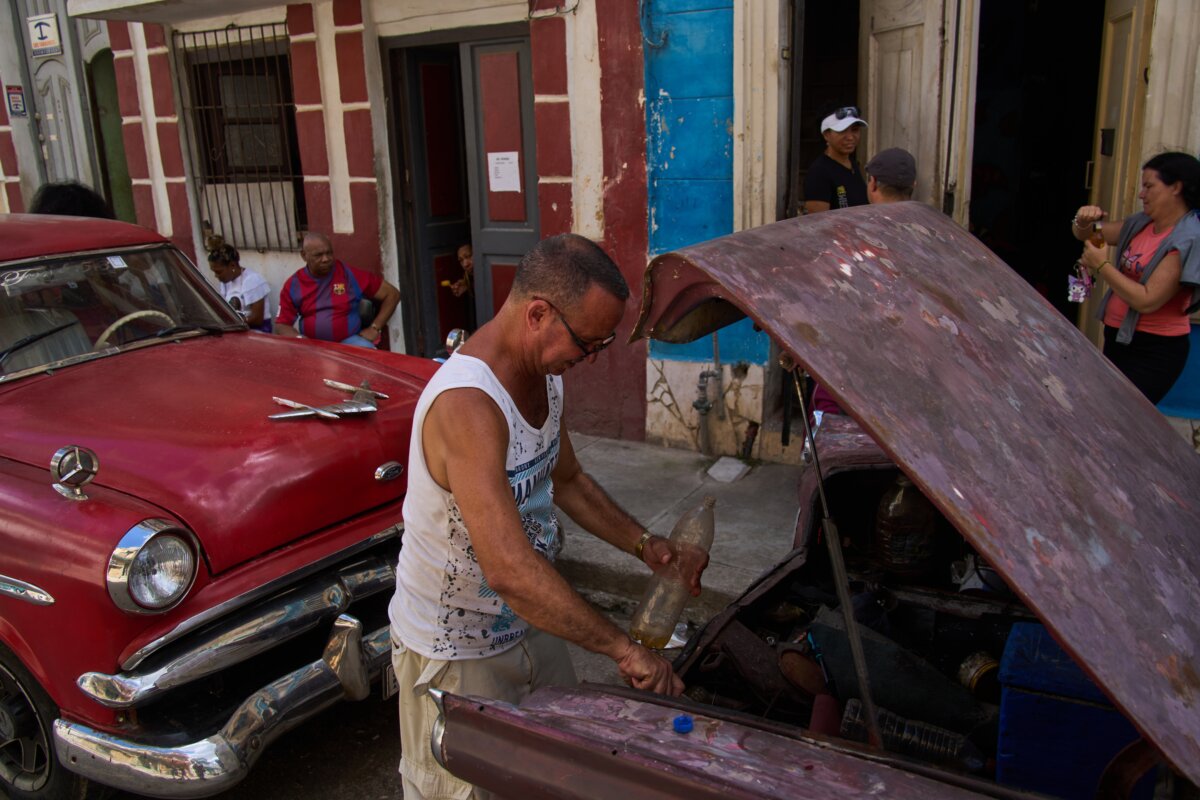
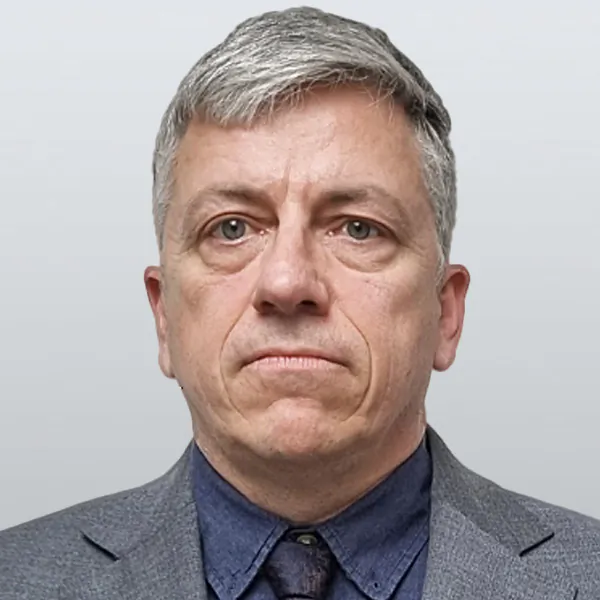
The Cuban energy and mines minister said on May 13 that the country has completely run out of diesel and heavy fuel oil, and that its power grid has entered a “critical” state, as Havana faces its worst rolling blackouts in decades amid a U.S. blockade that has strangled the island of fuel.
“We have absolutely no fuel [oil], and absolutely no diesel,” Cuban Energy and Mines Minister Vicente de la O Levy told a news conference covered by Cuba’s state-run media. ”We have no reserves.”
De la O Levy said daily power outages were affecting millions of Cubans.
Hundreds of Cubans protested in the streets of several neighborhoods on May 13, blocking roads with burning garbage and chanting, “Turn on the lights!” and “The people, united, will never be defeated.”
The minister said the country had not received any oil imports since December until Russia sent 100,000 tons (about 700,000 barrels) of crude last month.
Cuba was heavily reliant on Venezuelan oil, supplied by former Venezuelan leader Nicolás Maduro’s regime, but that supply was stopped after he was ousted and replaced by interim leader Delcy Rodríguez. Mexico also stopped sending oil, under pressure from the United States.
‘Life-Saving Help’
The U.S. State Department said in a May 13 post on X that it “is publicly restating the United States’ generous offer to provide additional direct humanitarian assistance to the Cuban people.”
“The Cuban regime must decide whether to accept our offer or deny life-saving help for the Cuban people, who desperately need it,” the post reads.
De la O Levy said, “Cuba is open to anyone that wants to sell us fuel,” but cited the Iran conflict and rising oil prices as complicating negotiations.
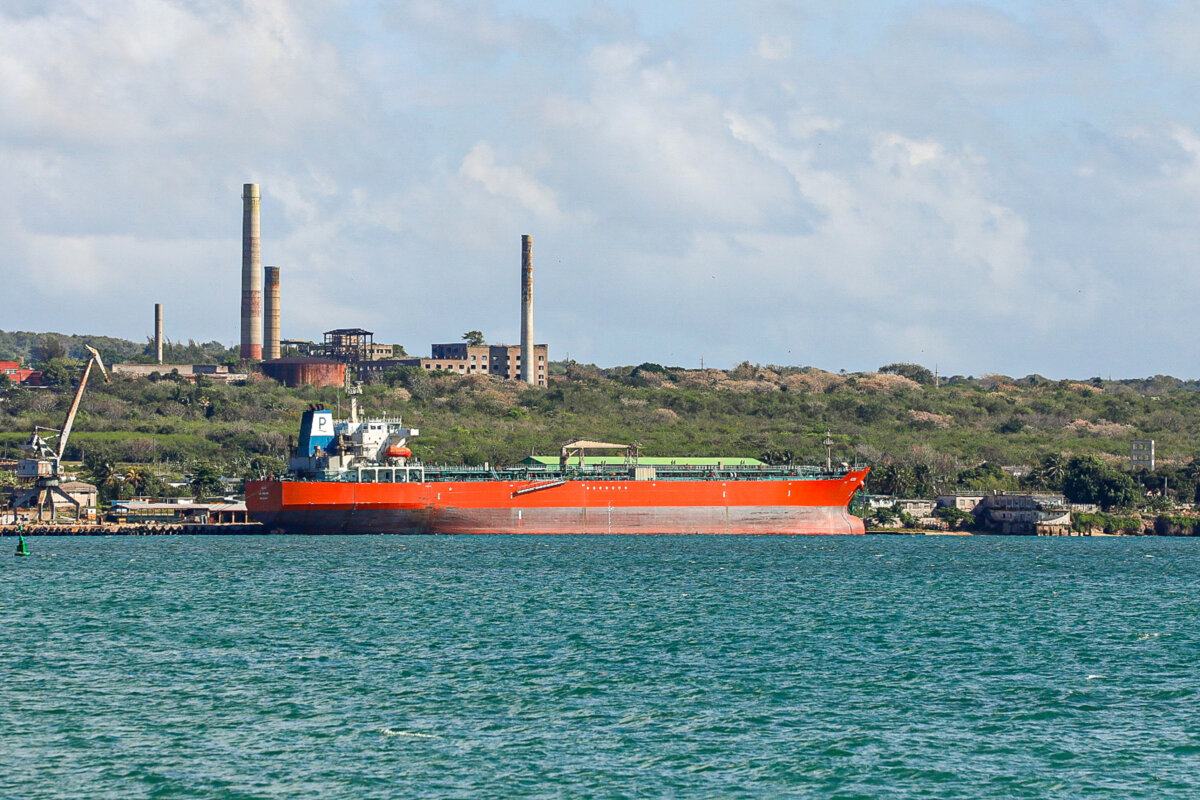
The regime in Cuba was founded in 1959 after rebels led by Fidel Castro ousted U.S.-backed leader Fulgencio Batista. Under Castro’s leadership, the government moved toward Marxism-Leninism and consolidated one-party communist rule in the years that followed. Cuba was closely allied with the Soviet Union until the bloc’s collapse in the early 1990s.
Since Castro’s death in 2016—and even before it—the Cuban communist regime has sought to introduce some market reforms in an effort to encourage private enterprise.
A foreign investment law in 2014 opened up most of the economy, cut taxes by about 50 percent, and provided greater flexibility in terms of majority ownership by foreign investors in ventures partnering with the state, compared with a previous law adopted in the 1990s.
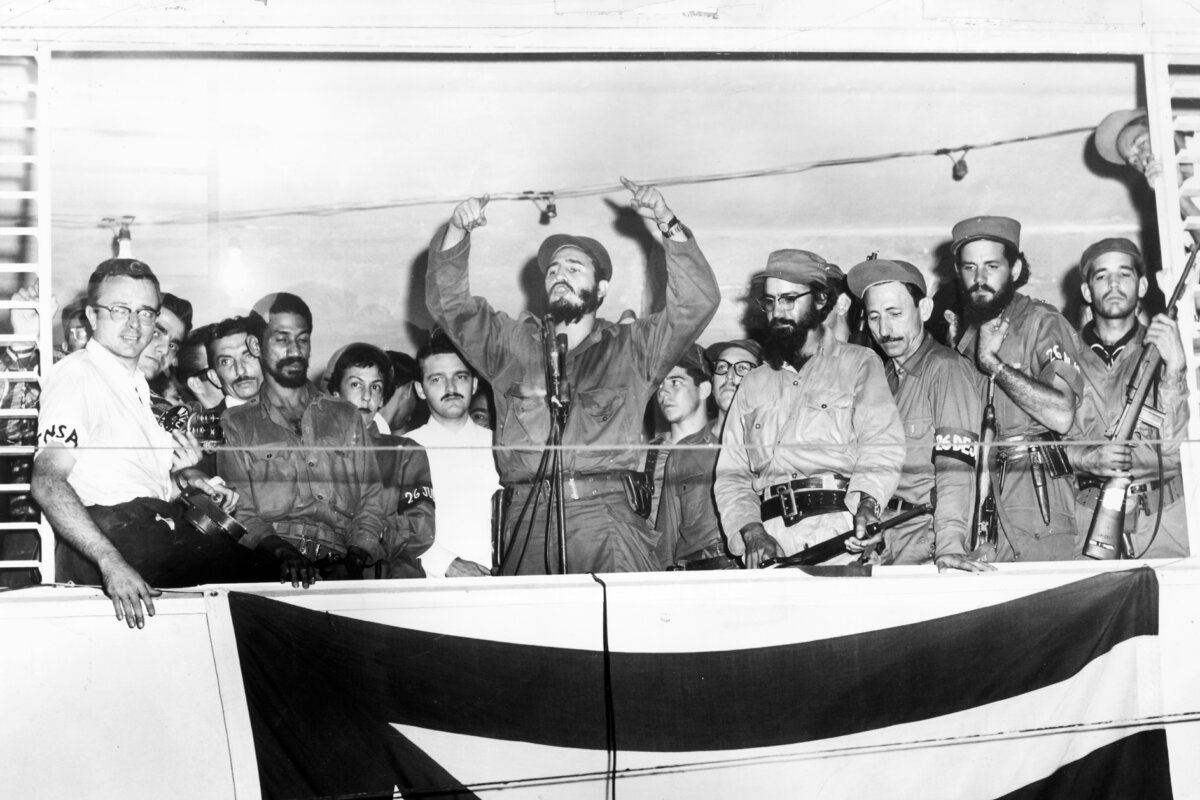
In 2017, the country signed new ventures valued at more than $2 billion, about twice the amount signed during any previous year.
A China-style special development zone also opened at Mariel, just west of Havana, with further tax and customs breaks, and where most projects are fully owned by investors.
U.S. President Donald Trump has made Cuba a focus of his second term, increasing pressure on Havana in the form of sanctions and an oil blockade, and making it clear that Havana is next, after the U.S. military captured Maduro, a longtime ally of Cuba, in January.
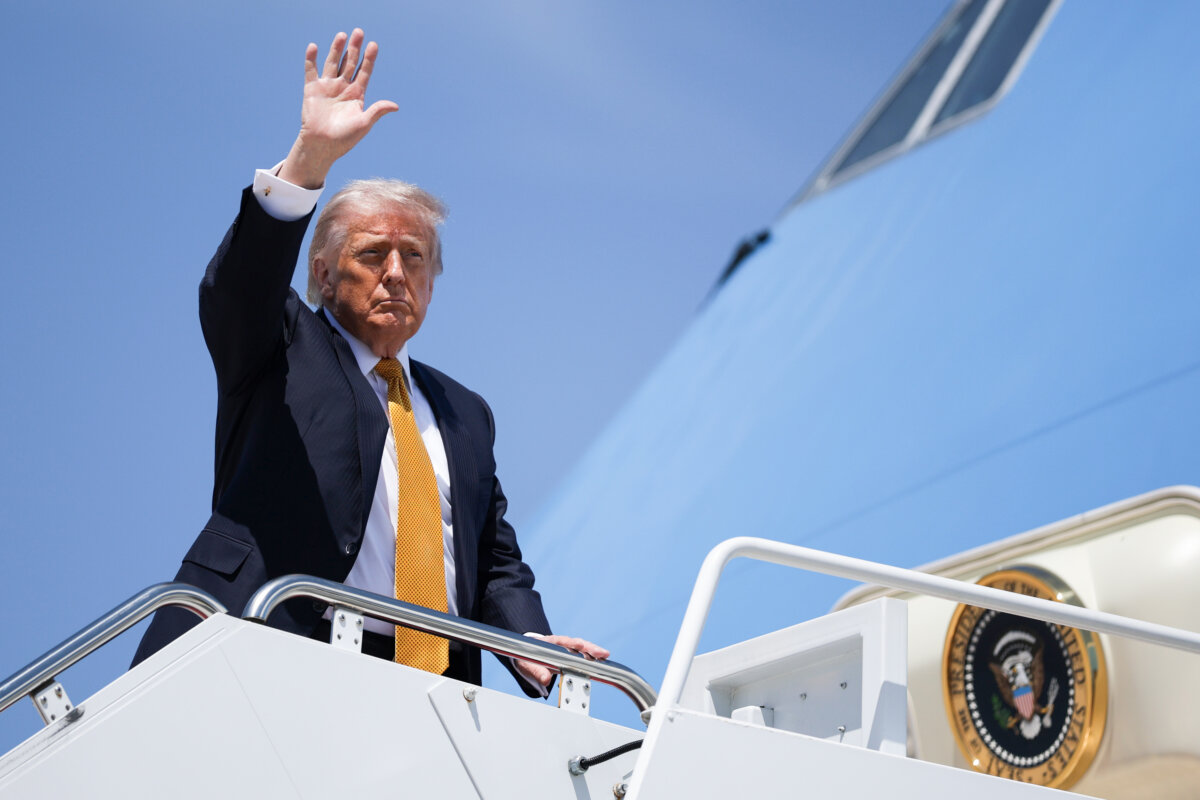
As he left for his trip to China this week, Trump said: “Cuba is not doing well. It’s a failed nation, and we’ll be talking about Cuba at the right time.”
In a post on Truth Social, Trump wrote, “Cuba is asking for help, and we are going to talk!!!”
De la O Levy said outages had increased dramatically this week, with many neighborhoods in Havana without light for up to 22 hours per day.
The Cuban capital is also suffering from food and medicine shortages.
The minister said the grid was operating entirely on Cuban-produced crude oil, natural gas, and renewable energy.
Solar Power Not Helping
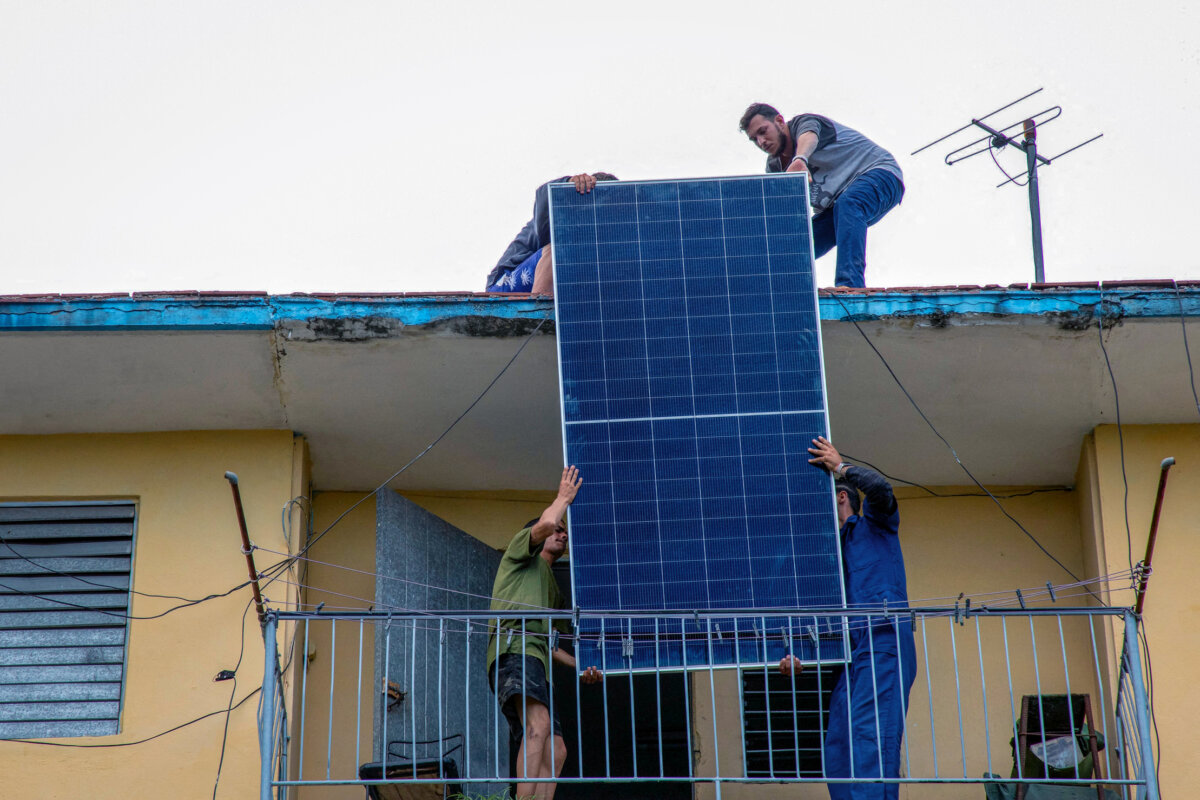
Cuba has installed more than 1,300 megawatts of solar power over the past two years, but de la O Levy said the grid’s weakness meant that it had to limit its input to avoid dangerous fluctuations.
The minister said the nation was in the final phase of a project to install large battery systems to stabilize the grid, allowing it to use more solar energy.
On May 7, the United Nations published a statement—based on the opinions of three U.N. special rapporteurs—that said the U.S. fuel blockade of Cuba was unlawful under international law.
“Cuba has been subjected to energy starvation by the United States, a condition in which the lack of fuel cripples the functioning of essential services required for a dignified life,” the experts said. “This unlawful blockade is not only disrupting daily life but also undermining the enjoyment of a wide range of human rights.”
The Epoch Times reached out to the U.S. State Department for comment but did not receive a response by publication time.
Reuters contributed to this report.
 Friends Read Free
Copy
Facebook
Tweet
Friends Read Free
Copy
Facebook
Tweet