
Food prices in New Zealand were five percent higher in July than a year earlier, up from a 4.6 percent increase in June, Stats NZ says.
“All five food groups recorded higher prices compared with a year ago,” said prices and deflators spokesperson Nicola Growden.
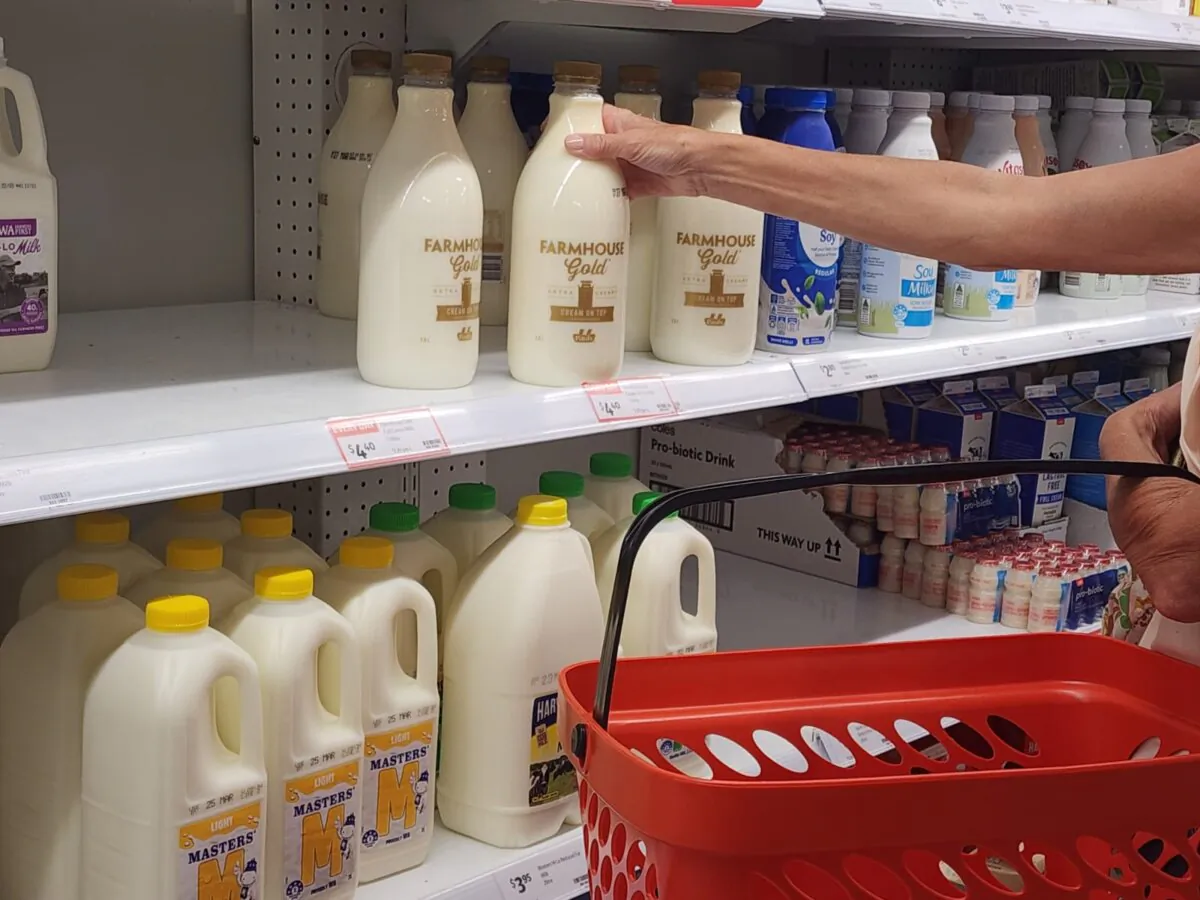
The grocery food category was the biggest driver, up 5.1 percent over the year, fuelled by sharp rises in the cost of milk, butter, and cheese.
Average prices in July showed 2 litres of milk at $4.70, up 16 percent; 500 grams of butter at $8.59, up 42.2 percent; and a 1-kilogram block of cheese at $13.01, up 29.5 percent.
These figures reflect the cheapest available options for each product.
“The price for 2 litres of milk has increased 33.9 percent since July 2020,” Growden said.
“In the 12 months to July 2025, milk prices contributed more to the increase in overall food prices than any other food item,” she added.
Meat and Produce Costs Up
The meat, poultry, and fish group recorded a 7.9 percent annual increase, the second-largest contributor to food inflation.
Beef steak prices jumped 24.6 percent, while beef mince rose 19.3 percent.
“The average price of 1 kilo of beef mince costs $21.97 in July 2025, about $3.50 more than a year ago,” Growden said.
Fruit and vegetables rose 7.3 percent over the year, while restaurant meals and ready-to-eat food increased 2.2 percent, and non-alcoholic beverages rose 4.4 percent.
Rent prices also edged higher, rising 2.4 percent annually—slightly slower than the 2.6 percent rise recorded in the year to June.
“Rent prices are still increasing, but at the slowest rate since 2011,” Growden said.
Households Under Pressure
An April 2025 survey found that 26 percent of New Zealanders are finding it difficult to manage financially—a figure that has held steady for two years but is six percentage points higher than in May 2022.
Low-income households have seen a 13-point jump in financial hardship since 2022, according to the latest report by Ipsos, a global market research specialist.
Almost half of the respondents are worried about job security, with women more concerned than men.
Two-thirds believe unemployment will rise in the next year, and 83 percent of those concerned about job security say they are spending less.
Four in five New Zealanders expect household costs to rise further, especially for food and utilities.
Forty-one percent expect their disposable income to fall, while fewer than one in four believe their standard of living will improve.
Despite more people expecting interest rates to drop, 52 percent still believe inflation will rise, and nearly half think it will take more than a year for inflation to return to normal, with 15 percent saying it never will.
Ipsos New Zealand country manager Carin Hercock said inflation remains the nation’s top concern.
“New Zealanders are not making the connection between reductions in the official cash rate and an improvement in living costs,” she said.
 Friends Read Free
Copy
Facebook
Tweet
Friends Read Free
Copy
Facebook
Tweet