
Thousands of residents in the Greater Toronto Area and sections of Ontario’s Golden Horseshoe continue to be without power after a powerful storm caused flooding, toppled trees, and brought down utility lines.
The City of Toronto announced on its website that several services have been affected by the thunderstorm that brought heavy rain, damaging winds, and large hail to the region.
Toronto Hydro crews worked throughout the night to restore power to roughly 90 percent of customers impacted by the storm that ripped through the city on Sept. 2, the utility said in a social media post.
Approximately 6,000 homes and businesses were still without power as of the evening of Sept. 3, down from a peak of 65,000, but the utility said that number was steadily being whittled down over the course of the day.
“Most larger outages have now been restored. The remaining outages are primarily affecting individual homes and small groups of customers across Toronto,” Toronto Hydro said in an afternoon post. “As a result, the outage map continues to show many outage locations even as the total number of customers without power decreases.”
The utility said outage numbers could continue to fluctuate as crews continue assessing damage.
A vast swath of the region west of Toronto was also left in the dark by the storm.
Alectra Utilities, which serves several municipalities in the Golden Horseshoe region, said at 10:45 a.m that crews were still responding to multiple outages in Vaughan, Brampton, Thornhill, and Mississauga, as well as the outskirts of Hamilton but announced just after 3 p.m. that its crews had dealt with most of the outages.
“Power has been restored to most customers affected by yesterday’s storm,” Alectra said. “Crews continue responding to remaining outages.”
Hydro One, the Crown-owned power supplier of the province, reported that more than 58,000 customers were still without service by morning but that number had dropped to roughly 16,000 by late afternoon.
The utility’s storm centre webpage continued to show outages across rural southwestern Ontario in the regions surrounding Hamilton, Kitchener, and London as of 3:30 p.m. Estimates of the lights coming back on ranged from 4 p.m. to 11 p.m.
“Our crews continue restoring power after yesterday’s severe thunderstorms that caused broken poles, downed power lines, and damage to electrical equipment,” Hydro One said in a statement. “Restoration efforts are prioritized to return power to the greatest number of customers in the shortest amount of time. Estimated restoration times may change once crews arrive and assess damage onsite.”
Premier Doug Ford said the province is “in close contact with impacted municipalities” following the storm.
“We stand ready to help wherever is needed,” he said in a Sept. 3 social media post.
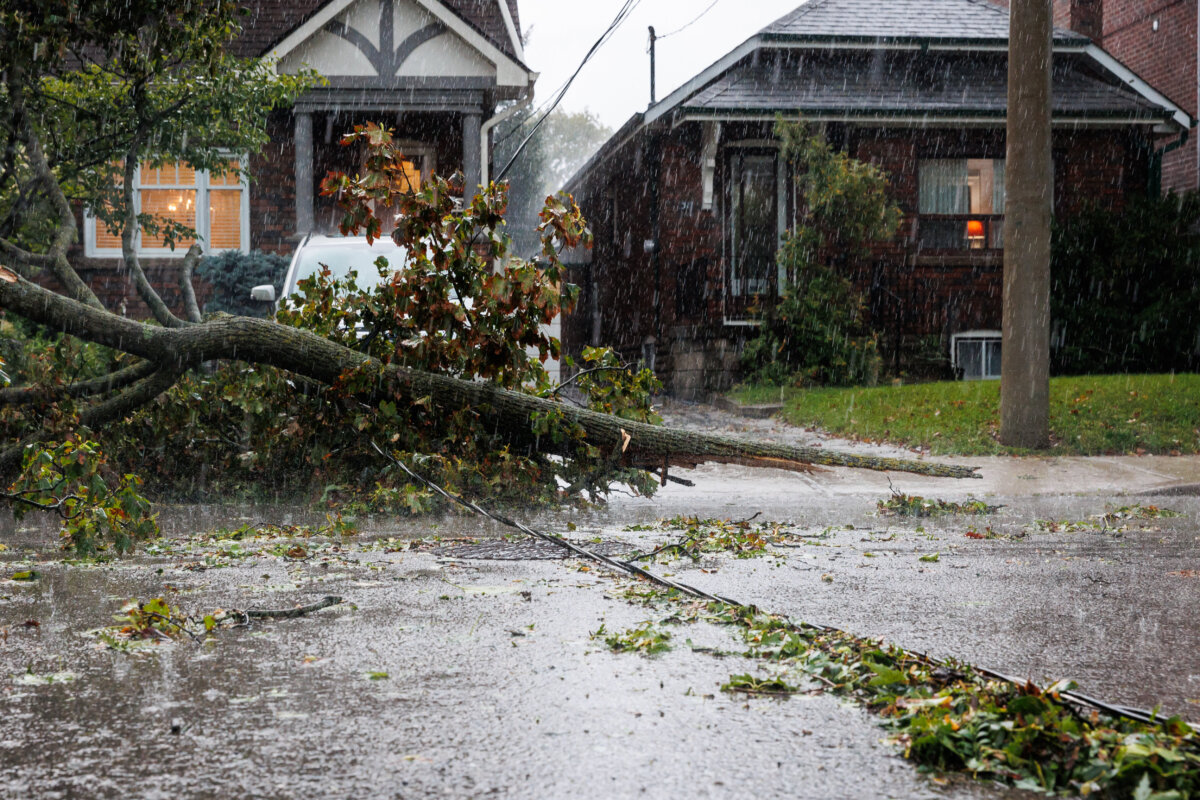
City Damages
Mayor Olivia Chow said the city’s Emergency Operations Centre was activated early in the day on Sept. 2 to prepare for the high intensity winds and rain.
Environment Canada’s localized tracking and the Toronto and Region Conservation Authority have confirmed that the storm resulted in cumulative rainfall totals exceeding 100 millimetres in several parts of the Greater Toronto Area (GTA).
Social media footage showed large hail falling and downpours flooding vehicles and bus stations, causing people to rush for cover.
Chow told reporters during a Sept. 3 briefing that Toronto Fire Services had responded to more than 1,000 calls, marking its second-highest daily total, and had rescued residents stranded on flooded roads.
The mayor acknowledged the efforts of public servants who persevered under challenging conditions, emphasizing that TTC drivers were dedicated to transporting passengers home safely, while 311 operators dealt with an “overwhelming” volume of calls.
“I want to assure the people of Toronto: we were prepared, our teams were co-ordinated and we will keep working until every road is clear and every resident has power back,” Chow said.
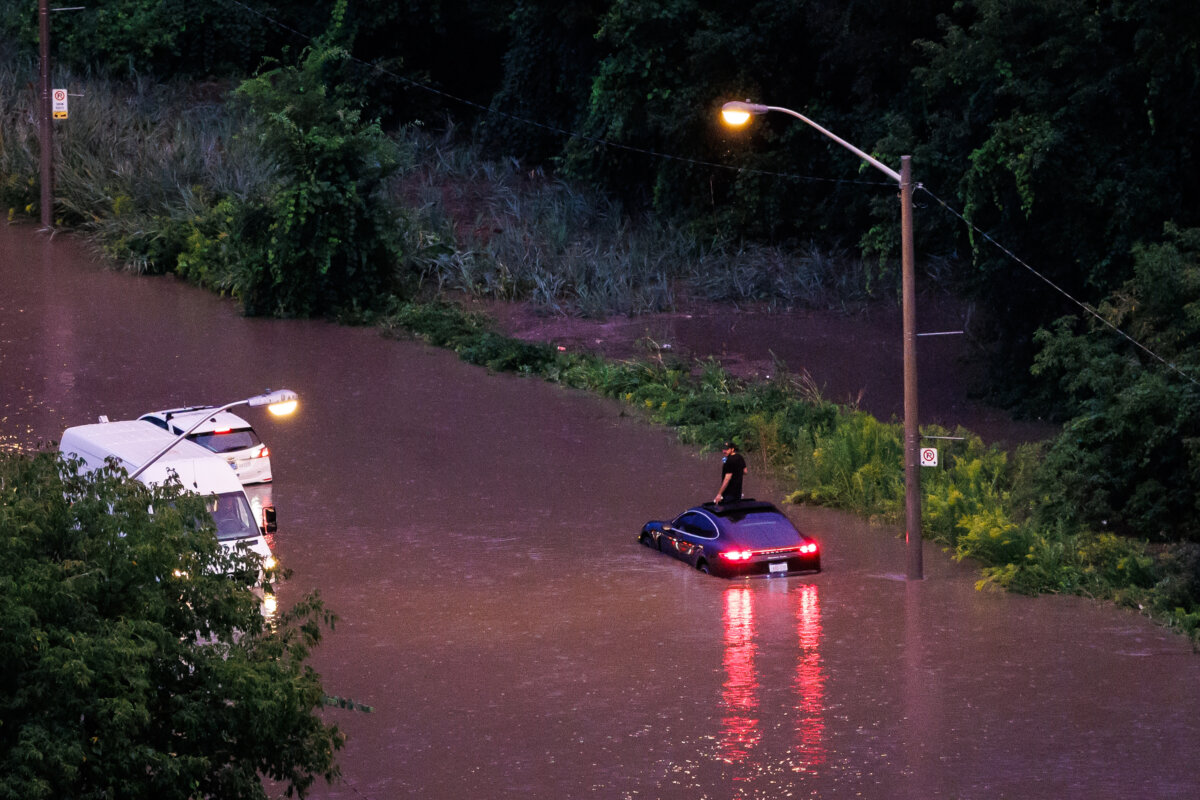
Localized flooding resulted in the shutdown of key roadways in Toronto, including portions of Yonge Street and the Don Valley Parkway (DVP), and halted subway operations during the afternoon rush on Sept. 2.
The City reported that the northbound lanes and the majority of the ramps on the Don Valley Parkway reopened this morning, but cleanup crews are still working to remove debris from the storm in order to restore service to the southbound DVP ramp to northbound Bayview Avenue.
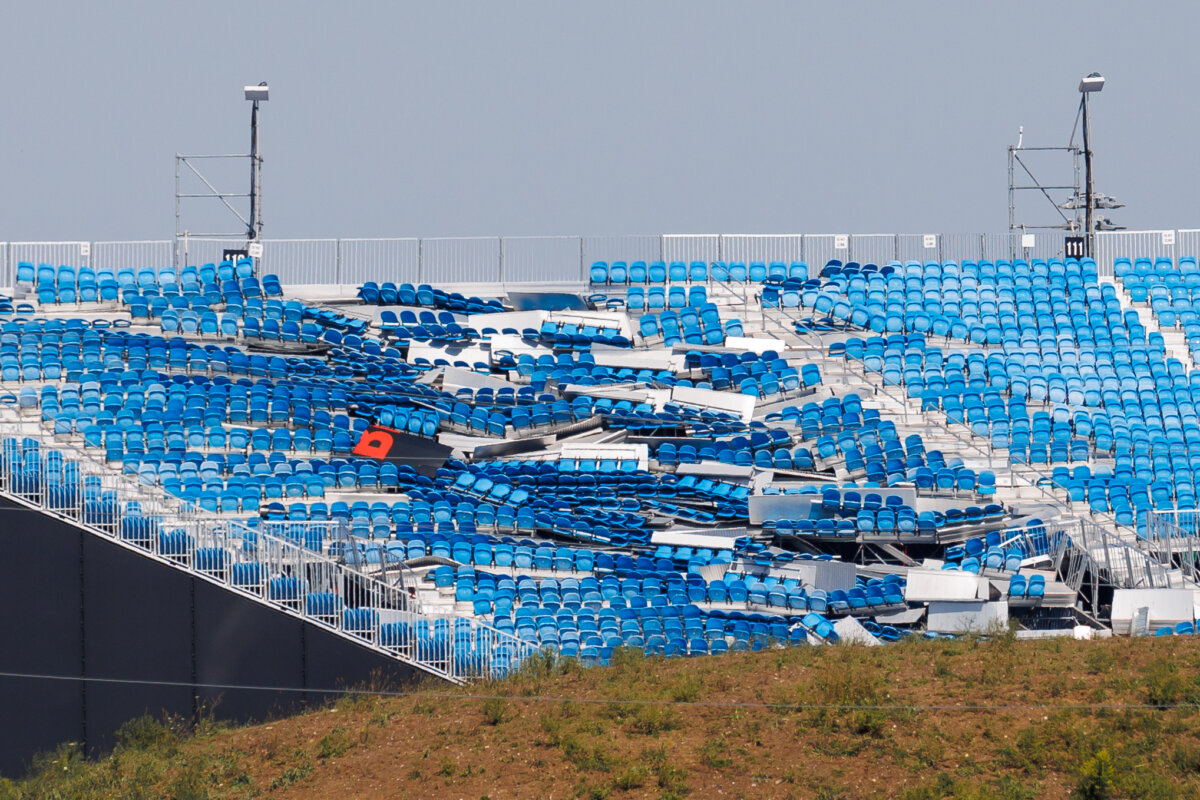
Rogers Stadium, the 50,000-capacity music venue in the city’s north end, sustained major damage during the storm. Photos and video of the open-air stadium at Downsview Park posted on social media show large sections of destroyed seating.
The city announced most of its wading and outdoor pools had reopened by 1 p.m., but several golf courses and parks remained closed due to downed trees.
The weather also affected flights out of Toronto’s Pearson Airport, with many flights delayed, and some cancelled.
“Operations are returning to normal following yesterday’s storm, which brought about 40 mm of rain to Toronto Pearson,” the airport said in a social media post just before 8 a.m. “Travellers are encouraged to check their flight status directly with their airline, as some schedules were impacted by yesterday’s storm.”
Environment Canada issued an alert on the afternoon of Sept. 2, warning of torrential rain and large hail in southern Ontario. It urged residents in affected areas to take cover in a basement or an interior room.
 Friends Read Free
Copy
Facebook
Tweet
Friends Read Free
Copy
Facebook
Tweet