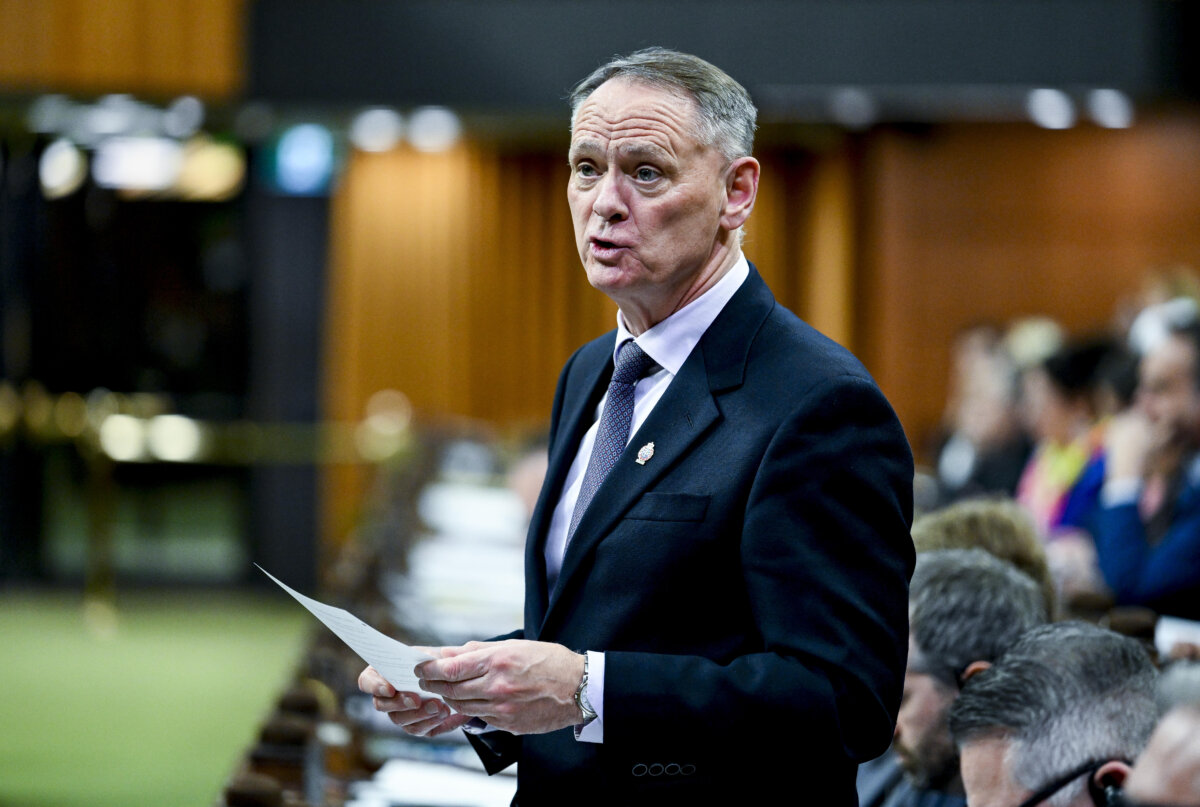

A day after Prime Minister Mark Carney told an American media outlet his government has examined potential scenarios involving U.S.-led military action in Canada, Defence Minister David McGuinty is saying it is simply due diligence.
McGuinty downplayed the significance of Carney’s comments published in the New York Times this week, in which the prime minister said it would be reckless to remain unprepared for what he described as “extreme tail risk.”
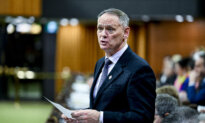
McGuinty told reporters during a Sept. 24 press scrum in Ottawa that such preparation “is normal.”
“All militaries in the world spend time analyzing risk scenarios,” he said.
Carney declined to elaborate on the specifics of the review during his interview with the Times, while characterizing it as “risk management.”
“I think you have a responsibility in these roles to look at extreme tail risk,” Carney told the publication. “That’s just risk management. That’s not a base case, but it would be irresponsible not to.”
Extreme tail risk in military terms refers to the chance of a rare, highly destructive event.
McGuinty also declined to elaborate, telling reporters on Parliament Hill the government would be keeping details about the scope of the review confidential.
When asked by reporters how Canadians should interpret the prime minister’s remarks, he said they should “take it as described by the prime minister—a tail risk.”
McGuinty said Canada and the United States have “one of the most significant military relationships in the world,” citing the North American Aerospace Defense Command (NORAD) as an example of that.
NORAD is a binational military organization established by Canada and the United States to monitor and defend North America, including by detecting and tracking aircraft, missiles and space vehicles that could threaten the continent.
“We’re talking about cooperation to keep North American airspace safe,” he said. “We’re talking about integrated air missile defence. We’re talking about maritime domain awareness investments.”
Conservative MP Ellis Ross has criticized Carney’s comments, telling reporters before question period on Sept. 24 that it was “very irresponsible for a leader of a first world country to come out and say that about another first world country.”
“That’s stoking fear and division, and that’s uncalled for, given what we’re going through right now,” Ellis added. “Canadians are faced with affordability, crime, drugs, and so what do we do? Let’s get Canadians fearing an American invasion.”
U.S. President Donald Trump has frequently made posts on social media about Canada merging with the United States as its “51st state.” When asked by reporters if he would use military force, Trump said he wouldn’t, saying in January 2025 that he would employ “economic force” as a tool to encourage Canadian integration into the United States.
Admiral Samuel Paparo, the head of U.S. Pacific Command, was asked by a reporter at a Sept. 2 press conference in Victoria whether he would ever follow an order from Trump to invade Canada.
He called the idea “absolutely and utterly preposterous.”
“I follow the orders of the commander-in-chief but that is a needlessly emotional question,” he replied. “Would you ask me please, also, what my attack plans are for the Martians?”
Paparo added that Canada remains a “close” and “indispensable” ally to the United States.
The Canadian Press contributed to this report.
 Friends Read Free
Copy
Facebook
Tweet
Friends Read Free
Copy
Facebook
Tweet