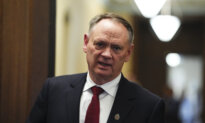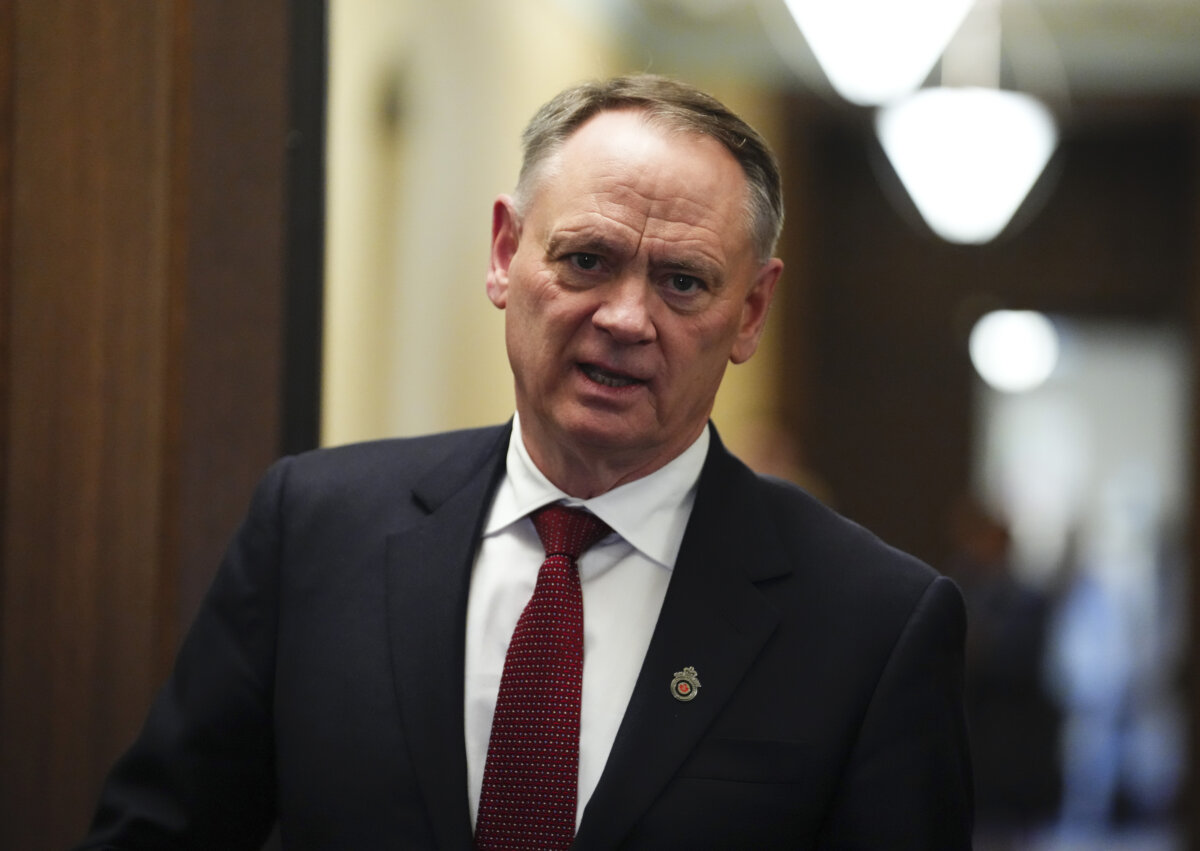

Defence Minister David McGuinty says Ottawa is considering two different partnerships with Ukraine to co-produce drones, following the lead of other European countries.
McGuinty made the comments at a press conference following a two-day visit to Latvia on June 26, saying Ukraine has made “huge strides and advances in drone technologies” because of its war with Russia.
He said partnering with Ukraine on drones is “under active consideration at the Department of National Defence.”
Ottawa is contemplating the same partnership that France and Ukraine have established, in which automaker Renault joined with Ukrainian manufacturers to build drone factories in both countries, the defence minister said.
McGuinty said another possibility Canada is considering is the “Danish model,” where the government offers financial assistance and then procures drones directly from Ukrainian companies.
“We’ll be looking at both those models very carefully and we’ll have more to say about that in due course,” he said.
The Liberal government recently announced it would spend $9 billion on defence in 2025 to meet NATO’s 2 percent target by March 2026. The increased military spending will include $2.1 billion for defence research and development, $2 billion for military aid and additional defence partnerships, $1 billion for strategic military capabilities such as advanced radar systems and additional vehicles, and $800 million for new and existing military equipment.
Ottawa will also spend $2.6 billion on recruitment and retention programs. When asked by reporters for further details on this, McGuinty said the Liberal Party was clear during the election campaign that it would be “addressing the question of compensation for the Canadian Armed Forces.”
McGuinty said he has asked the deputy minister of the Department of National Defence and chief of defence staff to “address this systematically.” One of the goals is to offer incentives to encourage Canadians to stay in the military longer and to recruit those with specialized technical knowledge.
McGuinty also said Canada hopes to leverage European loans through a new partnership signed at the NATO summit, adding that Ottawa plans to collaborate with European countries on bulk purchasing.
Ottawa recently signed a defence agreement with Europe, allowing Canada to enter and bolster the European Union’s $240 billion Security Action for Europe program contained within the ReArm Europe policy. This will allow Canada to begin talks to eventually join Europe’s rearmament plan.
The NATO summit saw the military alliance agree to raise its collective defence spending target from 2 percent to 5 percent of GDP by 2035. The new guidelines include 3.5 percent reserved for core defence spending and 1.5 percent of spending for items related to defence, such as critical infrastructure, civil preparedness, and cyber defence.
Prime Minister Mark Carney said prior to the summit that meeting the new NATO guideline would represent a yearly defence budget of $150 billion. According to the latest NATO estimates, Canada spent 1.45 percent of its GDP on defence in 2024.
 Friends Read Free
Copy
Facebook
Tweet
Friends Read Free
Copy
Facebook
Tweet