
Denmark and Sweden have announced they will contribute fighter aircraft to NATO’s Arctic Sentry mission, as part of Europe’s military contribution to the defense union’s focus on the Arctic and High North.
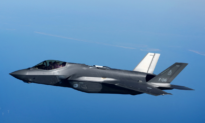
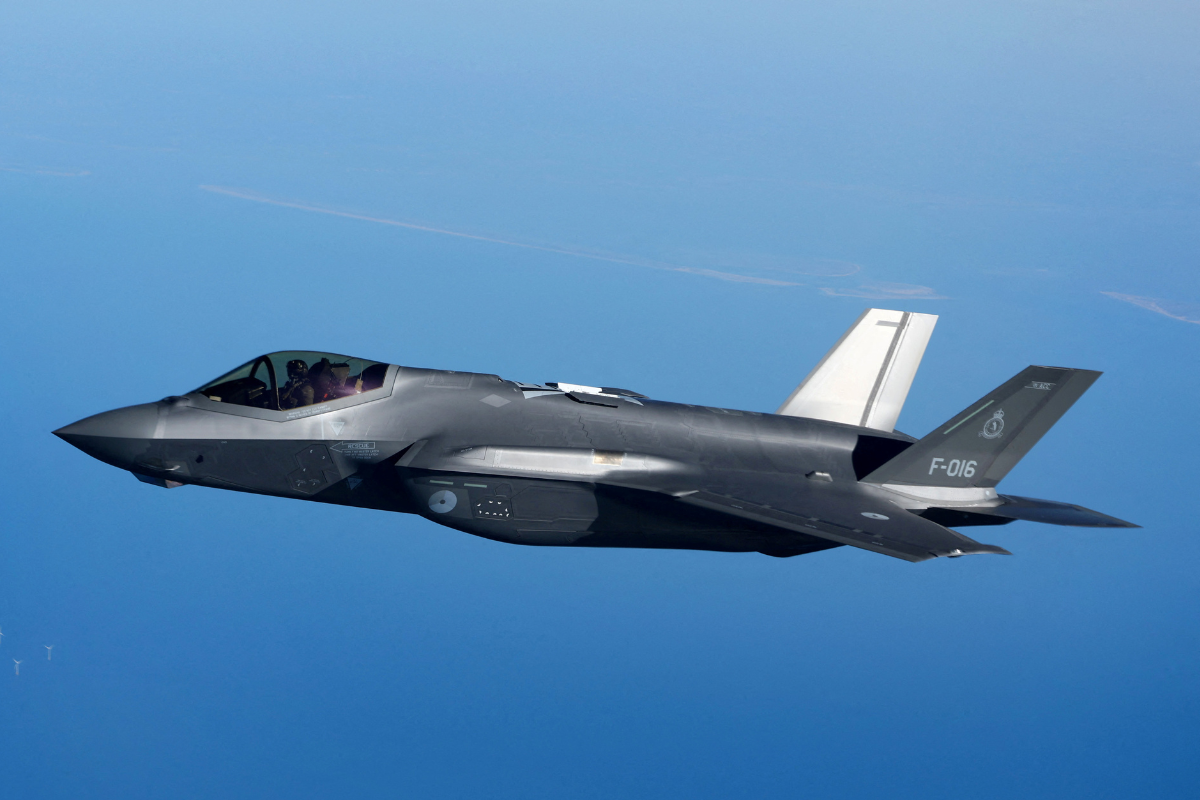
The Danish Ministry of Defense said in a Feb. 13 statement that it will deploy F-35s, which will carry out already-planned training exercises with Swedish Gripen fighter jets.
Danish Defense Minister Troels Lund Poulsen said the contribution to the mission “shows that we are ready to deliver concretely and operationally to NATO in the Arctic.”
“Our F-35 contribution strengthens the overall presence in the region and emphasizes Denmark’s role as an active ally in the Arctic and the North Atlantic,” Poulsen said.
Swedish Prime Minister Ulf Kristersson on Feb. 12 announced that his country would contribute JAS 39 Gripens to the newly established Arctic Sentry, saying that Sweden has a “responsibility to contribute to the security of the entire territory of the Alliance.”
NATO said on Feb. 11 that it had launched Arctic Sentry, a military exercise in the Arctic region and High North, to strengthen its presence in the region.
The announcement follows U.S. President Donald Trump’s call for the United States to acquire Greenland for national security, amid potential threats to the Arctic region posed by China and Russia.
Danish, Swedish Involvement
The Danish Ministry of Defense said that the purpose of Arctic Sentry is to demonstrate NATO’s presence and surveillance of the north as part of its sphere of responsibility.
The ministry outlined activities that it would undertake as part of Arctic Sentry. These include Arctic Shield, an exercise for the Home Guard, the voluntary, unpaid force responsible for protecting Denmark.
Arctic Summer involves training with the participation of Denmark’s special operations force, Sled Patrol Sirius.
Another activity, Brilliant Ice, is a logistical operation focused on the airborne delivery of fuel to Station Nord in Greenland.
The Greenlandic government welcomed the enhanced military operations in the Arctic.
“It is a new and strong capability that we have not seen much of in Greenland, but which will undoubtedly contribute to strengthening security and surveillance in our region,” said Vivian Motzfeldt, Greenland’s minister of foreign affairs.
Kristersson said Sweden’s involvement in Arctic Sentry “demonstrates that we are a loyal and active Ally that takes responsibility for our common security.”
“This reinforces deterrence, safeguards our shared interests and contributes to stability in a region that is critical to Europe and transatlantic cooperation,” he stated.
The Swedish Ministry of Defense said Sweden would initially contribute the JAS 39 Gripen fighter jets in the area around Iceland and Greenland.
Arctic Sentry
NATO’s military command said it launched Arctic Sentry amid growing concerns about potential security threats in the region posed by China and Russia.
“In the face of Russia’s increased military activity, and China’s growing interest in the High North, it was crucial that we do more, which is why we have just two hours ago launched Arctic Sentry,” NATO Secretary General Mark Rutte said during a press conference at NATO headquarters in Brussels, Belgium, on Feb. 11.
Led by Joint Force Command Norfolk, Allied Command Operations will execute a multi-domain exercise integrating air, land, maritime, and potentially space and cyberspace assets.
“Arctic Sentry leverages the strength of the alliance by bringing together NATO and allied activities in the High North into one overarching operational approach to the region, making clear our commitment to ensuring Arctic security and indeed the security of the whole alliance together,” the NATO secretary general said.
The announcement of the military exercise follows a meeting between Trump and Rutte last month in Davos, Switzerland, where the leaders agreed that NATO should take more responsibility for defending the Arctic region.
Rutte has said that the U.S. president is correct about the need to secure the Arctic.
“When it comes to the Arctic, I think President Trump is right. Other leaders in NATO are right. We need to defend the Arctic,” Rutte said on Jan. 21 at the World Economic Forum in Davos.
The NATO secretary-general said that China and Russia were becoming increasingly active in the Arctic Circle and acknowledged that this posed a problem for the alliance.
“There are eight countries bordering on the Arctic. Seven are members of NATO. That’s Finland, Sweden, Norway, Denmark, Iceland, Canada, and the U.S.,” Rutte said.
“And there’s only one country bordering on the Arctic outside NATO, and that’s Russia. And I would argue there is a ninth country, which is China, which is increasingly active in the Arctic region. So President Trump and other leaders are right, we have to do more there; we have to protect the Arctic.”
Guy Birchall and Jill McLaughlin contributed to this report.
 Friends Read Free
Copy
Facebook
Tweet
Friends Read Free
Copy
Facebook
Tweet