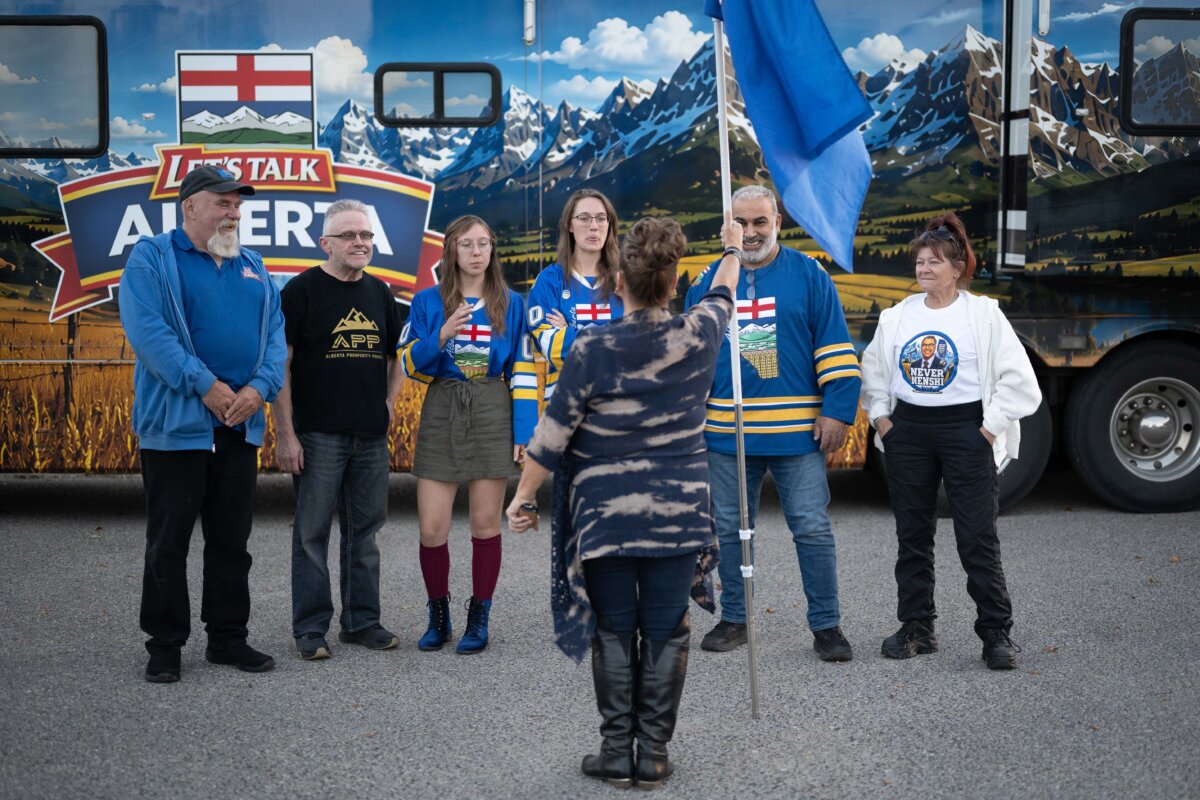

CALGARY/CZAR/DRUMHELLER/HANNA/WAINWRIGHT, Alta.—While a strong majority of Albertans have voted for the province to remain within Canada, voters on both sides say the separation issue isn’t going away.
“I don’t think it’s going anywhere. It might be dormant for a couple years, but I think it’ll be back,” pro-separation voter Callahan Charlton of Czar told The Epoch Times, after casting his vote at a polling station in his town, located about 250 kilometres southeast of Edmonton.
Edmonton resident Cody Roberts, who voted for Alberta to stay within Canada, said he thinks those who believe firmly in separation will continue to be active.
“People are definitely going to be holding onto their opinions,” he said.
Vicky Noronha of Drumheller, who didn’t want to disclose how she voted, similarly thought that the issue is here to stay.
“It might die down a little bit, but I don’t think it’s going to go away,” she told The Epoch Times. “To be honest, there’s enough people that are going to make enough noise about it to keep it going.”
The Oct. 19 referendum asked voters whether Alberta should remain in Canada or start the process of holding a legally binding referendum on separation.
Preliminary results show about 76 percent of voters want the province to remain a part of Canada, while 24 percent want a binding referendum on separation.
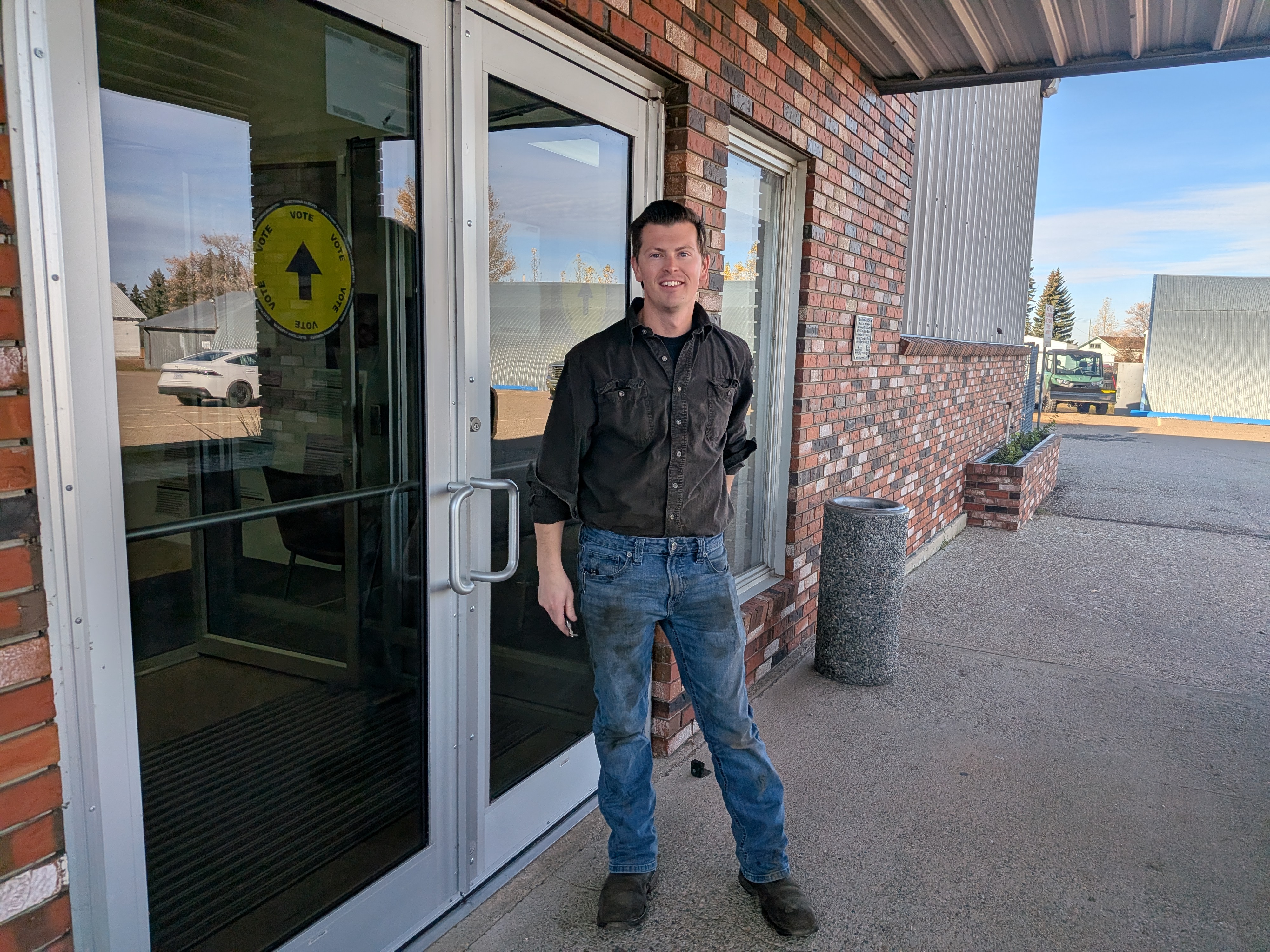 Callahan Charlton stands outside a polling station in Czar, Alta., on Oct. 19, 2026. (Paul Rowan Brian/The Epoch Times)
‘We’ve Been Used as an ATM’
Support for separation differs sharply between rural and urban voters, with significantly higher support among rural Albertans.
Czar resident Danny Dambrowsky, who like many others in his town supports separation, also said that the movement is here to stay.
“We’ve been used as an ATM, except we don’t even have a say because we don’t agree with most of Canada,” he said, pointing to the national equalization program that Alberta is a net-contributor to. “So maybe if we don’t agree, maybe we should just move on.”
In Hanna, a small town about 200 kilometres northeast of Calgary, Darcy Vold who works in the oil and gas industry said he strongly supports Alberta independence and believes the separatist movement will “absolutely not” lose momentum.
“I don’t think it will die down to be honest. People are fed up and I only hope this builds the movement stronger,” he told The Epoch Times outside a polling station in Hanna.
He said he supports Alberta independence because “the West doesn’t have a say in federal elections.”
“If you’re outside the GTA your concerns are blown off, the election is over by the time it hits Ontario,” Vold said.
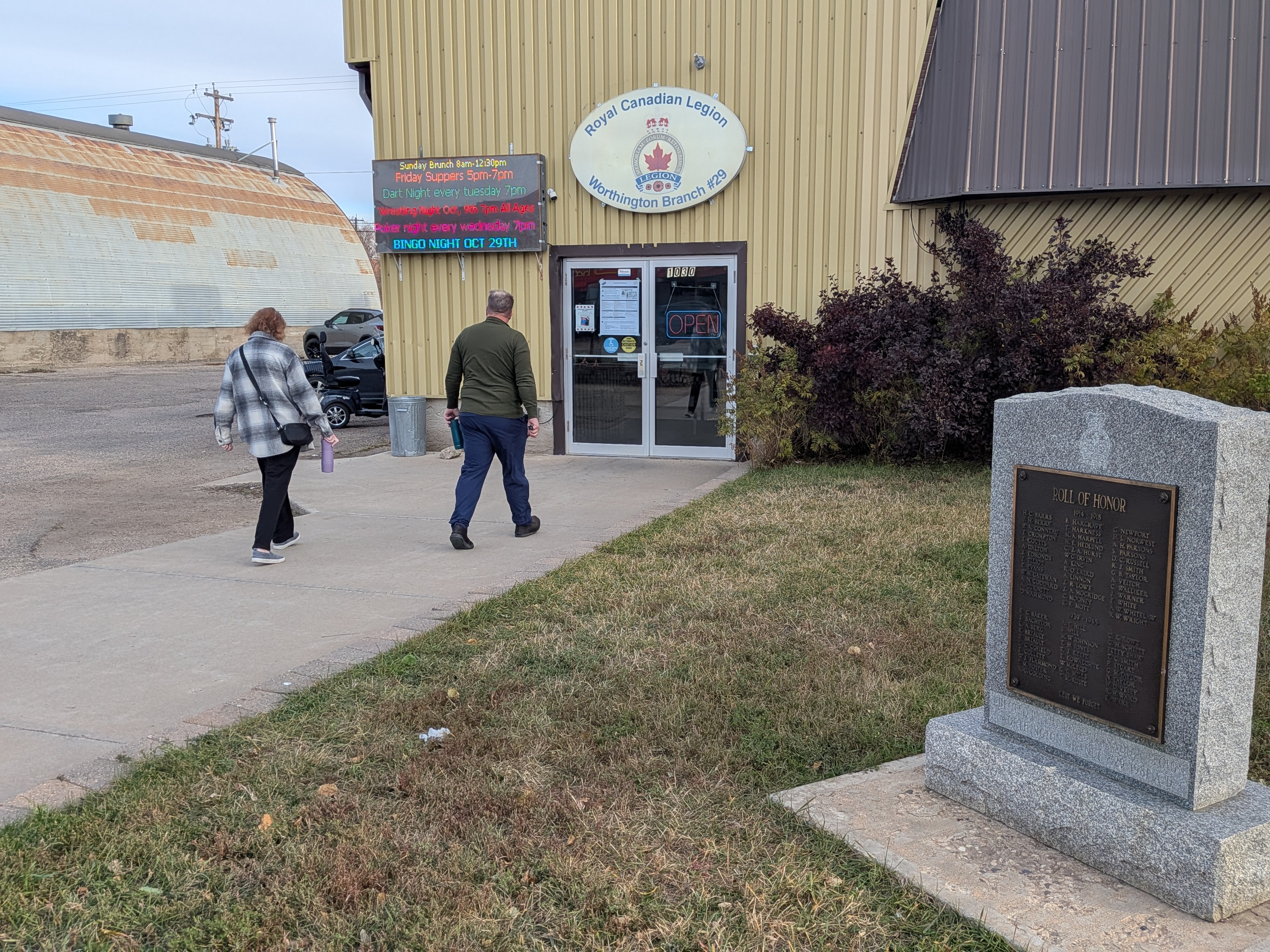 Voters enter the Royal Canadian Legion in Wainwright, Alta., on Oct. 19, 2026, to vote in the provincial referendum. (Paul Rowan Brian/The Epoch Times)
‘A Waste of Taxpayers’ Money’
Kat Smith of Wainwright, about 200 kilometres southeast of Edmonton, said she backs staying in Canada but doesn’t believe the referendum will settle the issue.
“There’s too much history in Alberta to leave it all behind,” she said.
Many of those opposed to separation objected to the question about separation being included on the referendum ballot, saying it wasn’t necessary.
Hanna resident Rhonda King said she supports the province’s governing United Conservative Party but doesn’t agree with the necessity of holding a referendum. She backs staying in Canada.
“I feel like it’s a waste of taxpayers’ money, even holding this referendum. But I’m here to make my voice known,” she said in an interview outside a polling station.
Alberta Premier Danielle Smith added the separation-related question to the province’s previously scheduled Oct. 19 referendum in May, saying people on both sides of the issue had collected hundreds of thousands of petition signatures.
While pro-independence supporters said they had collected over 300,000 signatures, their application to Elections Alberta for a referendum on the issue was halted by a court, which ruled that the process could not proceed because First Nations had not been properly consulted.
Smith called the court’s decision undemocratic. Although her government appealed the ruling, she said the process could take months or possibly years, and she wanted to allow citizens to use the democratic process to have their petition put to a referendum. Her decision was criticized by the opposition NDP, who said it creates uncertainty and wastes provincial resources.
The 10-question referendum also included proposals to give the province more control over immigration and other policy areas, as well as constitutional reforms, including abolishing the Senate. Smith has said she wants Alberta to remain within Canada but urged residents to vote “Yes” on the other proposals to increase the province’s autonomy.
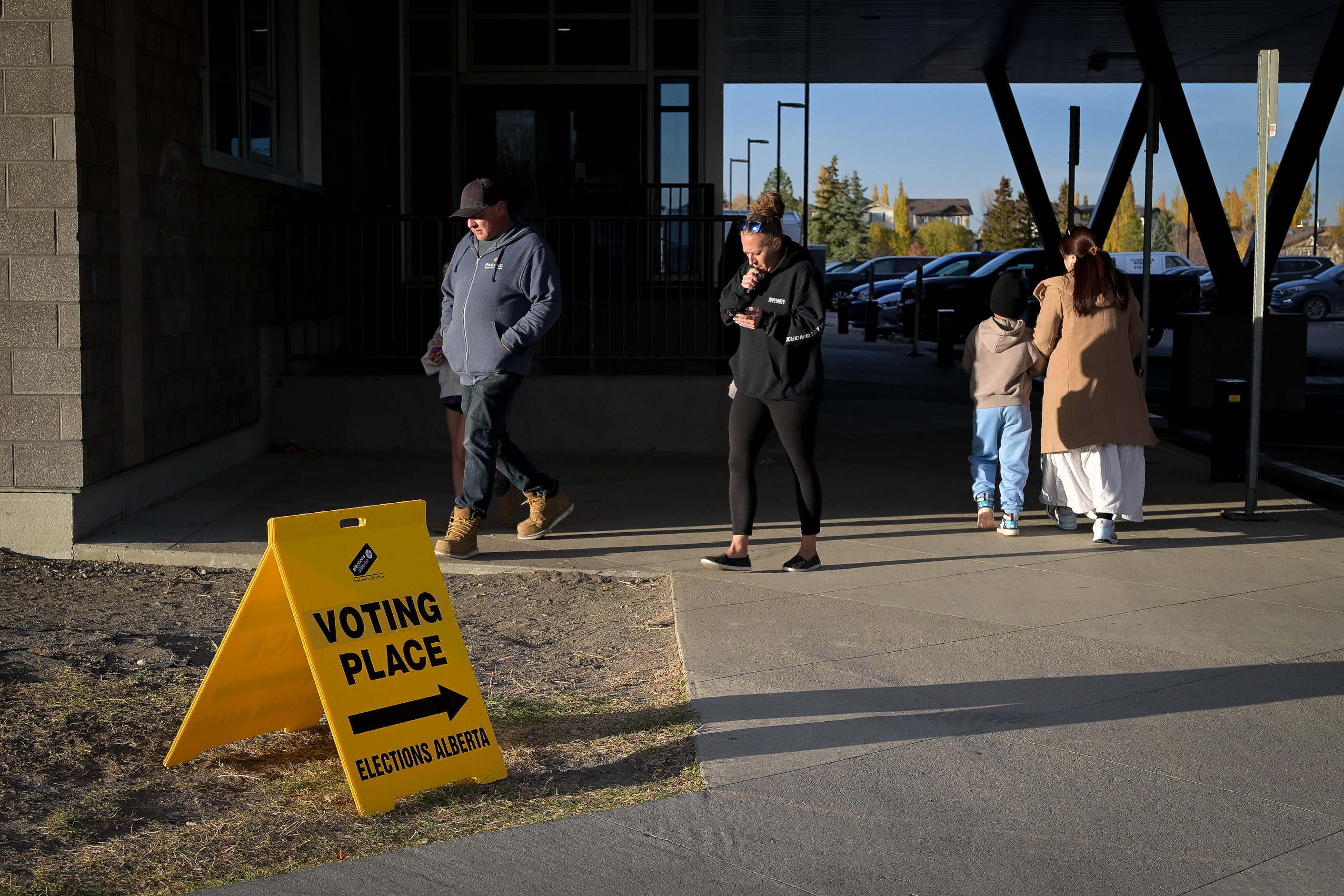 A referendum voting station at the Marshall Springs School in Calgary on Oct. 19, 2026. (Carlos Herrera for The Epoch Times)
In Calgary, Kartik Bharti said he voted to remain in Canada, adding that he voted “Yes” on some of the other nine questions.
He said he urged his friends to vote “Yes” on giving Alberta more control over immigration.
“Being an immigrant myself, I completely agree that the immigration at a certain level went way out of control,” he said in an interview.
As for the referendum on separation, Bharti said the fact that it’s even being held at all concerns him, as he believes it creates uncertainty.
“I remember the situation with Quebec. It happened, and we all know all the multinational companies ended up pulling their funding. Their corporate headquarters moved to Toronto. Imagine the same thing happening in Calgary,” he said.
Roberts, the Edmonton resident, said he doesn’t feel the referendum was necessary and that separation would be costly and disruptive. On the nine questions, he said that while some address what he considers valid provincial concerns, he doesn’t support giving Alberta’s government more authority, saying he’s concerned with its policy directions.
“I’ve not seen that this sitting government has used what power they have very justly,” he said.
Noronha, the Drumheller resident who didn’t disclose how she voted, said the referendum was needed to give citizens a voice.
“It kind of makes people feel like they’re being heard or their concerns are being noted, instead of just being completely ignored, whether the concerns are valid or not,” she said.
‘We’ve Been Held Back’
Pro-independence organizer Keith Wilson said the culmination of the referendum concluded “a campaign, but the conversation about Alberta’s future in Canada” continues.
“The concerns that Albertans have today about how we’re treated within Confederation did not begin with this referendum. It began over 100 years ago,” he said on Oct. 19 in an apparent reference to the time of the province’s founding in 1905.
“For too long, many of us have felt that we’ve been held back, not by forces beyond our control, but by forces in Ottawa that are able to make policies and decisions that affect us, for which we really don’t have true democratic representation, because we don’t have a functioning Senate, and we only have legislative body that’s driven by population.”
‘Very Pleased’
Premier Smith said she is “very pleased” to see the “widespread support for remaining in Canada.”
“Albertans have voted for a stronger Alberta in a united Canada,” she said. She said she will address the province about the referendum on the evening of Oct. 20.
Prime Minister Mark Carney said Albertans “made a clear choice” in the referendum.
“They chose unity, to build together, and to take care of each other,” he said in a statement after the referendum.
“While vote on all questions continue to be tallied, tonight’s results on the defining question of separation mean that Albertans and all Canadians will move forward together with renewed purpose and high ambition.”
 Friends Read Free
Copy
Facebook
Tweet