

Disposable vaping devices will effectively be made legal in New Zealand after the government was forced to scrap a regulation that required any vape sold in the country to have a removable battery.
The backdown comes after Mason Corporation, which owns the vape store chain Shosha, took the issue to the High Court.
The government defended the action, but Associate Health Minister Casey Costello confirmed Crown Law had advised Cabinet that dropping the 2023 regulations was the “best way to resolve the case.”
The regulation, which was introduced by the previous Labour government, effectively outlawed disposable vapes, which have an integral battery designed to be thrown away when the vaping liquid is exhausted.
Costello said she didn’t expect the change would “negatively impact [New Zealand’s] falling smoking or vaping rates.”
However, according to New Zealand Health Survey (NZHS) data for 2023/24, daily vaping prevalence among adults aged over 15 years increased from 3.5 percent in 2019/20 to 11.1 percent in 2023/24.
This represents an estimated 480,000 people currently vaping daily.
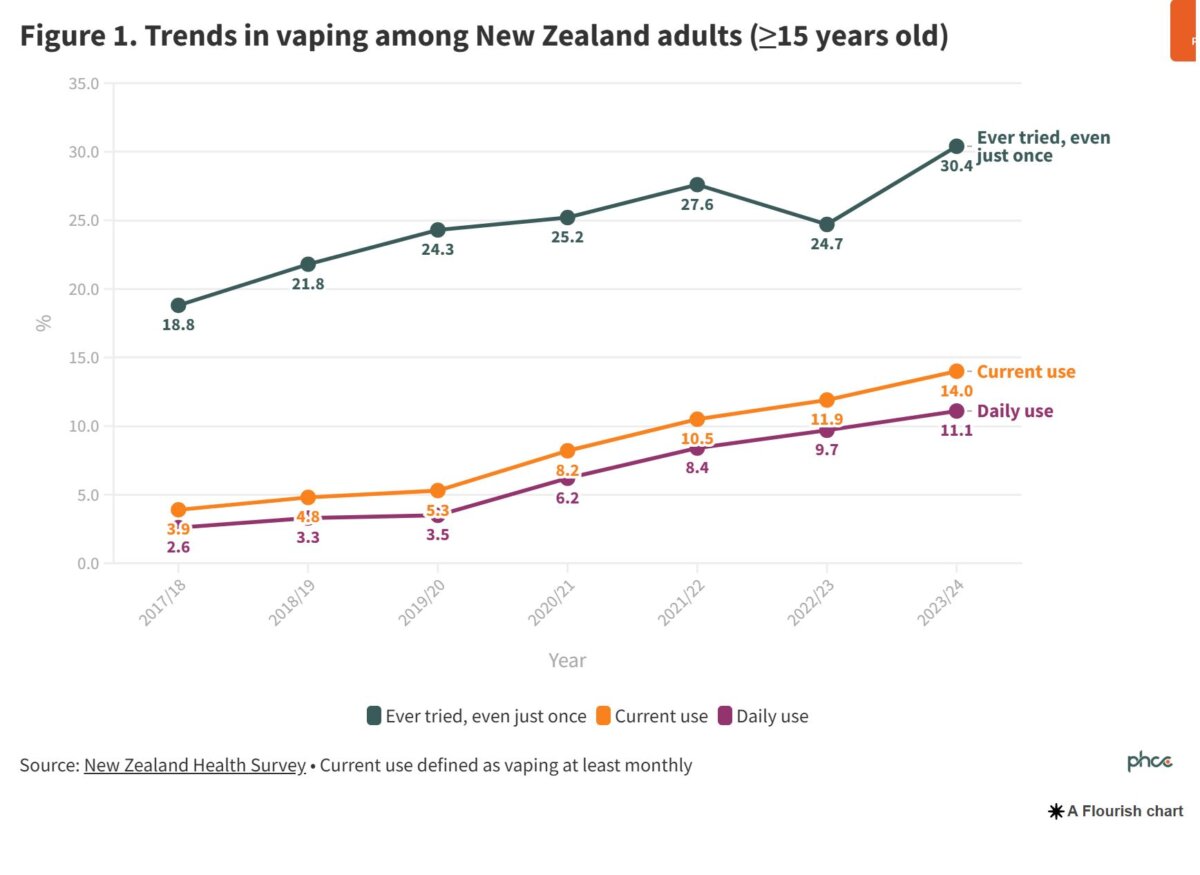
Vaping prevalence was particularly high among younger age groups, Māori and Pacific peoples, and people living in neighbourhoods with higher levels of deprivation, the study showed.
It also revealed that the rate of increase in vaping has been greater than the decrease in smoking, casting doubt on the argument that the availability of vapes is an aid in weaning people off cigarettes and not, in themselves, attract a new market to smoking.
The prevalence of people smoking daily and/or vaping daily between 2018/19 and 2023/24 went from 15.1 to 16.8 percent. The study suggested this change was likely driven by substantial increases in vaping among 15 to 24-year-olds.
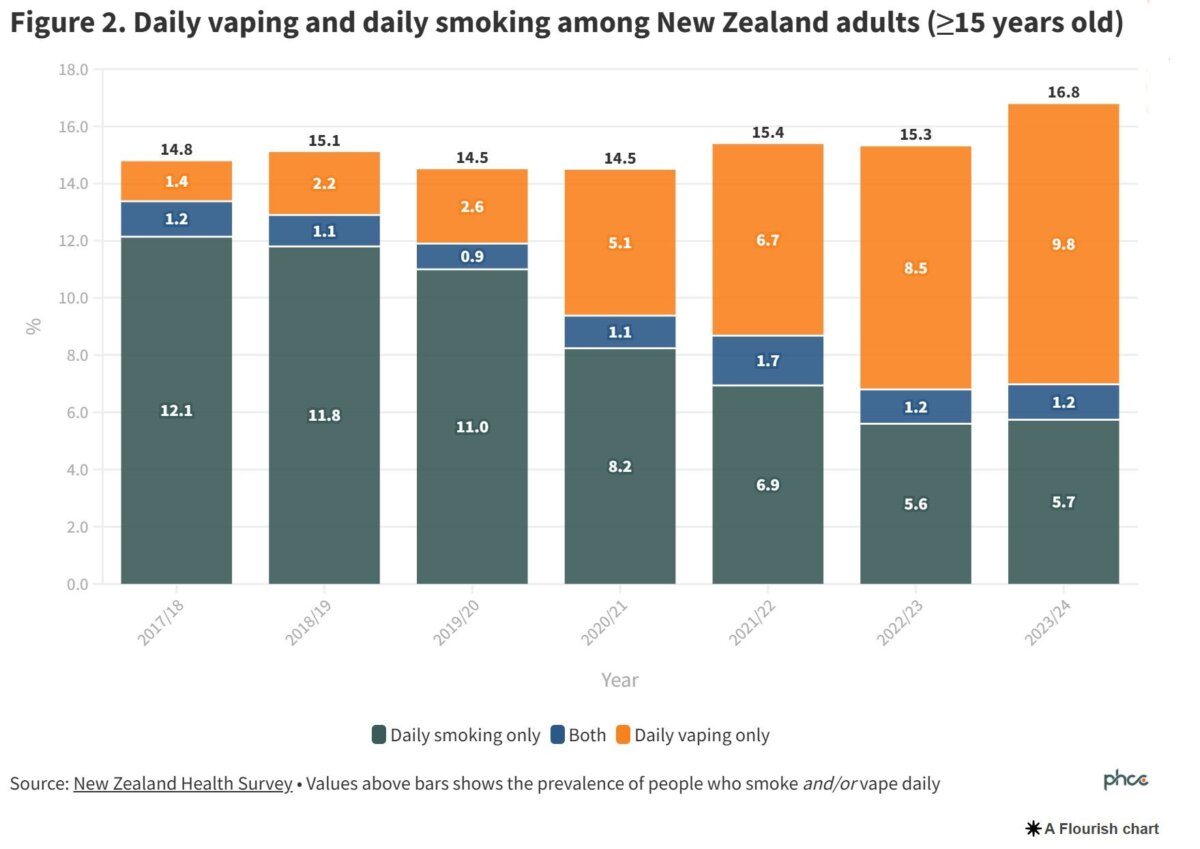
The prevalence of smoking and/or vaping among 15 to 24-year-olds was about 15 percent in 2017/18. It then increased to roughly 24 percent from 2021/22.
“The increase was due to a large increase in daily vaping prevalence, much greater in absolute terms than the decline in smoking prevalence,” the study says. “In contrast, there was no statistically significant change in prevalence of daily smoking and/or daily vaping for other age groups.”
The large rise in vape use among younger people suggested that “much of the increase is due to people who have never smoked taking up vaping, rather than people using vaping as a substitute for smoking,” the report said.
“The findings highlight the importance of continuing to evaluate and, where necessary, strengthen the regulatory framework for vaping products so people who do not smoke, particularly young people, are protected from becoming addicted to vaping, while people who smoke and wish to switch to vaping still have reasonable access to these products.”
 Friends Read Free
Copy
Facebook
Tweet
Friends Read Free
Copy
Facebook
Tweet