
Although drug seizures in the United States have risen slightly year-over-year, according to U.S. Customs and Border Protection (CBP), traffickers continue to find increasingly ingenious ways to bring narcotics into the country.
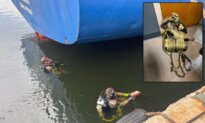
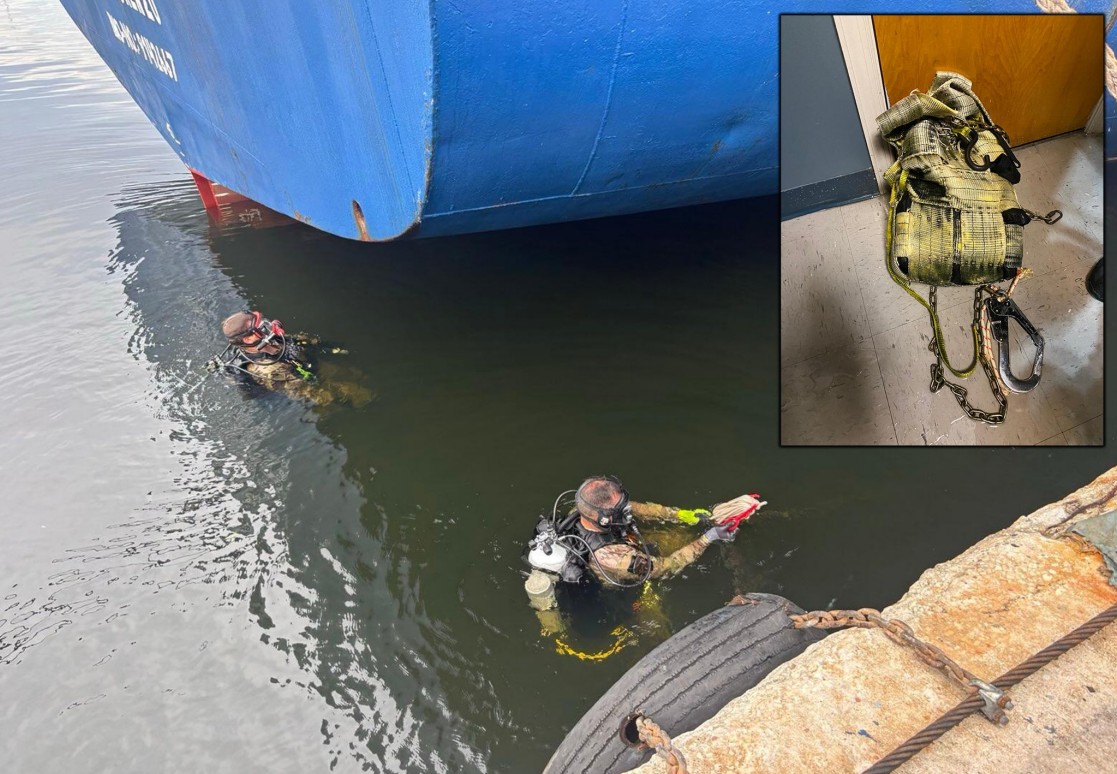
U.S. Border Patrol (USBP) Chief Michael Banks said in a Sept. 25 post on X that his agency’s Border Patrol Search, Trauma, and Rescue Unit (BORSTAR) used specialized underwater cutting tools to extract 8 pounds of cocaine from the belly of a ship in the port of Miami two days earlier.
“USBP’s BORSTAR dive team plunged beneath Miami waters and discovered a parasitic load strapped to the hull of a vessel arriving from the Dominican Republic,” Banks said. “CBP Office Field of Operations seized the drugs. Our specialized team made history with their first ever parasitic drug seizure. This marks an innovative advancement to continuing narcotics interdiction efforts.”
In a practice known as parasite smuggling, drug cartels put narcotics into waterproof, often vacuum-sealed bags, which are hidden in compartments below the water line on ocean-going vessels such as container ships.
When the vessel reaches its destination port, divers working for cartels are sent down to retrieve the packages. The ship’s crew and owners are oblivious to the entire operation, hence the use of the term parasite.
“This does not surprise me at all,” Brian Townsend, a retired Drug Enforcement Administration (DEA) special agent, told The Epoch Times. “Organizations are always looking for new ways to smuggle drugs. They shift quickly and adapt all the time to avoid enforcement and our interdiction operations.”
Interdictions have intensified, especially this past year, and traffickers are looking to “mix their tactics to avoid single points of failure,” he said. “I wouldn’t look at parasite smuggling as a replacement for other methods, I see it as a supplement that diversifies risk.”
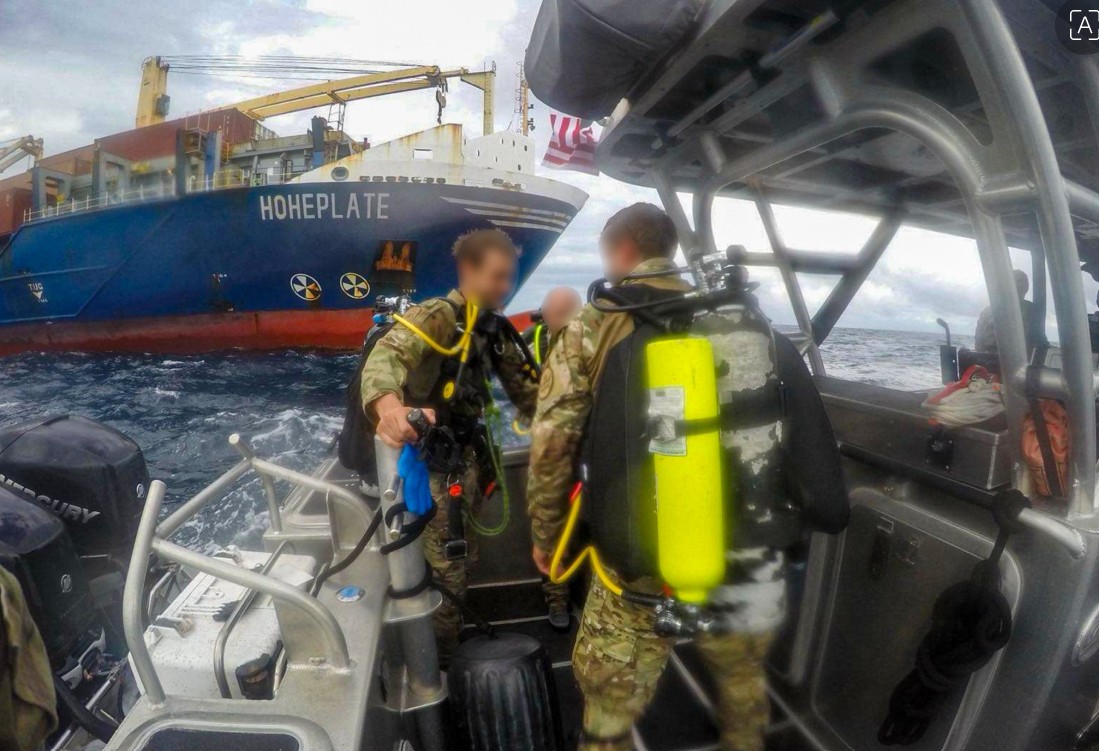
The Hoheplate, a ship registered in Antigua and Barbuda, was used by the parasite smugglers. The vessel traveled to Miami from Haina Occidental Port in the Dominican Republic.
Jim Weber, a former narcotics investigator with the Department of Homeland Security and founder of Streetwise Consulting, said parasite smuggling was an unconventional method.
“There are pros and cons to every method of smuggling,” Weber told The Epoch Times, noting that while the method was difficult to detect by law enforcement, it did not have the scope for trafficking substantial quantities of drugs.
“Do you want to stick it in a cargo container and move massive quantities with a higher probability of getting intercepted?” Weber said. “Or do you want to go with a bit of a lower quantity that is more covert, and smuggled less conspicuously?”
A CBP spokesperson told The Epoch Times that the agency is “acutely aware of and actively combats sophisticated methods employed by transnational terrorist organizations to smuggle illicit narcotics to the U.S. and Europe, including ‘parasite smuggling.'”
Cocaine-Focused Smuggling
Last month, The Times of London reported that six Albanian divers were arrested in 2023 as they attempted to recover 330 pounds of cocaine from a ship, the Nordloire, which arrived at the port of Husnes, Norway, from Brazil.
The U.S. market is closer to Latin America than Europe, and makes a natural target for parasite smugglers.
CBP reported the total amount of drugs seized between October 2024 and September 2025 was 583,256 pounds—up from 573,469 pounds over the previous 12 months—which included 185,004 pounds of marijuana and 170,119 pounds of methamphetamine.
There was a noticeable drop in fentanyl seizures, down from 21,889 pounds in 2023/2024 to 12,027 pounds in 2024/2025.
In August, Mexico City criminal defense attorney Ilan Katz told The Epoch Times the Mexican government had made a “titanic effort” against fentanyl traffickers.
“Seizures are up in Mexico, and seizures are down in the [United] States,” Katz said.
In most instances of parasite smuggling, it appears the drugs being carried are cocaine, from South America, rather than fentanyl.
CBP’s ‘Multi-Layered Strategy’
The CBP spokesperson said it works closely with the United States Coast Guard and Homeland Security Investigations (HSI), and uses a “multi-layered strategy to detect and interdict parasitic smuggling.”
“Intelligence teams vet arriving vessels and when the vessel arrives in port, CBP deploys underwater remotely operated vehicles and dive teams based on the vessel’s itinerary, country of origin, and any additional intelligence,” he said, and if narcotics are discovered, HSI and U.S. Coast Guard Investigative Service are notified.
Townsend said he expected the traffickers to refine their smuggling technique to adapt to CBP’s methods.
Compared to other smuggling methods, including trucks, tunnels, drones, international mail, and mules traveling by air, parasite smuggling has a lot of downsides for smugglers. It can only cope with relatively small payloads, and involves a lot of risks, Townsend pointed out.
It requires skilled divers to attach and retrieve the loads, and there was a lot of danger involved when working near propellers and ship intake pipes, he said.
Due to the money involved, divers are still willing to take on the risk.
“The returns are so lucrative that it is believed that the same diver who places the package later flies to the other end of the world where the vessel calls and extracts the package personally,” wrote Harshvardhan Kumar, a former ship’s captain who is now an executive marine surveyor with insurance loss adjusters.
Many countries provide for a pre-departure underwater inspection of ships, with a video recording being given to the captain as proof of having a clean hull, he wrote on his company’s blog.
“This recording can be given to the authorities in the next port to placate their concerns,” Kumar said.
Townsend said CBP and other agencies needed to be constantly vigilant at ports, and also needed to regularly change things up.
“Traffickers are very good at determining our schedule and patterns and how to exploit it,” he said.
In an interview conducted by his agency and published in June, Banks said Border Patrol faced an “immense challenge” because of the previous administration’s border policies.
“Every president since I’ve worn a uniform has done something to advance border security. Some at a greater level than others. But every one of them did something to advance border security,” Banks said. “The Biden administration did the exact opposite. They regressed border security, so, you’re coming into the Border Patrol at a time when morale is at an all-time low.”
 Friends Read Free
Copy
Facebook
Tweet
Friends Read Free
Copy
Facebook
Tweet