
The European Central Bank (ECB) has warned that non-bank financial firms and companies hit by trade and energy shocks could heighten market stress and pose greater risks to eurozone banks.
The findings were published on May 27 in the ECB’s Financial Stability Review, as the war in the Middle East and energy supply disruptions continue to pressure Europe’s economy.
The bank said that risks remain high among hedge funds, insurers, pension funds, and private investment firms because many have limited cash reserves and hold assets that could be difficult to sell quickly during market turmoil.
A sudden loss of investor confidence, the review said, could force companies to rapidly sell assets, increasing instability across financial markets.
“The current energy supply shock poses upside risks to inflation and downside risks to economic growth,” ECB Vice President Luis de Guindos said. “It could also increase market volatility and challenge debt servicing capacities as financing costs rise in an environment of weaker economic growth.”
The review comes as European policymakers monitor the economic fallout from the war in the Middle East, volatile oil markets, and growing geopolitical uncertainty across economies.
ECB President Christine Lagarde said last month that business confidence and economic growth had weakened since the Middle East conflict began.
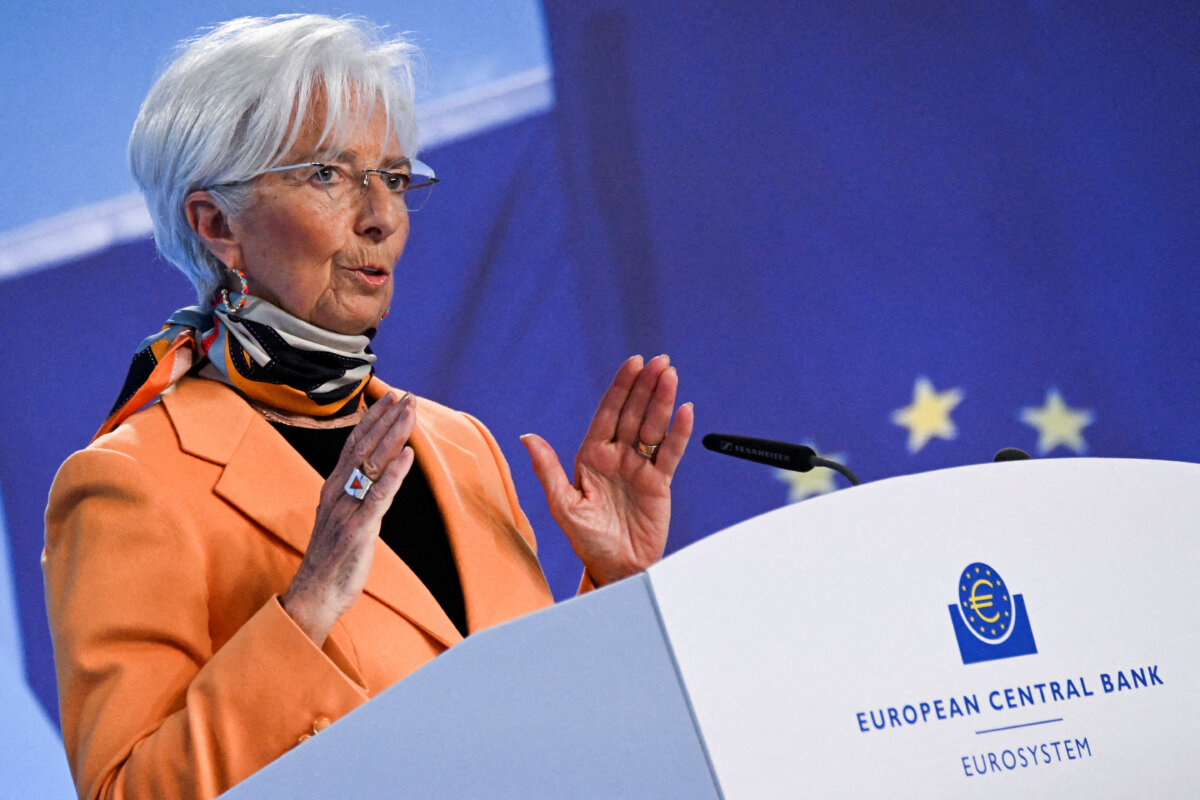
The ECB left interest rates unchanged on April 30 after eurozone inflation rose to 3 percent in April, up from 2.6 percent in March, and energy inflation soared to 10.9 percent from 5.1 percent the previous month.
Liquidity Risks
The ECB said non-bank financial institutions have so far remained relatively resilient despite recent geopolitical shocks. However, it said the sector could become a source of instability if markets deteriorate sharply.
If investors panic, companies could be forced to sell assets rapidly, pushing prices down further and increasing stress across financial markets. The ECB also stated that private markets are often difficult to fully track and are closely connected globally, especially to the United States, raising the risk that financial problems could spread across countries and sectors.
S&P Global estimates that global private market assets under management grew to roughly $15 trillion in 2024, while the broader private markets are projected to reach more than $18 trillion by 2027.
European investors with exposure to U.S. private debt could face losses and heightened funding pressures, the ECB said, and broader fears about private markets could also spill over into other areas, such as risky corporate bonds.
The review stated that growing links between private markets and insurers or pension funds could increase the risk of financial stress spreading through the wider financial system.
Banks Resilient but Exposed
The ECB said eurozone banks remain profitable and well-prepared to handle market shocks, as many still have strong cash reserves and financial cushions despite recent volatility.
Deutsche Bank last month reported a capital ratio of 13.8 percent in the first quarter of 2026.

French bank BNP Paribas said on April 30 that its ratio stood at 12.8 percent as it works toward a 13 percent target by 2027.
However, the ECB review warned that banks remain indirectly exposed to sectors sensitive to trade disruptions, rising interest rates, and energy costs.
Companies operating in manufacturing, transport, and energy-intensive industries remain particularly vulnerable, the bank said, if geopolitical tensions continue disrupting supply chains and commodity markets.
The ECB also warned that cybersecurity threats and attacks on critical infrastructure are increasing in the current geopolitical environment.
Energy Shock, High Debt
The ECB said the war in the Middle East has created a major “geoeconomic shock.” It said financial markets have so far absorbed the economic and energy disruptions relatively well.
But the bank warned that investors may be underestimating the risks from war, political uncertainty, and rising government debt.
The ECB said markets could become more volatile if confidence weakens, especially in heavily indebted eurozone countries facing higher borrowing costs.
Several eurozone governments continue to face high debt burdens following years of COVID-19 pandemic spending, energy subsidies, and slower economic growth.

Italy’s public debt, according to IMF May 27 data, increased to about 137 percent of gross domestic product at the end of 2025.
France’s public debt is set to increase to some 120 percent of gross domestic product by 2027, up from 115.6 percent last year, according to the EU’s May 21 forecast.
The ECB warned that increased fiscal spending in response to geopolitical crises could trigger a repricing of sovereign debt risk in heavily indebted countries.
 Friends Read Free
Copy
Facebook
Tweet
Friends Read Free
Copy
Facebook
Tweet