
The forestry industry claims that the Environmental Protection Authority (EPA) has shut down forestry operations across New South Wales (NSW) because it allowed insufficient time to comply with new rules protecting the habitat of the endangered greater gliders.
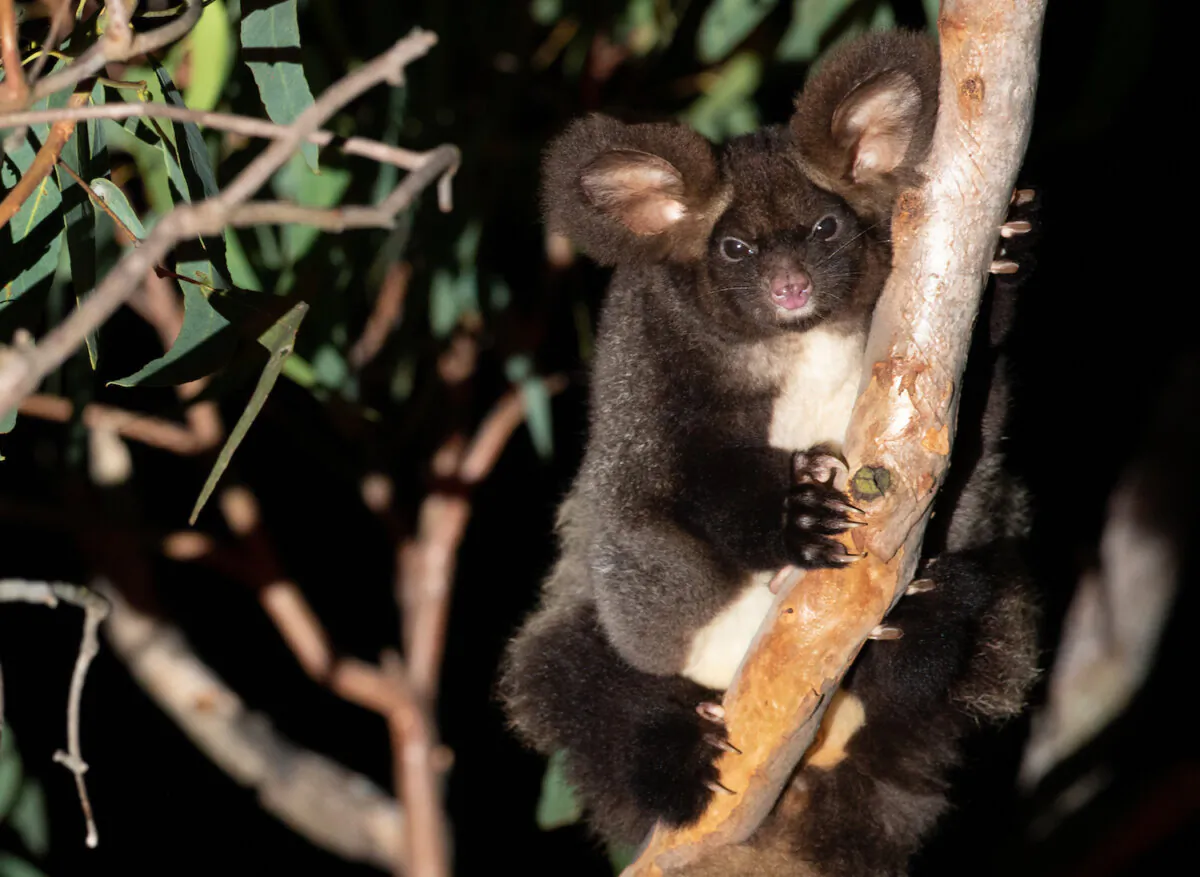
The marsupial was listed as endangered in July 2022, having previously been listed as vulnerable. Populations have declined by 80 percent in the past 20 years.
A new rule requires the protection of any tree in which a glider is spotted and the creation of a 25-metre logging exclusion zone around it. The protection is temporary and lasts for the duration of a forestry operation.
The government-owned Forestry Corporation suspended 15 harvesting operations in state forests almost two weeks ago, claiming it had no time to conform to the EPA’s new rule. The industry says the cost is already crippling, with no end to the suspension in sight.
The Corporation said it warned the EPA of the risk of shutdowns unless it was given more time to implement the latest rule changes, but the Authority says the Corporation was afforded procedural fairness before they were announced.
Maree McCaskill from Timber NSW says trucking operators and harvesters contracted by the Corporation are paying the price for “a fight between two government departments.”
She estimates losses at $2,000 (US$1,300) to $4,000 a day for each harvest crew and up to $20,000 a day for haulers with big fleets.
Wood Supply Will Soon Be Impacted
The Australian Forest Contractors Association says the shutdown is the biggest the industry has experienced, outside of emergencies like the Black Summer bushfires.
Spokesperson Tim Lester described the rule change as “huge” and said mill closures and impacts on wood supply are imminent unless the situation is resolved quickly.
In recent months, the industry has been affected by three sets of rule changes related to gliders, and the constant uncertainty is unworkable.
“What we need from the NSW govt … is [a] really holistic and consistent approach that doesn’t end up with one agency essentially playing off another,” he said.
NSW Agriculture Minister Tara Moriarty—who is on the board of the Forestry Corporation—said she’s deeply concerned about impacts on businesses and workers.
“I want agencies to work better together so we can minimise impacts of protocol changes on workers,” she said.
A spokesperson for the NSW government said it had promised an environmental watchdog “with teeth” and support for a sustainable timber industry.
Businesses Can Only Wait For a Resolution
Some businesses, like Anthony Dorney’s in the Bulahdelah area, have been forced to close sawmills, log hauling, and harvesting operations, multiplying their losses.
He says 24 of his 120 workers have been stood down, with losses exceeding $100,000 so far.
His fleet of log-hauling trucks is largely idle, with each vehicle costing about $15,000 a month. He estimates that over 40 truckloads of timber are sitting at a collection point, but the suspension means they can’t be touched.
It’s a terrible impasse, Mr. Dorney says, and one he just wants resolved. His business advisor, Marius Heymann, estimates it won’t be long before the mills run out of wood.
Kirsty Parker, part of a family-run harvesting crew on the mid-north coast, says her business has lost thousands of dollars so far.
“I know Forestry is working on getting this right and we fully appreciate that but we’re making no money and we’ve got families to feed,” she said.
Logging Opposed on Multiple Fronts
Native forest logging in NSW faces intense opposition on many fronts. The Australia Institute is leading the campaign against the Labor government’s continued support for the industry.
Earlier this month, it released a video showing confused koalas walking in circles and trying to climb stumps of logged trees, along with an open letter—signed by more than 100 political leaders, academics, environment, and climate experts—calling on the government to get out of the business of logging native forests.
Businessman and activist Geoff Cousins supports the campaign and said he recently met with Environment Minister Penny Sharpe and Ms. Moriarty, and that both “accept that the status quo cannot continue.”
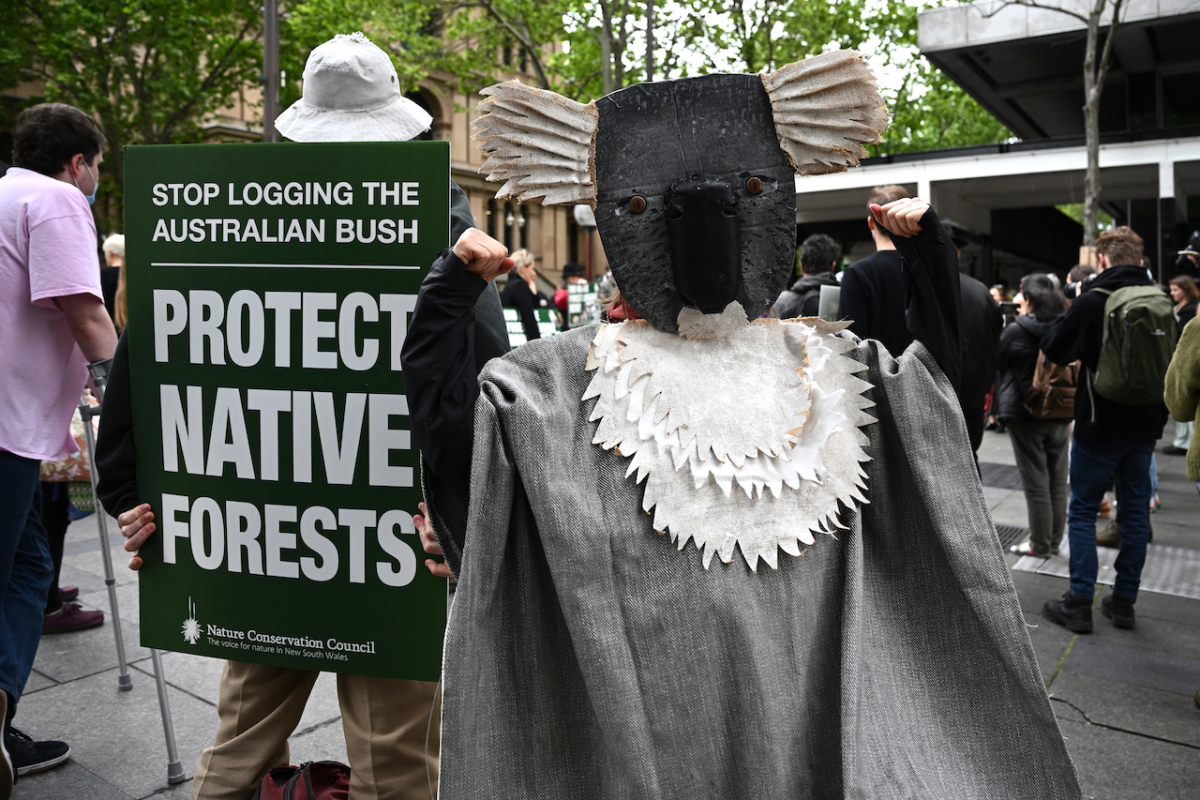
Strong feelings on both sides of the divide have led to confrontations between environmentalists and loggers, with tales of assault and intimidation by forestry workers common.
In May, the NSW Green Party claimed that 78 percent of pre-logging surveys by the Forestry Corporation had been discovered to be non-compliant with their conditions, including in 27 active logging sites across nine State Forests. These had been reported to the EPA.
“The operations that have been reported show that there is a systemic failure by Forestry Corporation to check for habitat trees for threatened greater gliders as required under conditions for logging,” said Greens MP and spokesperson for the environment, Sue Higginson.
The gliders typically come out of their nests in trees within an hour of sunset, glide around the forest at night, and return to their homes at sunrise.
Last year, it emerged that Forestry was conducting its wildlife surveys during the day and did not finding any greater gliders or den trees.
AAP contributed to this report.
 Friends Read Free
Copy
Facebook
Tweet
Friends Read Free
Copy
Facebook
Tweet