
The administrator responsible for Prime Minister Mark Carney’s ethics screen says the prime minister has had 13 potential conflict of interest cases identified, and an ethics screen was applied to six of those cases, adding that the requirement did not apply to the other seven cases.
An ethics screen, also known as a conflict of interest screen, serves as a formal compliance measure for politicians, aimed at preventing any potential conflicts between their private interests and their responsibilities to the public.
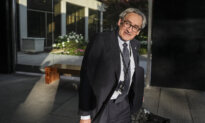
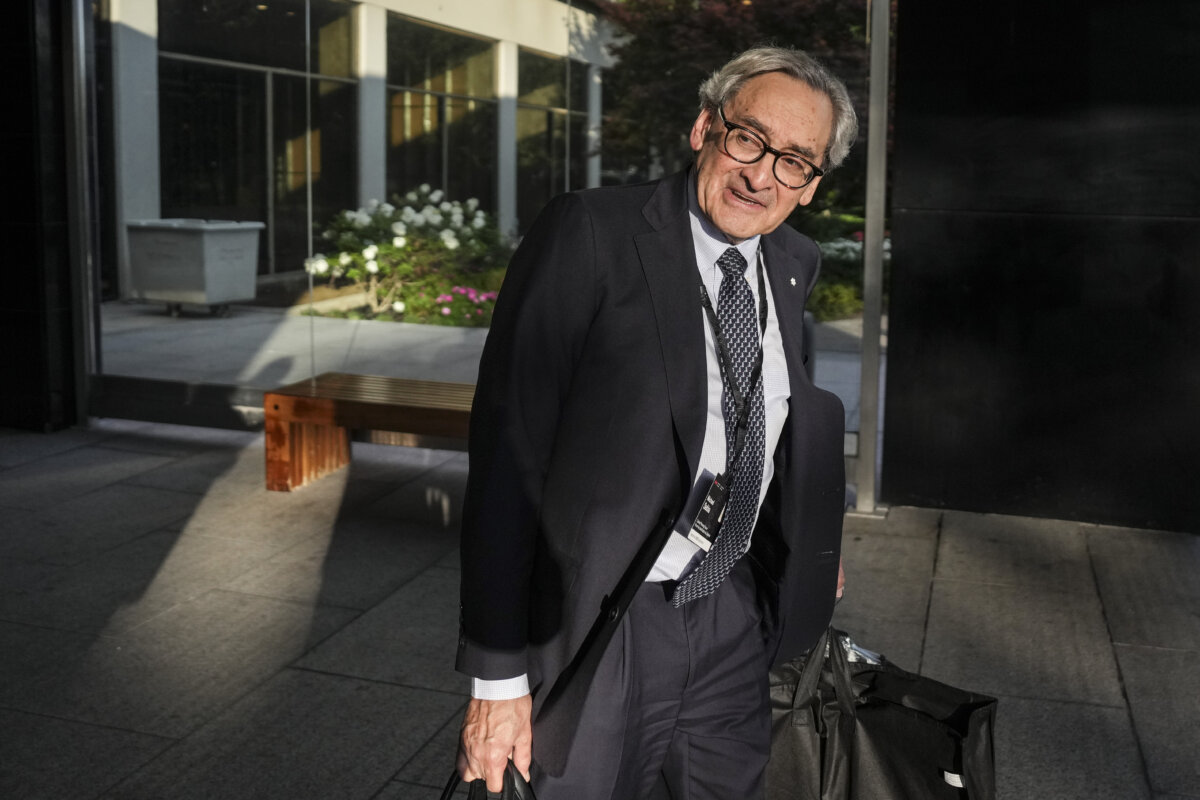
“There are 13 files on which we needed to decide whether or not to apply the screen,” Privy Council Clerk Michael Sabia told MPs as he testified before the House of Commons ethics committee on Nov. 19. “Every one of those 13 files, without exception, was confirmed by the ethics commissioner.”
Sabia said the ethics screen was not applicable in seven of the 13 cases because five “did not have any direct interaction with businesses” and two were related to “general application tax measures.”
The screen was used for the remaining six cases, four of which are still in progress and cannot be further commented on, because Carney cannot be aware of a file prior to a decision being reached, confirmed, and made public, Sabia said.
He noted that the other two screened cases involved adjustments to the government’s tax system, one of which was “in a cross-border circumstance,” and the other involved a “minor change.” In these cases it was determined that companies related to Carney’s assets could benefit from the changes and so the screen was imposed to ensure Carney could not participate in the decision-making process, Sabia said.
Sabia agreed to provide the committee with more details on the cases next week, except for the four cases that are still ongoing. He also agreed to share when the screen is triggered on a regular basis “within reason.” The Conflict of Interest Act doesn’t require Sabia to share such details, but he agreed it could help to improve public confidence.
Sabia and Carney’s chief of staff, Marc-André Blanchard, are responsible for administering the prime minister’s conflict-of-interest screen, and the ethics commissioner is also involved in the process.
The ethics committee is conducting a review of the Conflict of Interest Act to determine whether conflict-of-interest screens and blind trust rules should be amended. Opposition parties have voiced concern about potential conflict of interest since Carney’s entry into politics, noting his extensive past experience on corporate boards and his sizeable assets.
The prime minister has always maintained that he is in full compliance with ethics requirements, including by placing his assets in a blind trust. Public office holders are subject to the Conflict of Interest Act and are required to divest their controlled assets or put them in a blind trust.
Carney worked with the ethics commissioner to set up the appropriate conflict-of-interest screens, for which details were released in July. Carney’s declaration said he and the ethics commissioner agreed the screens would be aimed at “preventing any opportunity” to further his interests or to “improperly further those of Brookfield Asset Management, Brookfield Corporation, and Stripe Inc,” where he was employed prior to entering politics.
The content of the blind trust included a number of shares and stock options in payment processor Stripe, Brookfield, and others. It also lists shares in more than 500 companies held in an investment account managed by a third party.
Sabia Sold His Own Brookfield Shares
Opposition MPs asked Sabia whether he thought the prime minister should be required to divest his assets before taking office, given Sabia himself sold his Brookfield shares.
Sabia said his own assets have been in a blind trust since 2009 and he sold his Brookfield shares within 30 minutes of learning from the ethics commissioner that he had investments in the company. He said he made the decision because it would be “simpler” to administer Carney’s ethics screen if he himself didn’t have Brookfield assets.
“It was more practical to not invest in Brookfield given the prime minister’s position, and given that my role is to protect the prime minister and his institution against the perception of the conflict of interest,” Sabia told MPs.
Bloc Québécois MP Luc Thériault questioned whether Sabia selling his Brookfield assets indicates that he knew there could have been a conflict of interest. Sabia responded that it wasn’t a conflict of interest and it was just “simpler to avoid that appearance.”
“I knew that the prime minister had investments in some of Brookfield’s activities and so, to better manage the screen, I chose to sell my shares,” he said. “So it’s not a matter of a conflict of interest. It was just to simplify things.”
Several opposition MPs pressed Sabia to explain why Carney didn’t sell his assets, to which Sabia responded “that’s why we have the screen.”
“Do you not believe, sir, that when a person runs for prime minister and is that conflicted, should they not divest themselves of all of the assets to ensure that we can have public confidence… that the person who is holding the highest office in the land is not benefiting from the decisions that are being made,” Conservative MP John Brassard, chair of the ethics committee, asked Sabia.
Sabia said it wasn’t “that simple,” noting that given the issues the country is facing today, Canada needs access to “the best talent.” He said there needs to be a balance between ensuring accountability and transparency, while also not creating barriers that make it hard to attract “talented people to come to the aid of the country.”
Noé Chartier contributed to this report.
 Friends Read Free
Copy
Facebook
Tweet
Friends Read Free
Copy
Facebook
Tweet