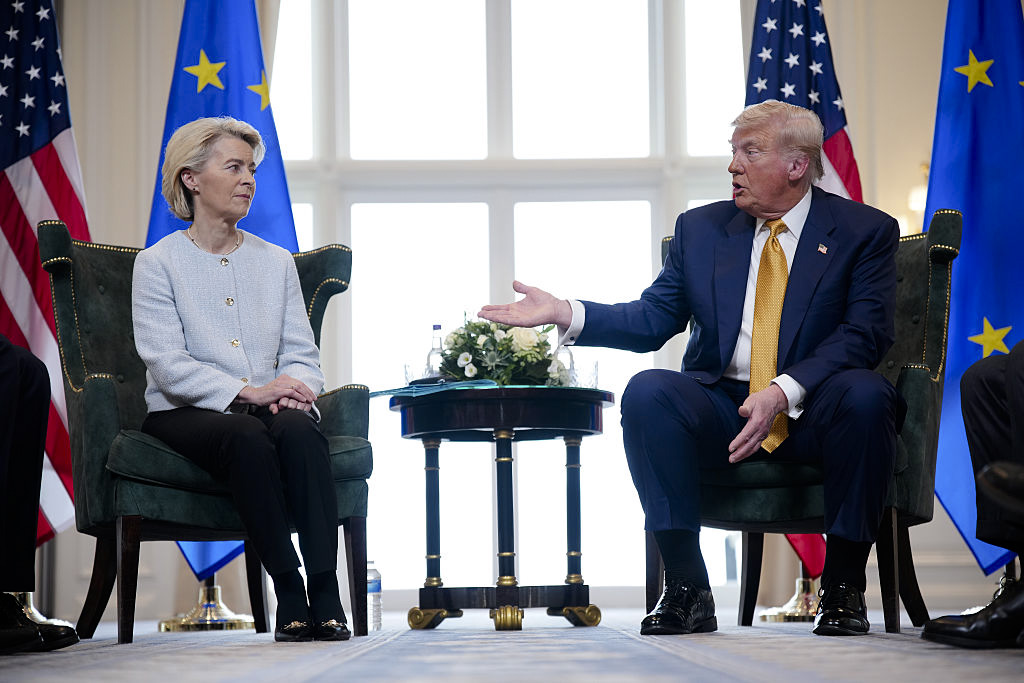

European lawmakers reached a provisional agreement on May 20 to remove import duties on U.S. goods, ahead of President Donald Trump’s July 4 tariff deadline for the bloc to implement its trade deal commitments.
The move brings the European Union closer to implementing tariff elements of the U.S.–EU trade framework agreement agreed politically at Trump’s Turnberry resort in Scotland in July 2025 and detailed in an Aug. 21, 2025, joint statement.
That framework, known officially as the Framework on an Agreement on Reciprocal, Fair, and Balanced Trade, would eliminate EU tariffs on U.S. industrial goods, grant preferential access to U.S. farm and seafood products, and set a 15 percent ceiling on U.S. duties for key European exports, including autos, pharmaceuticals, semiconductors, and lumber.
In return, the EU committed to purchase $750 billion worth of American energy products, including liquefied natural gas, crude oil, and nuclear fuel, through 2028 and to buy at least $40 billion in U.S.-made artificial intelligence chips for European data centers. The EU also pledged an additional $600 billion of investment into the U.S. economy and said it would substantially increase procurement of U.S. military and defense equipment, a move that both sides said would deepen transatlantic defense industrial ties and strengthen NATO interoperability.
Von der Leyen said in a May 20 post on X that the bloc “will soon deliver” on its part of the deal.
“I now call on the co-legislators to move swiftly and finalise the process,” she said. “Together, we can ensure stable, predictable, balanced, and mutually beneficial transatlantic trade.”
The deal now heads toward formal approval by EU lawmakers and member states in the coming weeks. If adopted, the tariff reductions could take effect before Trump’s July 4 deadline for the bloc to fulfill its commitments under the agreement.
The European People’s Party (EPP), the largest political group in the European Parliament, welcomed the agreement and said it would help prevent a larger trade dispute between the United States and Europe.
“The deal is done, and European businesses will finally have the certainty they have been waiting for,” the EPP Group wrote in a May 20 post on X.
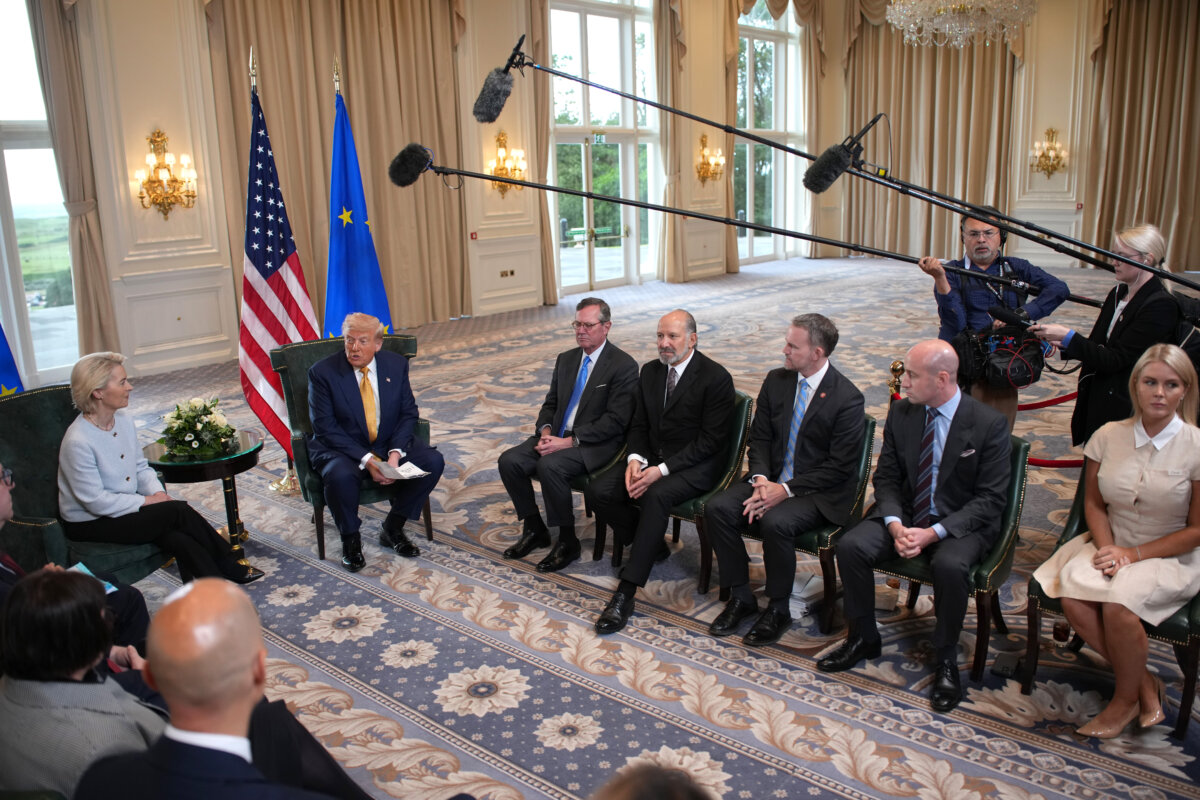
Zeljana Zovko, the EPP’s lead trade negotiator on the agreement, said the framework provides “stability, predictability and legal certainty” while allowing room for additional talks on unresolved disputes involving steel and aluminum tariffs.
‘Reliable Trading Partner’
The announcement by the EU follows Trump’s warning earlier this month that the EU must complete its obligations under the agreement or face higher U.S. tariffs.
In a May 7 Truth Social post, Trump said he had spoken with von der Leyen and warned that tariffs would “immediately jump to much higher levels” if the bloc failed to comply by July 4.
Trump said the original agreement called for the EU to reduce tariffs on U.S. industrial goods to zero. He also previously threatened to raise tariffs on EU automobiles to 25 percent if negotiations stalled.
European Trade Commissioner Maros Sefcovic said in a May 20 statement that the agreement protects European economic interests and showed that the EU is “a reliable trading partner.”
The latest agreement followed months of political disputes and delays inside the European Union. The European Parliament paused ratification efforts twice this year.
The first pause came in January after Trump threatened additional tariffs on several European countries that opposed his proposal to acquire Greenland, an autonomous territory of Denmark.
A second pause followed in February after Trump announced a 15 percent global tariff following a U.S. Supreme Court ruling limiting his emergency tariff powers.
Negotiators inside the European Parliament sought stronger protections before approving the tariff reductions. Some lawmakers pushed for a sunrise clause that would delay EU tariff cuts until the United States fully implemented its side of the agreement.
Others proposed a sunset clause ending the tariff concessions in 2028 or provisions allowing the EU to suspend the arrangement if Washington violated the deal.

According to EU data, trade in goods and services between the United States and the European Union exceeded 1.8 trillion euros (about $2.1 trillion) in 2025, with more than 4.9 billion euros (about $5.7 billion) in goods and services crossing the Atlantic daily.
The European Commission said investments by U.S. and European firms in each other’s markets surpassed 4.8 trillion euros (about $5.6 trillion) in 2024.
 Friends Read Free
Copy
Facebook
Tweet
Friends Read Free
Copy
Facebook
Tweet