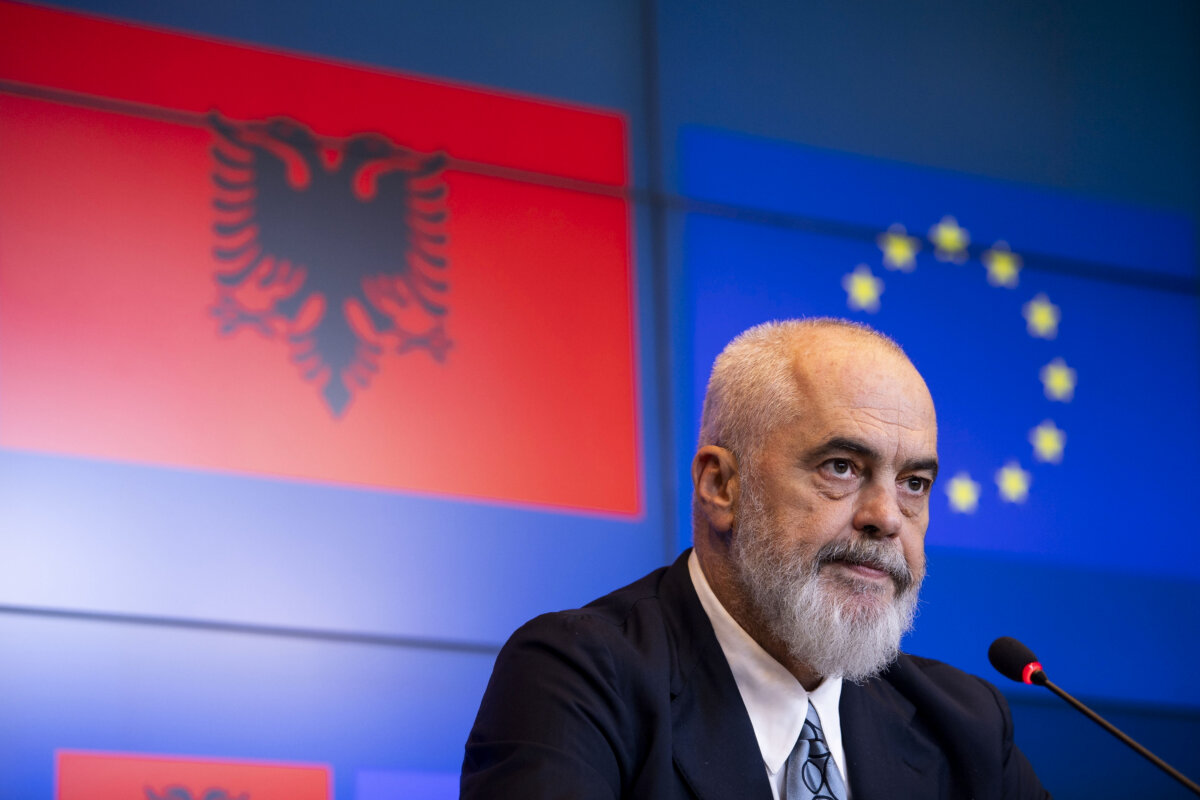
Adding more member states to the European Union (EU) is of strategic importance amid global and economic uncertainty, a top Brussels official said on June 2.
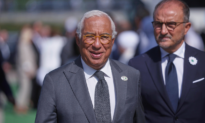
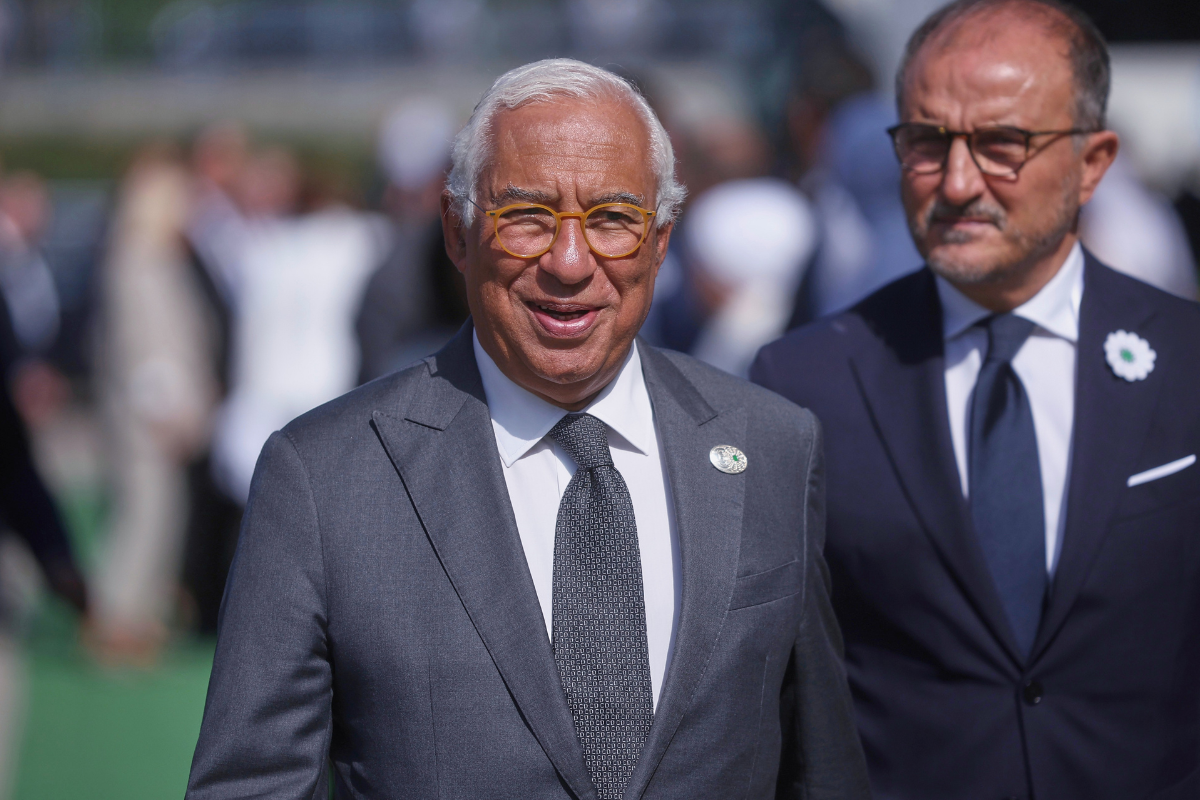
European Council President António Costa said, “in this time of global geopolitical uncertainty and economic instability, more than an opportunity, enlargement is also a geostrategic necessity for Europe.”
“It is an investment in the peace, stability and security of our continent,” he said at a press conference during a trip to Tirana, Albania.
Costa was hosted by Albanian Prime Minister Edi Rama, whose country is in the process of joining the EU, an economic and political union made up of 27 member states.
The European Council president told Rama that last week’s Accession Conference confirmed Albania’s progress in meeting a number of interim benchmarks.
“It is a clear recognition by the member states of Albania’s commitment to further advance on the path towards membership of the European Union,” Costa said.
“The European Union has forged lasting peace and stability for its member states through resilient democratic institutions and strong economic bonds,” he added. “Enlargement offers those same opportunities to our neighbors in Europe—like Albania.”
Costa later wrote on a post on X that Albania “is making fast [and] concrete progress towards EU accession.”
“As we gear up to the EU-Western Balkans Summit this Friday, now is the time to further advance on the path towards enlargement,” he said.
The EU-Western Balkans summit will be held in Tivat, Montenegro, on June 5, and is intended to “[reaffirm] the strength of the EU’s relationship with the Western Balkans,” according to the European Council.
Candidate Countries
Albania is one of six Balkan nations currently in the process of joining the EU. Candidate countries are Albania, Bosnia and Herzegovina, Montenegro, North Macedonia, and Serbia. Kosovo is a potential candidate that has applied to join the EU, but has not yet been granted candidate status.
Georgia, Moldova, Turkey, and Ukraine are also candidate countries.
Following the European Commission’s release of its last annual enlargement report, Commission Vice-President Kaja Kallas said in a November 2025 statement that new countries joining the bloc by 2030 “is a realistic goal.”
“Expanding the EU is in our best interest. It’s a long-term investment in our security, economy, and global edge. Through enlargement, Europe can grow its geopolitical power,” Kallas said.
The latest member to join the bloc was Croatia in 2013.
The EU lost a member on Jan. 31, 2020, when the UK officially left the bloc following the June 2016 referendum vote to leave the EU. The UK had been a member since 1973, when the bloc was called the European Economic Community.
Iceland’s Referendum
The EU may soon have another candidate country.
On May 28, Iceland’s parliament voted in favor of holding a national referendum on restarting accession talks with Brussels on Aug. 29.
According to a section on the Icelandic government’s website dedicated to the referendum, voters this summer will be asked to respond yes or no to the question, “Should negotiations on Iceland’s membership in the European Union continue?”
If the Icelandic people vote yes, accession negotiations will begin. Then, if an agreement is reached between Reykjavik and Brussels, “that agreement will be subject to a second referendum on whether Iceland should join the European Union,” the government stated.
If the answer is no, negotiations will not continue.
Iceland had initially applied to join the bloc in 2009, after its banking sector collapsed during the 2008 global banking crisis.
However, Reykjavik abandoned EU membership talks in 2013 when a center-right government came to power. In 2015, Reykjavik asked the bloc to stop regarding Iceland as a candidate for EU membership.
Iceland’s center-left government, which came to power after a snap election in 2024, had promised to hold a public vote on joining the bloc by 2027.
Icelandic Prime Minister Kristrun Frostadottir said in February that her government “will listen to whatever the Icelandic population wants to do.”
 Friends Read Free
Copy
Facebook
Tweet
Friends Read Free
Copy
Facebook
Tweet