
Iceland’s parliament voted on May 28 in favor of holding a national referendum on restarting accession talks with the European Union, which could see the Nordic island join the 27-member bloc before the end of this decade.
The Althingi, Iceland’s parliament, voted in favor of holding the plebiscite on Aug. 29, 2026, months after Icelandic Prime Minister Kristrun Frostadottir first raised the prospect of exploring joining the EU.
In the 63-seat Althingi, 34 voted for the referendum, with eight voting against (14 abstained, and seven were absent).
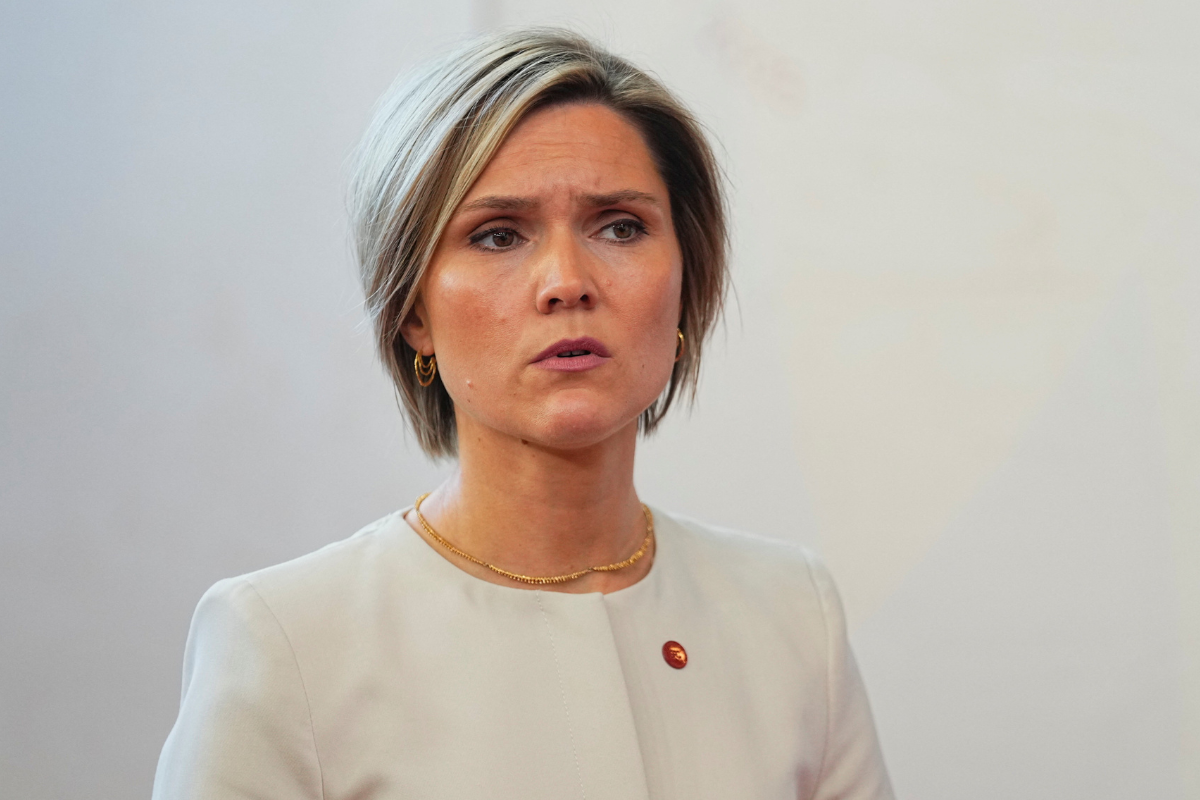
Foreign Minister Thorgerdur Katrin Gunnarsdottir said in March that she thought Iceland could join the EU fairly soon but that she expected agriculture, fisheries, and the labor market to be the most difficult issues in negotiations.
Gunnarsdottir had said that if Reykjavik can successfully negotiate those terms with Brussels, “then I’m pretty optimistic that we will be, before the end of the year 2028, a member of the European Union.”
The Nordic island already has access to the EU’s single market through its membership of the European Economic Area and the Schengen open border travel zone.
According to a section on the Icelandic government’s website dedicated to the referendum, voters will be asked this summer to respond yes or no to the question, “Should negotiations on Iceland’s membership in the European Union continue?”
If the Icelandic people vote yes, accession negotiations will begin. Then, if an agreement is reached between Reykjavik and Brussels, “that agreement will be subject to a second referendum on whether Iceland should join the European Union,” the government stated.
If the answer is no, negotiations will not continue.
According to Olafur Thordur Hardarson, a professor of political science at the University of Iceland, many voters are uncertain about whether to support joining the bloc and may take comfort in the two-step process.
“The large proportion that has not finally decided if they want to join or not, many of them, of course, want the [first] referendum because they want to see exactly what terms would be in a potential agreement,” Hardarson said.
Talks Suspended
Iceland had initially applied to join the bloc in 2009, after its banking sector collapsed during the 2008 global banking crisis.
However, Reykjavik abandoned EU membership talks in 2013 when a center-right government came to power. In 2015, Reykjavik asked the bloc to stop regarding Iceland as a candidate for EU membership.
Iceland’s center-left government, which came to power after a snap election in 2024, had promised to hold a public vote on joining the bloc by 2027.
The prime minister said in February that her government “will listen to whatever the Icelandic population wants to do.”
The decision to take the question of EU membership to Iceland’s 400,000 citizens comes amid growing geopolitical instability—such as the Russia–Ukraine war—and economic pressures, which are contributing to growing concerns for the island.
Iceland has no army and relies on NATO and a bilateral defense agreement with the United States for security.
Iceland has been hesitant about joining the EU over concerns that it would be forced to share its rich North Atlantic fishing grounds with boats from other EU countries.
Accession States
The EU is an economic and political union made up of 27 member states.
Several countries are attempting to join the union, and according to the European Commission—the EU’s executive branch—the bloc could welcome new members by 2030.
Countries on the path to joining are Albania, Bosnia and Herzegovina, Georgia, Kosovo, Moldova, Montenegro, North Macedonia, Serbia, Turkey, and Ukraine.
The latest member to join the bloc was Croatia in 2013.
The EU lost a member on Jan. 31, 2020, when the UK officially left the bloc following the June 2016 referendum vote to leave the EU. The UK had been a member since 1973, when the bloc was called the European Economic Community.
Reuters contributed to this report.
 Friends Read Free
Copy
Facebook
Tweet
Friends Read Free
Copy
Facebook
Tweet