
The European Union’s 27 leaders are meeting on Oct. 1 in Copenhagen, Denmark, to discuss support for Ukraine and broader defense concerns.
The summit is the first of two that will take place in the Danish capital. The leaders of the broader European Political Community (EPC), an organization of 47 member countries, are scheduled to meet at the Bella Center on Oct. 2 for talks on similar subjects.
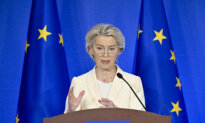
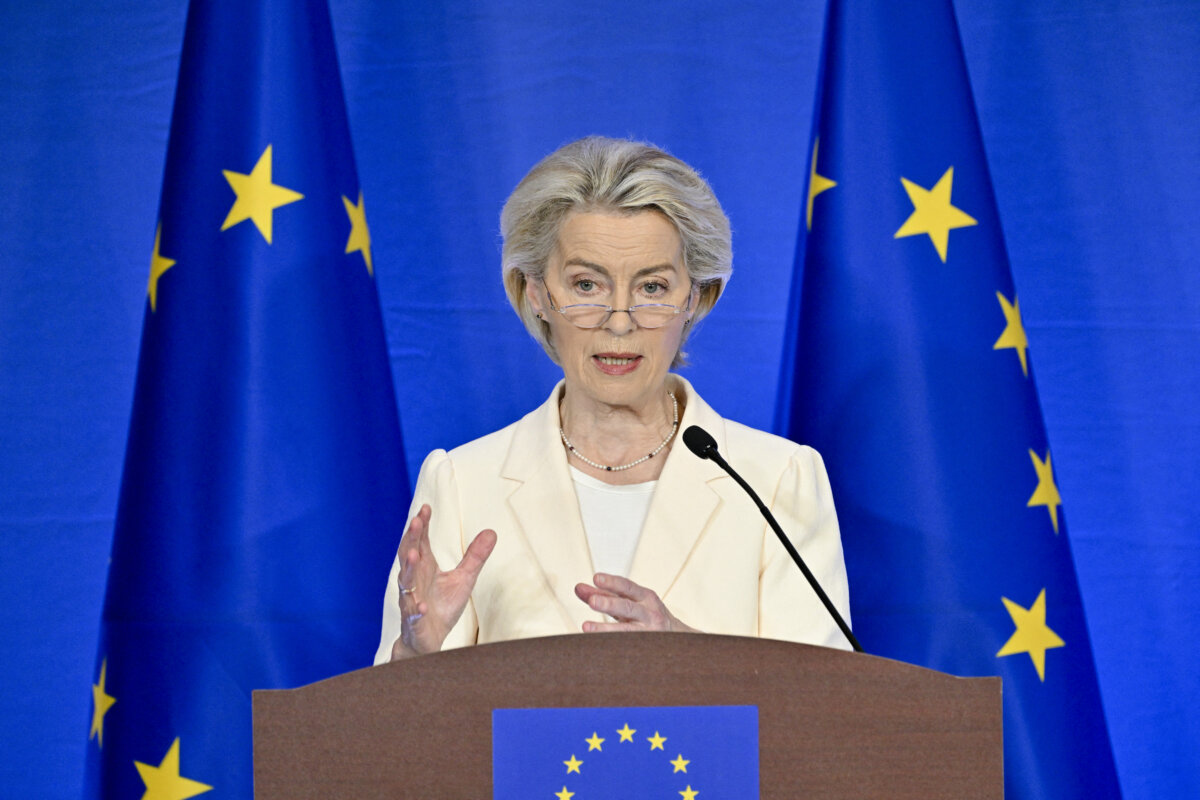
The informal EU meeting will be the first opportunity for member states to properly debate a proposal, tabled by European Commission President Ursula von der Leyen, to use frozen Russian assets to fund a loan to Ukraine.
Last week, the commission, which acts as the bloc’s executive branch, proposed using the funds frozen due to sanctions to finance a “Reparation Loan” that would bolster Ukraine’s war effort.
“We are at a moment where decisive action on our side can lead to a turning point in this conflict,” von der Leyen said on Tuesday.
She also said that at least part of the loan would be earmarked for Ukraine to make purchases from European arms manufacturers, boosting the continent’s defense industry.
Under the plan, Ukraine would only pay back the loan if Russia paid reparations for the war. The plan raises legal and technical questions that have yet to be ironed out.
Belgium, which holds most of the assets in the Euroclear securities depository, issued a stern warning against the suggestion, saying it will “never happen.”
“If countries see that central bank money can disappear if European politicians see fit, they might decide to withdraw their reserves from the eurozone,” Belgian Prime Minister Bart De Wever said last week, according to Belga News Agency.
The move received a boost last week when German Chancellor Friedrich Merz threw his support behind it.
Participants will also discuss a so-called “drone wall” to protect Europe, after incursions by unmanned aerial vehicles (UAVs) forced the temporary closure of Danish airports, including Copenhagen Airport.
The Danish Ministry of Defence has since set up a precision radar system at Copenhagen airport to keep watch. France, Germany, the Netherlands, Sweden, and the UK also sent aircraft, ships, and air defense systems ahead of the summits.
Ukraine’s armed forces have also dispatched a mission to the country for joint exercises and to share its expertise on combating Russian drones.
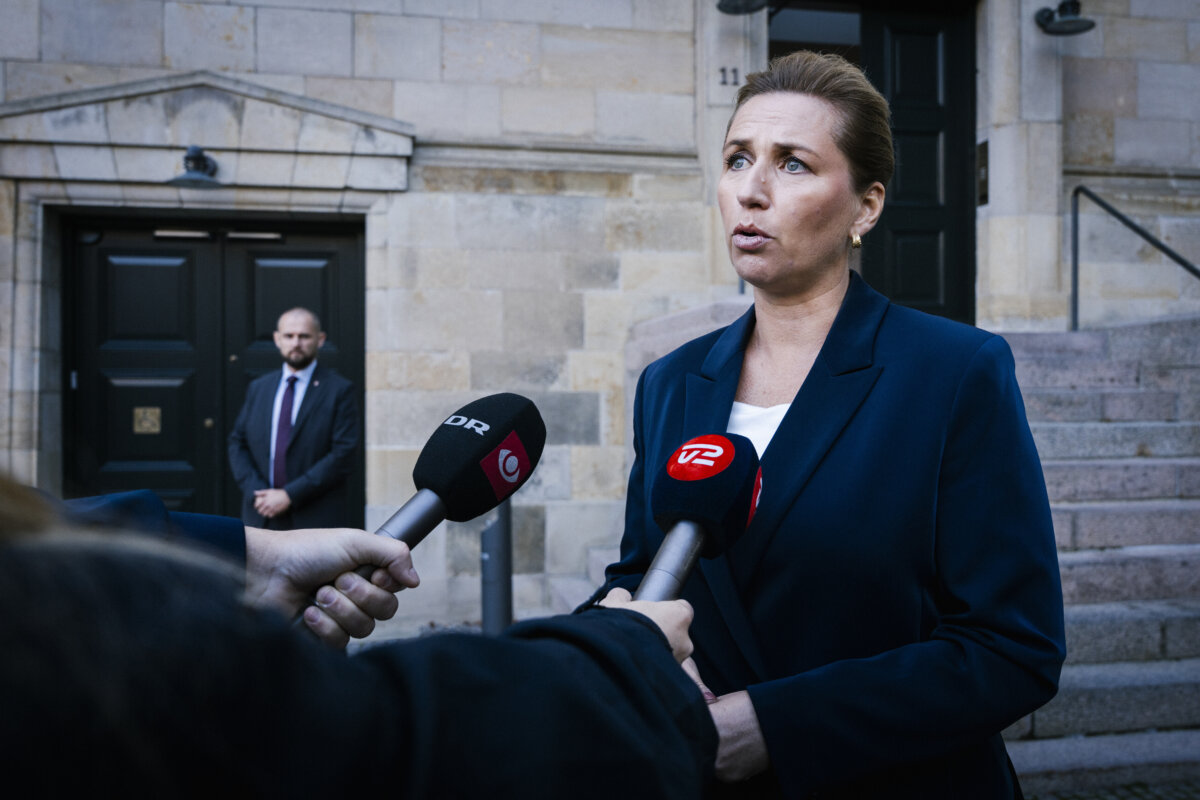
Danish Prime Minister Mette Frederiksen said in a Sept. 25 statement that while authorities can’t conclude who is behind the hybrid attacks, “we can at least state this: there is primarily one country that poses a threat to Europe’s security, and that is Russia.”
Russia has denied involvement.
In a Sept. 25 post on social media, the Russian Embassy in Denmark rejected all suggestions of Russian involvement in the drone incursions over Copenhagen Airport and said the incident was “staged.”
“It is evident that the incidents involving reported disruptions at Danish airports are a staged provocation,” the embassy stated in the post.
“Undoubtedly, they will be used as a pretext for further escalating tension in the interests of forces seeking by all means to prolong the Ukrainian conflict and extend it to other countries. The Russian side firmly rejects the absurd speculations of involvement in the incidents.”
Denmark was not the only nation subjected to unusual drone activity in September, with several suspected Russian drones breaching Poland’s airspace on Sept. 10, forcing NATO aircraft to scramble to intercept and shoot down some of the UAVs in the first direct encounter between NATO and Moscow since the war in Ukraine broke out in 2022.
Days later, NATO jets also escorted three Russian warplanes out of Estonia’s airspace.
The incidents prompted Europe’s leaders to question how prepared the alliance is against Russia.
NATO Secretary-General Mark Rutte praised the idea of the “drone wall” on Tuesday, calling it “timely and necessary.”
Ukrainian President Volodymyr Zelenskyy is also expected to address the EU leaders by video link on Wednesday.
Wednesday evening will then see more than a dozen other leaders from across the continent converge on Copenhagen for a European Political Community dinner.
The EPC leaders will meet the next day for talks on security, trafficking, and migration. It will be the seventh such meeting of the group, which was formed in 2022 in the wake of Russia’s invasion of Ukraine.
 Friends Read Free
Copy
Facebook
Tweet
Friends Read Free
Copy
Facebook
Tweet