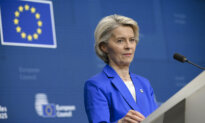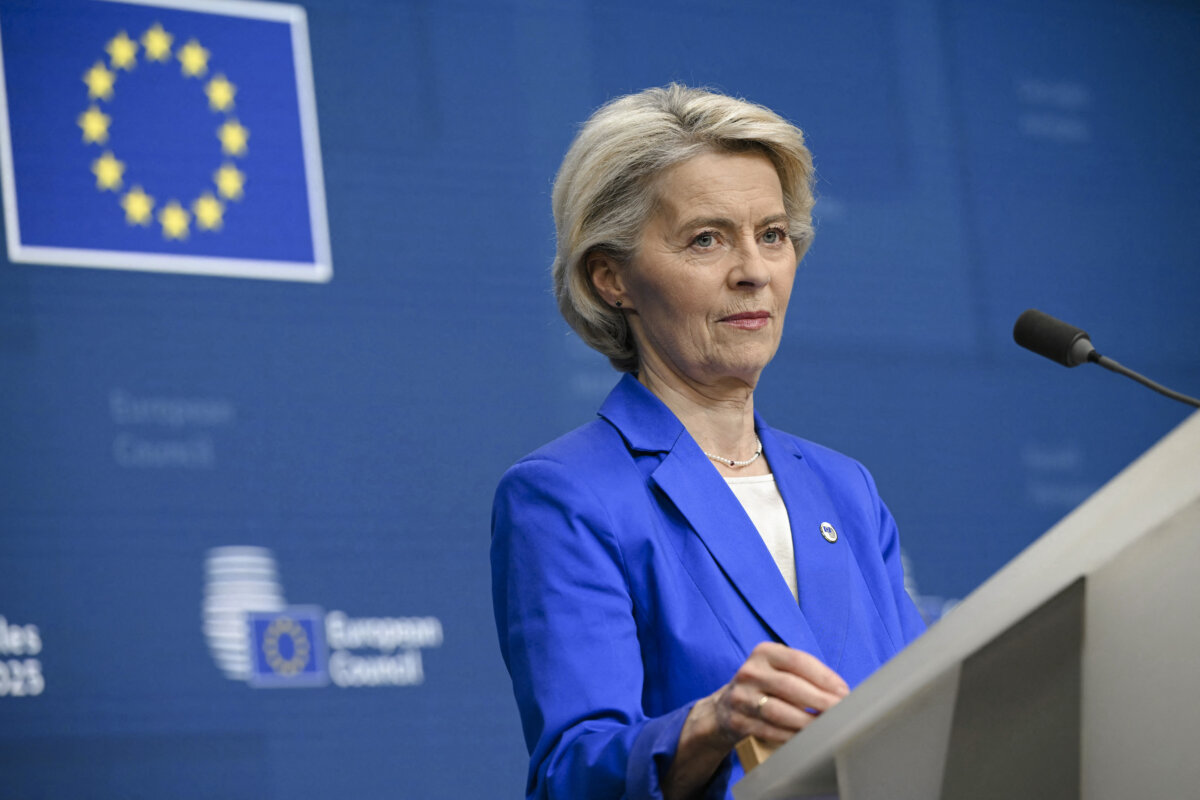

The European Union is seeking to wean itself off rare earths from China, according to European Commission President Ursula von der Leyen.
In a speech at the Berlin Global Dialogue on Oct. 25, Von der Leyen said the EU is “working on a new RESource EU plan along the lines of the REPower Initiative,” which Brussels launched in 2022 to phase out Russian energy.
“The aim is to secure access to alternative sources of critical raw materials in the short, medium, and long term for our European industries,” she said.
On Oct. 9, the Chinese regime tightened its export controls over rare-earth and battery materials amid an ongoing trade war with the United States.
The move also “has a huge impact” on the EU’s industries, including the automotive, semiconductor, aerospace, and defense sectors, and “poses a significant risk” to the bloc, Von der Leyen said, warning that more than 90 percent of the bloc’s consumption of rare-earth magnets is imported from China.
Without naming any country, the European Commission president said “the tools of traditional statecraft are being used to weaponize interdependencies and leverage alliances … to create chokeholds on countries and industries, [and] to exert control and impose coercion on others.”
Von der Leyen said the EU will work with Chinese officials to reach short-term solutions, while also working with Group of Seven partners on a coordinated response.
According to Von der Leyen, the RESource EU plan will include building a “circular economy,” which involves recycling materials.
“Some companies can recycle up to 95 percent of critical raw materials and batteries,” she said. “This means extracting precious raw materials, reducing waste, and of course promoting sustainable resource management.”
Other parts of the plan include joint purchasing, stockpiling, and investing in projects within and outside of the EU, she said.
The 17 rare earths, of which China has announced export restrictions on 12, are vital for products ranging from electric vehicles to aircraft engines and military radars. Existing export controls since April caused shortages around the world before a series of deals with Europe and the United States eased the supply crunch.
China’s new export controls on battery materials and on rare earths are set to take effect on Nov. 8 and Dec. 1, respectively.
European automakers are also warning of significant disruptions to their production if Beijing continues to ban the export of chips from Nexperia China amid the company’s dispute with its Dutch headquarters.
On Oct. 21, European Trade Commissioner Maros Sefcovic and Chinese Commerce Minister Wang Wentao agreed that officials would hold talks next week regarding the export controls.
Reuters contributed to this report.
 Friends Read Free
Copy
Facebook
Tweet
Friends Read Free
Copy
Facebook
Tweet