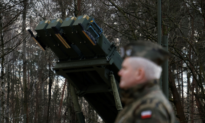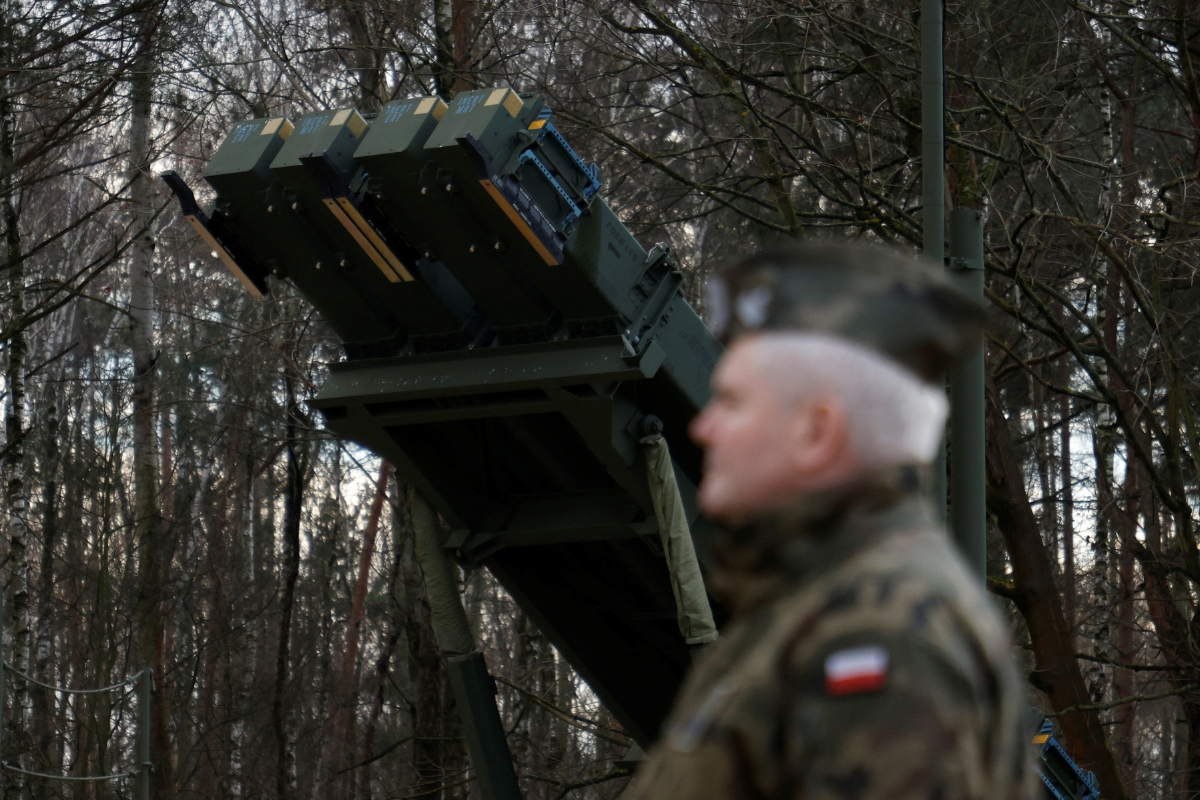

Europe has become the world’s biggest arms importer over the past five years, as governments seek to rearm amid the perceived threat from Russia, according to a think tank report published on March 9.
Data from the Stockholm International Peace Research Institute (SIPRI) showed that Europe accounted for 33 percent of global arms imports, rising by 210 percent between 2016–2020 and 2021–2025, according to a statement.
Per SIPRI’s fact sheet, Europe became the region with the largest share of total global arms imports “for the first time since the 1960s.” The top spot had been held by the Asia and Oceania region in 2016–2020.
In the period 2021–2025, Asia and Oceania ranked second at 31 percent, followed by the Middle East (26 percent), the Americas (5.6 percent), and Africa (4.3 percent).
Across the world, the volume of major arms flows increased by 9.2 percent between the two five-year periods.
The think tank said this was “overwhelmingly” because of the growth in movement of arms to Ukraine—accounting for 9.7 percent of all arms transfers—and other European countries.
Mathew George, director of SIPRI’s Arms Transfer Programme, said the “sharp increase” in arms flows to Europe had pushed global arms transfer figures higher.
“Deliveries to Ukraine since 2022 are the most obvious factor, but most other European states have also started importing significantly more arms to shore up their military capabilities against a perceived growing threat from Russia,” George said.
The Russia–Ukraine war passed the four-year mark on Feb. 24. The conflict on NATO’s doorstep has prompted European countries to rearm.
NATO allies on the continent have made independent offers of aid and materiel support to Ukraine. In addition, in July 2025, U.S. President Donald Trump struck a deal with NATO under which the United States will supply weapons to Kyiv and the defense alliance will pay for them.
European Defense
SIPRI further stated that threat perceptions concerning Moscow have been “compounded by uncertainties over the USA’s commitment to defending its European allies.”
Trump has long maintained that Europe should rely less on the United States for its security and that European NATO allies should increase their defense spending. This approach was formally accepted by NATO when, in June 2025, allies agreed to raise defense spending targets from 2 percent of gross domestic product to 5 percent by 2035.
The administration has also codified its defense priorities through the national defense strategy, released by the Pentagon on Jan. 23, which outlines the U.S. plan to prioritize homeland defense and American interests throughout the Western Hemisphere.
Allies around the world, including partners in Europe, should take primary responsibility for their own defense “with critical but limited support from U.S. forces,” the strategy states.
World’s Largest Arms Supplier
According to the report, the United States remains the world’s largest supplier of arms, and total exports increased by 27 percent between 2016–2020 and 2021–2025. It supplied 42 percent of all international arms in the past five years, up from 36 percent in the previous five-year period.
SIPRI report authors noted that “for the first time in two decades, the largest share of US arms exports went to Europe (38 percent) rather than the Middle East (33 percent).”
On Feb. 6, Trump signed an executive order directing the establishment of an “America First” arms transfer strategy that focuses on using arms sales to advance U.S. foreign policy objectives and on increasing domestic production capacity.
“American-manufactured military equipment is the best in the world, resulting in American dominance across international defense exports,” the directive states.
“It is critical that the United States fully use this comparative advantage in arms transfers as both a tool of foreign policy and a tool to expand domestic production and transfer.”
Kimberly Hayek contributed to this report.
 Friends Read Free
Copy
Facebook
Tweet
Friends Read Free
Copy
Facebook
Tweet