
The European Commission (EC) proposed limited changes to its anti-deforestation law on Oct. 21, easing reporting requirements for smallholders and businesses, but stopping short of another delay to the policy’s rollout.
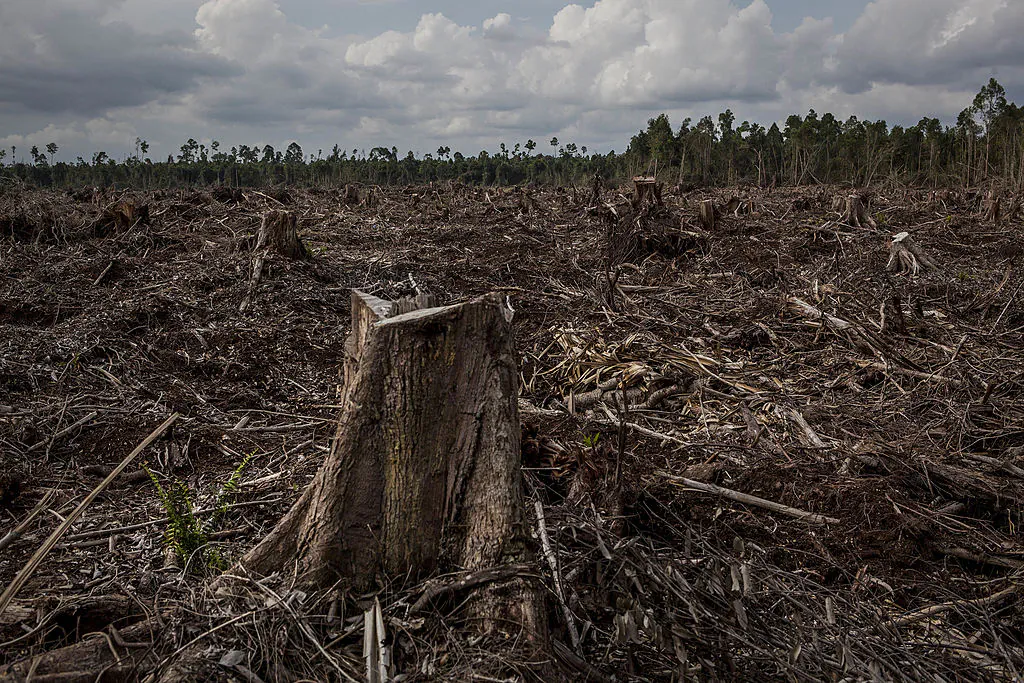
The bloc’s anti-deforestation regulation (EUDR) would bar imports of palm oil, coffee, cocoa, beef, timber, and rubber unless companies can prove they were produced without deforestation.
First postponed from 2024 to December 2025, it was set for another delay in September after EU Environment Commissioner Jessika Roswall said more time was needed to fix the IT system tracking products under the deforestation law.
Speaking to reporters in Luxembourg on Tuesday, Roswall said the law was now expected to take effect Dec. 30 for large and medium companies, and June 30, 2026, for micro and small enterprises. There would be lighter reporting requirements for small operators and a six-month grace period for larger companies before full enforcement begins.
“Micro smallholders would be taken out of the scope in one way, that don’t need to do the due diligence statement, but only a declaration that will, of course, also help the burden on the IT system,” she said.
Roswall said the simplifications would allow the law to enter into force as planned, with a six-month transition period for large companies during which no penalties would be imposed.
Teresa Ribera, EC executive vice-president for Clean, Just and Competitive Transition, said the proposal allows large operators to “progressively adapt while giving micro and small producers more time to adjust.”
Some European industry stakeholders criticized the proposal.
Holger Schwannecke, secretary general of the German Confederation of Skilled Crafts, said the Commission’s revisions “fall far short of what is needed.”
“Instead of addressing the key problems, the Commission is sticking to a timetable and targets that are hardly or not at all feasible for small and medium-sized craft enterprises and that also place a significant additional burden on them,” Schwannecke said in a statement.
He said the EU should have paused implementation to allow time for a thorough overhaul of the regulation.
“Given the massive administrative burdens imposed on small and medium-sized craft businesses by the EU law, a ‘stop-the-clock’ procedure would have been the only appropriate course of action,” Schwannecke said.
“A complete suspension of its application for two years and an opening for fundamental corrections could have provided a remedy.”
Compliance and Confusion
Under the updated proposal, smallholders in low-risk countries such as the United States, Canada, India, China, and Australia would only need to submit a one-time declaration to register as operators.
The measure does not apply to “standard-risk” countries like Brazil, Indonesia, and Malaysia, which must still provide full due diligence documentation.
Brazil, the single biggest exporter of agricultural products to the EU, along with Australia and the United States, had previously asked the EU to hold off on the regulation.
Last year, U.S. officials said producers were struggling to comply with the rules.
Roswall said the law remained compliant with international trade rules.
“It will come for everybody,” she said, adding that all companies placing products in the EU market, regardless of size, would still be bound by core due diligence requirements.
The proposal will now go to EU governments and the European Parliament for approval, where further amendments remain possible.
Roswall said she hoped the proposal would be approved quickly, noting there was little time left to ensure the law could take effect smoothly.
“I expect that everybody sees that we have a very short time to solve this issue with an effective implementation,” she said.
She warned that reopening the legislative process more broadly, for instance, by adding new risk categories for countries, could lead to delays.
“Another risk category will be a very lengthy and problematic process,” she said, dismissing suggestions that the EC should have opted for another full-year delay.
 Friends Read Free
Copy
Facebook
Tweet
Friends Read Free
Copy
Facebook
Tweet