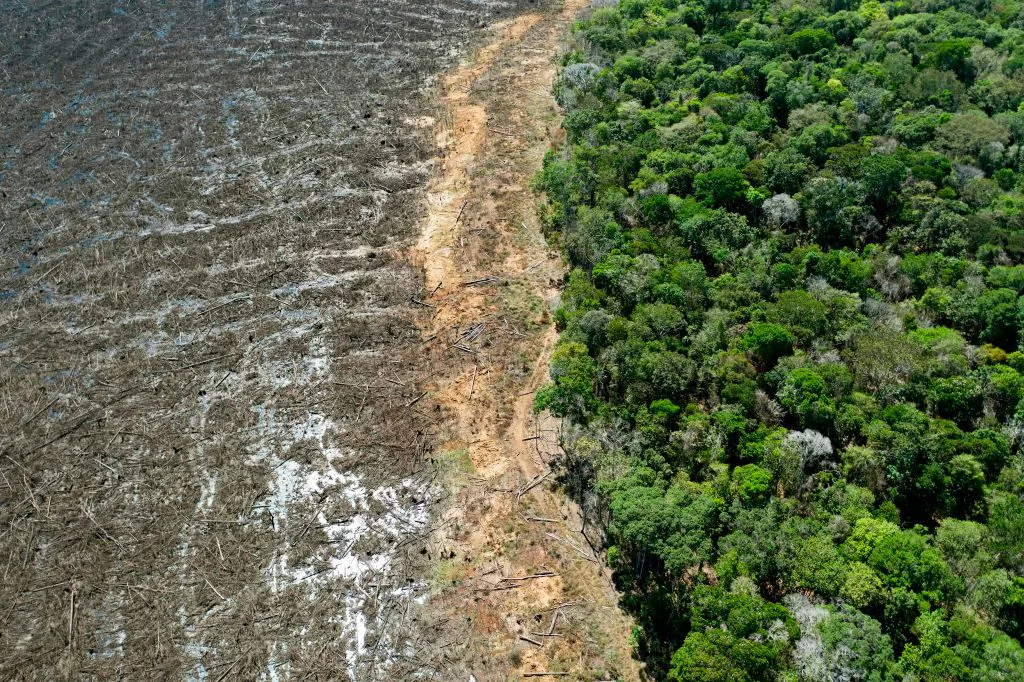

The European Union has again delayed a ban on imports tied to deforestation, including soy, beef, cocoa, and palm oil.
Confirming the delay on Sept. 23, EU Environment Commissioner Jessika Roswall said the delay was needed to fix problems with the IT system that will track all products covered by the deforestation law, from producers to importers, both inside and outside the EU.
The bloc’s anti-deforestation regulation (EUDR) would bar imports of palm oil, coffee, cocoa, beef, timber, and rubber unless companies can prove they were produced without deforestation.
First postponed from 2024 to December 2025, it is now set to be delayed again.
Roswall’s remarks were made after Indonesia and the European Union on Sept. 23 finalized their negotiations on an economic partnership agreement, which will eliminate tariffs on 80 percent of Indonesian products entering the European market.
Indonesia, one of the world’s largest suppliers of soy and palm oil, has previously warned that the EUDR could harm smallholder farmers.
Indonesia’s Deputy Foreign Minister Arif Havas Oegroseno said in July that the ban would especially affect those involved in rubber, cocoa, coffee, and palm oil, according to the national news agency, Antara.
Brazil, the single biggest exporter of agricultural products to the EU, as well as Australia and the United States, has previously asked the EU to hold off on the regulation.
Last year, U.S. officials said producers were struggling to comply with the rules.
In a trade deal struck earlier this year, Brussels recognized that U.S. production of commodities poses “negligible risk” to deforestation and pledged to address American exporters’ concerns.
In July, the American Forest & Paper Association called the regulation a trade barrier.
Association President Heidi Brock urged the U.S. government to secure an exemption from the EUDR.
The measure would “further support U.S. forest product producers’ ability to continue shipping over $3.5 billion in essential products to the EU,” she said.
Roswall said the delay was not linked to U.S. concerns about the policy.
Anke Schulmeister-Oldenhove, forest policy manager at the WWF European Policy Office, called the delay “unacceptable and a massive embarrassment” for the EU commission.
Schulmeister-Oldenhove said that if the technical issue is genuine, it reflects not only incompetence but also a lack of political will to ensure the timely implementation of the EUDR.
EU Lawmakers
Inside the EU, German lawmaker Christine Schneider, who leads the European Parliament’s negotiations on the file, welcomed the move and said it exposed deeper flaws.
“This clearly shows that the problems of the Deforestation Regulation run deep,” she said, adding that regions and products with no deforestation risks must be treated in an unbureaucratic manner and without unnecessary documentation.
In his statement, German European Parliament member Peter Liese said that the regulation, if applied without changes, would have overwhelmed small foresters, farmers, and medium-sized businesses such as coffee roasters with heavy documentation and data-entry requirements into the EU’s new database system.
“Before requiring them to enter data into a database, the system has to function properly,” he said, adding that the same rules should apply to third countries where the situation is the same.
Liese said he supports the aim of ending global deforestation but warned that too much red tape risks undermining public support.
Farm Europe, a rural policy think tank, said on Sept. 23 that palm oil imports hinge on how strictly the EU enforces the EUDR.
“The European Commission is floating the idea of further postponement of this regulation on the same day of the EU/Indonesia agreement, this country being one of the most important opponents to this regulation from the beginning,” it said, urging the commission to apply the law consistently.
 Friends Read Free
Copy
Facebook
Tweet
Friends Read Free
Copy
Facebook
Tweet