
U.S. Treasury Secretary Scott Bessent said on Thursday that the European Union has officially joined the United States’ Operation Economic Outcast, a sanctions campaign aimed at economically isolating Iran amid a war that recently reached the six-month mark.
“The United States stands firm with our allies in ensuring the murderous Iranian regime cannot exploit the global financial system to fund its nuclear ambitions, weapons programs, and terror proxies,” Bessent said in a post on X.
Bessent shared an Aug. 31 statement from the European Union, in which the bloc said it “welcomes efforts at ensuring that Iran ceases its destabilising activities and engages in peace negotiations with good faith, also through additional economic pressure, including through the US led Operation Economic Outcast.”
The EU statement fell short of confirming whether it was officially joining the operation.
“The EU will continue to work closely with the United States and other G7 and international partners to maintain pressure on Iran and contribute to de-escalation and regional stability,” the European Commission, the EU’s executive arm, said in the statement.
The European Union has already imposed various sanctions on Iran and is willing to take further action to safeguard its interests, it said.
The Epoch Times reached out to an EU spokesperson for clarity on whether the bloc joined Operation Economic Outcast but did not receive any response by publication time.
Operation Economic Outcast
Under Operation Economic Outcast, the United States can sanction any entity or individual operating in Iran’s technology, digital assets, aviation, gold, or shipping sectors. According to the Treasury, these sectors are being used to evade existing sanctions, generate revenue for Tehran, and support the Iranian regime’s weapons development efforts.
Last week, the United States imposed penalties on Egyptian bank Banque Misr’s branches in the United Arab Emirates and sanctioned Hong Kong-based Kameng Trading Limited over Iranian links.
Iranian Foreign Ministry spokesman Esmail Baghaei in an Aug. 31 post on X criticized the EU for supporting measures against Iran, saying the EU was surrendering its sovereignty and values to American coercion.
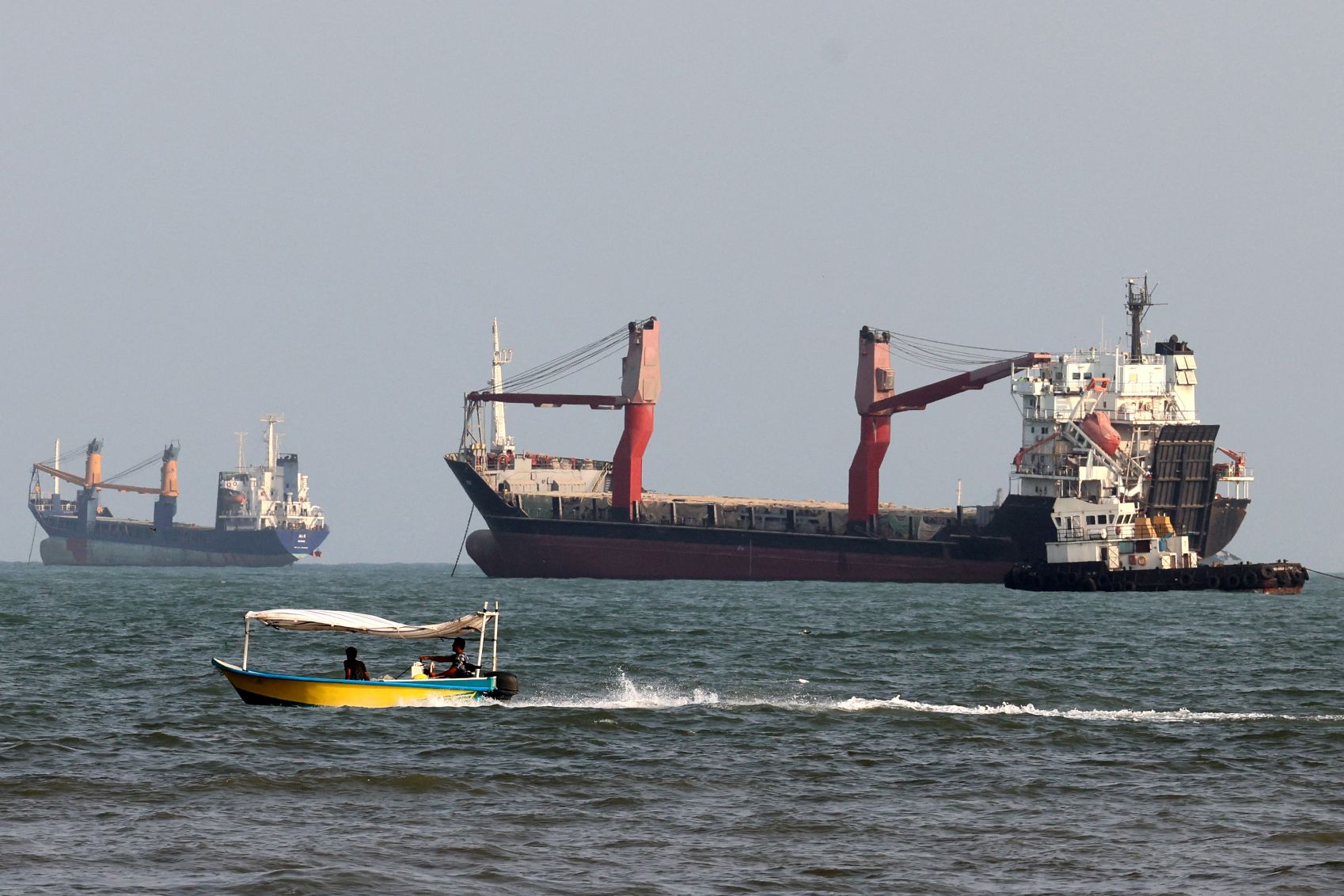 Vessels in the Strait of Hormuz, off the port city of Bandar Abbas in southern Iran, on Aug. 10, 2026. (Atta Kenare/AFP via Getty Images)
Nate Swanson, a resident senior fellow at the Atlantic Council think tank, said in an Aug. 24 analysis that the U.S.–Iran war has entered “a race to the bottom.”
China is Iran’s key trading partner. If Beijing were to sever ties with Tehran, the Iranian regime would be left with no replacement. China has historically skirted U.S. sanctions, and there is no indication that Beijing will do anything different, Swanson said.
Lesley Chavkin, a nonresident senior fellow at the council, said that most of the high-value targets within Iran have already been sanctioned. Imposing secondary sanctions on targets in nations with economic ties to Iran can carry a steep diplomatic cost.
“The question ahead is whether Washington is prepared to move beyond threats and impose secondary sanctions on prominent entities—not just teapot refineries or small trading firms—in countries that are either economic powers or strategic partners, considerations that have historically shielded those entities from designation,” Chavkin said.
The U.S.–Iran conflict has escalated over recent days. The U.S. military on Sept. 1 struck Iran’s air defense systems, communication facilities, mine-laying capabilities, radar installations, and maritime assets.
According to the Iranian Foreign Ministry, the U.S. attacks targeted civilian areas and public infrastructure, including telecommunications facilities in Khuzestan, Sistan and Baluchestan, and Kerman provinces.
The ministry said in a Sept. 2 statement that a U.S. strike hit a wedding celebration in Kouhestak in Hormozgan province, killing or wounding more than 70 people.
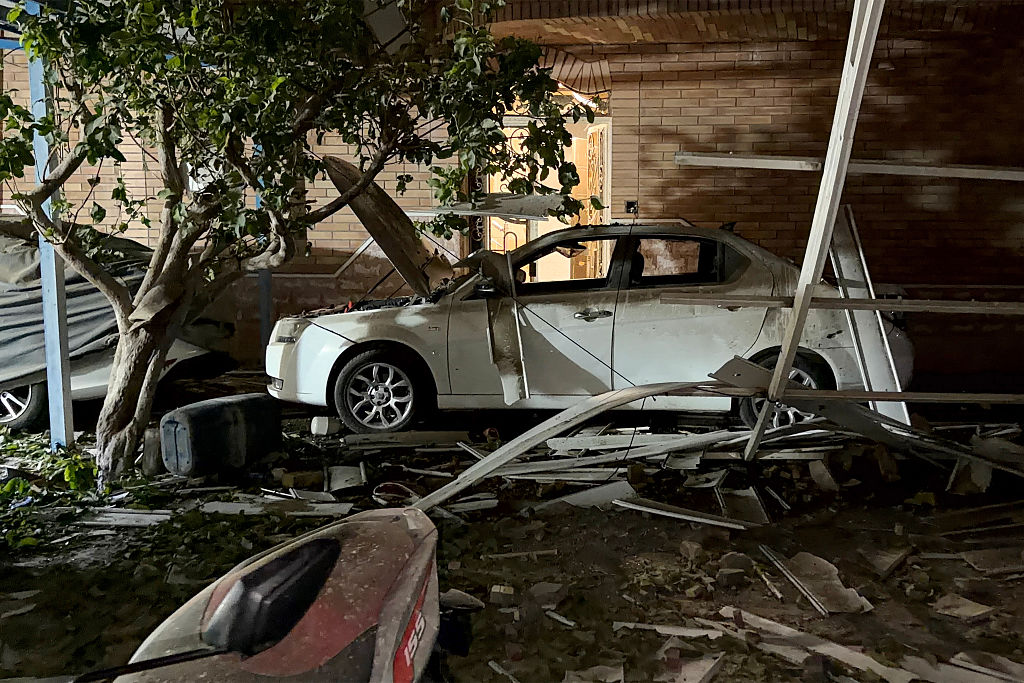 A destroyed vehicle at the site of an overnight strike in Kuhestak, Sirik County, Hormozgan province, Iran, on Sept. 2, 2026. (Masoud Mohamadi/Tasnim News/AFP via Getty Images)
“Last night we took out all of the new equipment that they tried to build along the Strait of Hormuz. Some offensive, some defensive,” Trump said. “And we blew up much more than their radar last night. It was a very heavy attack last night, and we’re prepared to do another one anytime we want.”
On Thursday, Iran launched drone and missile attacks against U.S. facilities located in the United Arab Emirates and Kuwait, according to Iranian state media. A U.S. naval blockade on vessels entering or leaving Iranian ports, first imposed in April and renewed in July, remains in effect.
U.S. Central Command said in a Sept. 3 post on X that as of Thursday, its forces have redirected 87 commercial vessels, disabled three, and boarded two as part of enforcing the blockade.
 Friends Read Free
Copy
Facebook
Tweet
Friends Read Free
Copy
Facebook
Tweet