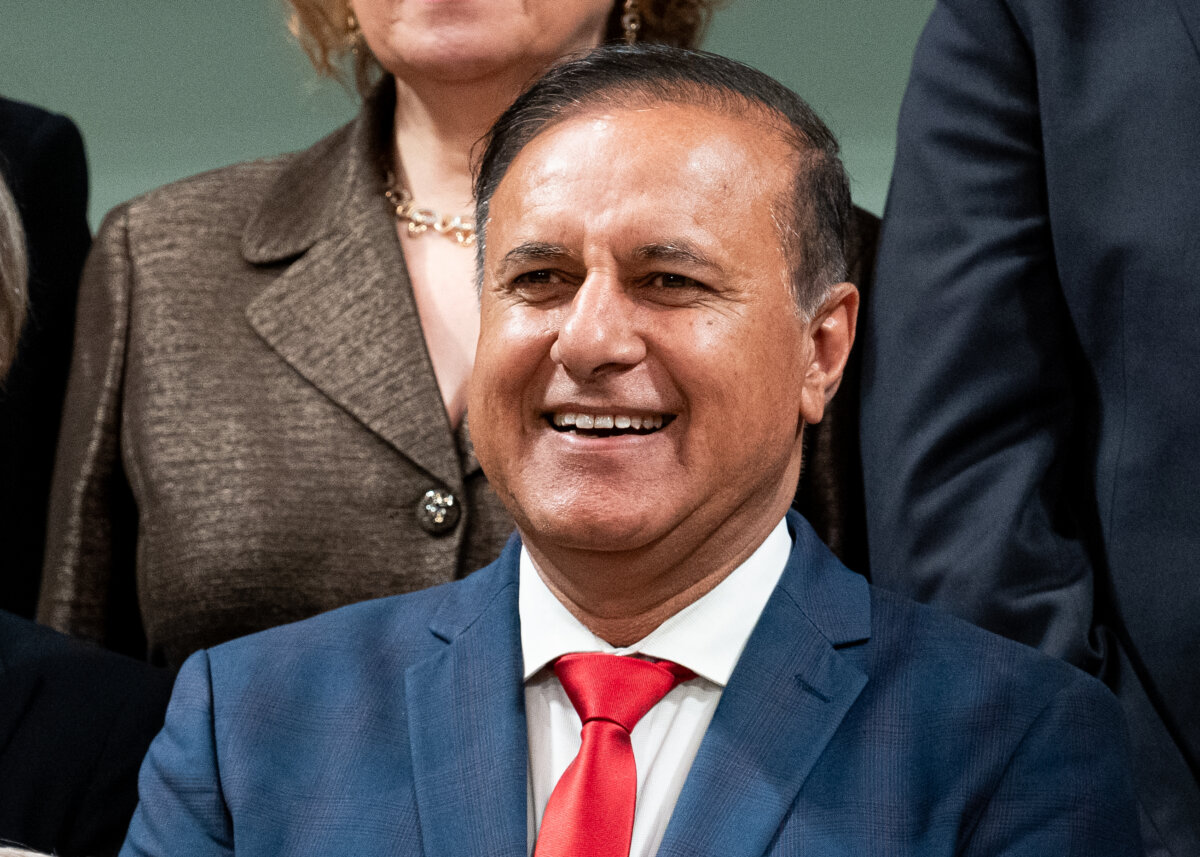

The Liberal government has launched a review of federal regulations in a bid to reduce any related drag on the economy.
Federal departments and agencies with regulatory responsibilities have now 60 days to report back to Treasury Board President Shafqat Ali with proposals to remove outdated regulations or eliminate duplication with provincial rules.
Prime Minister Mark Carney said in a statement his government was elected to “spend less and invest more,” and that it’s time to improve government efficiency and “catalyze more private capital so we can build the strongest economy in the G7.”
The Treasury Board said that inefficient red tape has been raising costs, reducing productivity, and stifling economic growth.
The review will be overseen by a newly created government entity, the Red Tape Reduction Office, part of the Treasury Board.
Formal efforts by the federal government to cut red tape have been ongoing for over a decade. The Stephen Harper government established the”one-for-one” rule in 2012 that said every time Ottawa creates a rule that increases the burden on businesses, it must be met by a corresponding decrease to offset the cost.
The rule was enshrined in legislation via the Red Tape Reduction Act of 2015. The Treasury Board president is required by the act to produce an annual report outlining the impact of adding and removing regulations. The department says that $26 million in net administrative burden was removed in the last fiscal year under review, 2023-2024.
Meanwhile, the Canadian Federation of Independent Business said earlier this year that business owners attribute $17.9 billion of their costs to red tape, with small business spending 735 hours to comply with regulation.
The federation called on governments at all levels to reduce regulatory barriers to deal with Canada’s productivity problem.
Cutting red tape by undertaking a 60-day review was part of the Liberals’ election platform under the theme of building “one Canadian economy.”
Other pledges under that theme included removing federal barriers to internal trade by Canada Day and speeding up the approval of “nation-building projects.”
This was accomplished in late June with Parliament passing Bill C-5, also known as the One Canadian Economy Act, which relates both to components of internal trade and major projects. The next step on that file for the Carney government is consultation with indigenous groups and stakeholders and selecting the first projects to prioritize.
The red tape review announced by the Liberal government this week comes in tandem with Finance Minister François-Philippe Champagne sending a letter to his cabinet colleagues asking them to find savings under their portfolios.
Champagne has asked that savings of 7.5 percent be found in departmental budgets starting in fiscal 2026. The cuts have to increase to 10 percent in 2027 and then reach 15 percent in 2028.
The request was made as the federal government is expected to table a budget in the fall with a much higher deficit than previously projected. Carney announced in early June that Canada would be meeting NATO’s previous defence spending guideline of 2 percent of GDP this year, amounting to an extra $9 billion in spending.
Defence Minister David McGuinty said this week after receiving Champagne’s letter that he had not been part of any discussions regarding “significant social services cuts” in Ottawa. His department will, however, have to find cost saving measures like others, according to Champagne’s office.
The Liberals had partly campaigned on accusing the Conservative Party of seeking to cut social services.
The Public Service Alliance of Canada had also campaigned against the Tories, encouraging to vote to “protect public services.”
The union has reacted negatively to the cuts being prepared by the Carney government, saying it could result in thousands of job losses in the public service.
“The deep spending cuts called for by PM Carney’s government yesterday will weaken the programs that people depend on,” the union said on social media.
The Canadian Press contributed to this report.
 Friends Read Free
Copy
Facebook
Tweet
Friends Read Free
Copy
Facebook
Tweet