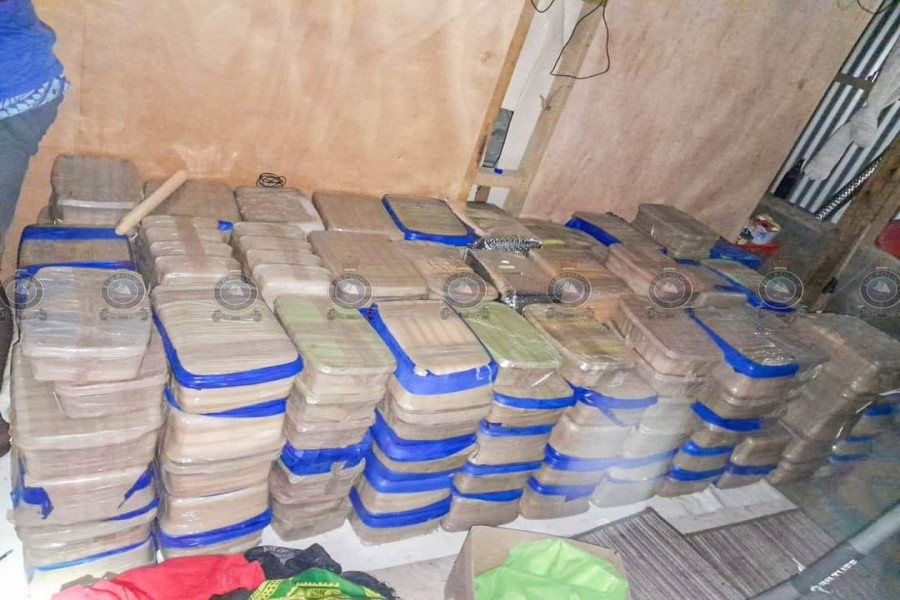

Amid the trial of seven people for Fiji’s largest-ever drug seizure—more than four tonnes of methamphetamine estimated at FJ$2 billion (US$860 million) in value—state prosecutor John Rabuku has warned that the Pacific nation is an emerging “hub for transnational drug trafficking and organised crime networks across the Pacific.”
In late January 2024, Fijian authorities raided a vacant house that was under construction in the tourist town of Nadi. Hidden there were about 800 medium-sized containers wrapped in brown tape that contained the drug, locally known as “ice,” which was later destroyed in a high-temperature furnace.
Initially, 15 people were charged and released on bail. Eventually, nine were brought to trial—two pleaded guilty, leaving the seven currently facing the court. Some of those originally accused have been granted immunity in return for testifying.
According to witnesses, whose names have been suppressed, the men used a barge to meet a superyacht that delivered the methamphetamine in December 2023.
One described receiving the yacht’s coordinates from a man he believed was Russian, who spoke to him via a satellite phone.
He said the barge sailed outside of Fijian waters to meet the yacht, which was crewed by three foreigners, one of whom he described as Hispanic.
Drugs Linked to Violent Crime and Rising HIV Infection
Opening for the prosecution, Rabuku told the court that drugs like methamphetamines are addictive and linked to escalating violent crime rates, money laundering, unexplained wealth, corruption, and an increase in rates of HIV.
HIV is not just caused by dirty needles but by a practice known as “bluetoothing,” which is when someone is so desperate to get high that they use a syringe to withdraw blood from a person who has injected methamphetamine and inject it into themselves.
As a result, the number of new cases of HIV for the first half of the year increased to over 500, surpassing the total cases (415) for the entirety of 2023.
The conviction in New Zealand in 2023 of Aiyaz Mohammed Musa Umarji, a Fijian national, for illegally importing millions of dollars’ worth of pseudoephedrine, a precursor chemical of methamphetamine, highlighted the unwillingness of the previous Fijian government, led by Frank Bainimarama, to bring international drug traffickers to justice.
Umarji, owner of a Pacific-wide network of pharmacy companies, had long been a police target in his own country but had never been prosecuted. He and his family were reportedly significant donors to Bainimarama’s FijiFirst Party until it lost power in elections last December.
Some Police Involved in Crime
The new People First government, under Prime Minister Sitiveni Rabuka, vowed to immediately target the problem.
However, it faces a deeply entrenched problem because some of the Fiji police force are involved in trafficking.
For example, three officers were charged, along with two civilians, in relation to alleged tampering with drug evidence in March last year.
A senior officer is also under investigation after allegedly being found in possession of white substances believed to be cocaine and methamphetamine.
The Australian Federal Police (AFP) recently undertook an independent review of the Fiji Police Force, which found the need for “transformative change within the organisation” to restore public trust and confidence.
While the Fiji police said the four tonnes of methamphetamine they’d seized was destined for a foreign market, with Fiji being used as a transit point, a leading anti-drugs campaigner claimed the country was now so flooded with drugs that children as young as 10 were using them.
Police have arrested teenagers on drug offences in the past.
This month, a video circulated on social media shocked most Fijians, as it showed young boys, “barely teens,” as local media described them, injecting drugs in broad daylight near family homes in the capital, Suva.
Drug-Free World Fiji founder Kalesi Volatabu told public broadcaster FBC that the consumption of hard drugs such as methamphetamine and heroin had “grown out of proportion.”
“It’s not just one drug they’re doing. Marijuana, really huge numbers of crystal meth. Heroin, inhalants, sniffing of glue,” she said.
“We don’t have a drug and alcohol rehab in the country. So that’s first and foremost. The demand was initially the international market, whether it be New Zealand, Australia, or any other country, but now we have a demand here locally.”
She said every second or third person in Fiji would know of someone taking methamphetamines.
In the current trial, prosecutors allege that two of the men on trial arranged for the methamphetamine to be shipped into the country. Then, along with their co-accused, they moved the drugs to locations around Nadi, including Denarau Island, which is home to major international hotel chains and is widely considered the jewel in Fiji’s tourism crown.
Fiji relies on tourism as its primary source of income, welcoming over 920,000 visitors last year. Australians and New Zealanders are its key source markets, comprising over 70 percent of total arrivals.
 Friends Read Free
Copy
Facebook
Tweet
Friends Read Free
Copy
Facebook
Tweet