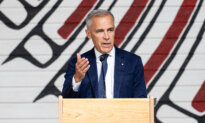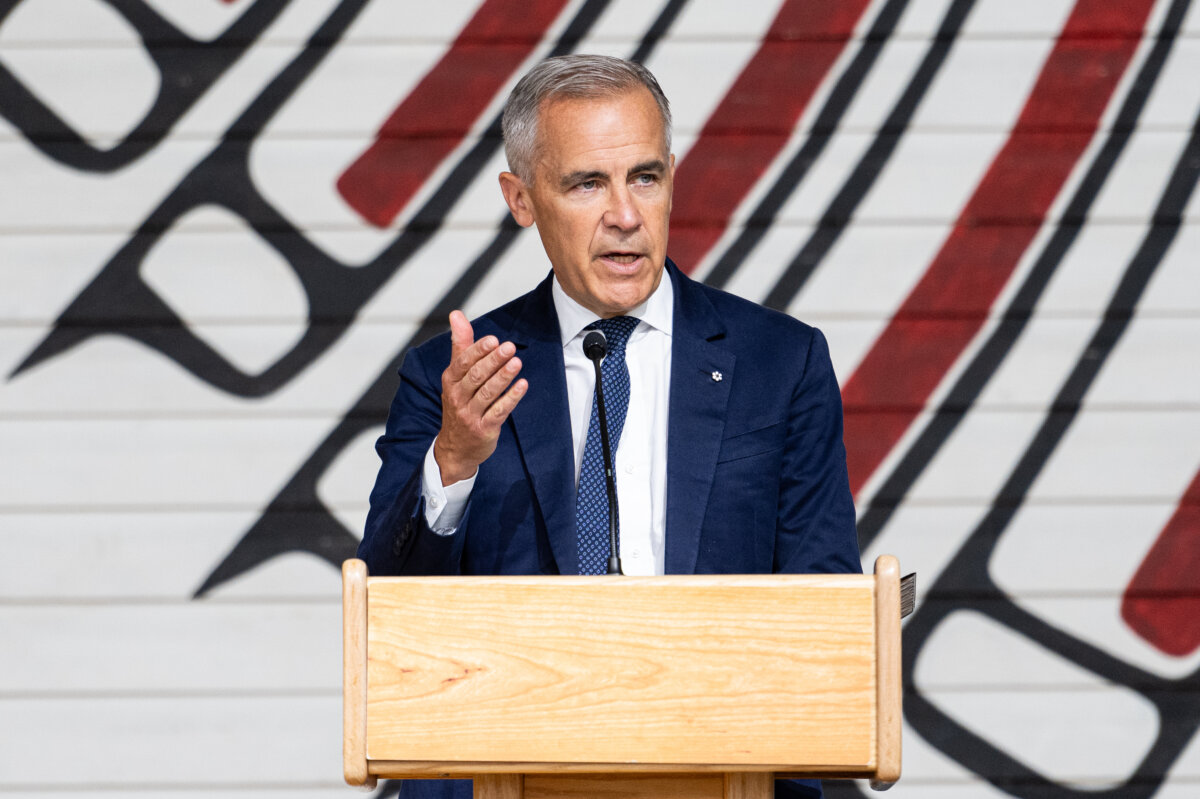
Prime Minister Mark Carney faced pushback from First Nations leaders during consultations on the government’s recently passed Bill C-5, which aims to fast-track the approval process for major projects.
A number of First Nations leaders at a summit held this week in Gatineau, Que., expressed skepticism and criticism of Carney’s promise that projects advanced under the new bill will put the wellbeing and prosperity of indigenous communities at the centre of decisions.
The Liberal government rushed through the passage of Bill C-5 before Parliament went on break for the summer, bypassing the usual more-robust review process. Some opposition parties and stakeholder groups criticized the move, and Carney announced consultations with indigenous groups shortly after the bill cleared the Commons on June 20.
First Nations leaders have expressed a variety of concerns around the respect of their rights and environmental protections.
“We have many asks and many demands when it comes to this process. When we think about the consent of these major projects, we also need to have rights of refusal. We need to be able to say no,” said Grand Chief Kyra Wilson of the Assembly of Manitoba Chiefs in a press conference following the July 17 session.
“We’re not against development, but not at the expense of our waters and our lands,” she added.
Grand Chief Brian Hardlotte of Saskatchewan’s Prince Albert Ground Council, which is comprised of 12 First Nations, said at the press conference the Prince Albert Grand Chiefs are “very, very apprehensive about Bill C-5.”
“They say it undermines treaty rights and indigenous sovereignty,” he said.
Speaking to reporters on July 17, Carney did not answer questions on whether First Nations would have veto power over proposed projects, but said they would be developed “in partnership” with indigenous groups and conducted in a “positive” manner.
Major Projects
Carney has sought to advance what he calls “nation-building” projects amid trade uncertainty with the United States and domestic factors contributing to lower economic growth. Canada’s economy is currently burdened by high household debt and a rising cost of living, along with low productivity and innovation growth. Canada’s per-capita GDP has fallen sharply compared to the United States since 2014, when the two countries were essentially on par.
“It’s time to build big projects that will transform and connect our economy. Central to this mission is shared leadership with Indigenous Peoples,” Carney said in a July 17 press release. “Working in partnership, we can seize this opportunity and build lasting prosperity for generations.”
Trade tensions with the United States has also revived talks of building new pipelines in Canada to increase self-sufficiency and develop new markets. Some of the proposals on Carney’s desk likely include projects along those lines, and one chief raised concerns about one related initiative.
Chief Kelsey Jacko of the Cold Lake First Nation mentioned the Pathways Alliance carbon storage project, a partnership of six oil sands companies aiming to capture and store carbon dioxide from oil sands projects in northeast Alberta. It has been mentioned alongside an oil pipeline going to B.C.’s northern coast by Alberta Premier Danielle Smith.
Jacko said he thinks it’s likely the Pathways project will be among those pushed forward under Bill C-5. He said he is doubtful his people will profit from the initiative and has concerns about the efficacy of the project and its environmental impacts.
Jacko added that the conference didn’t give sufficient time for chiefs to speak about their questions and concerns, and said many had been “cut short” in a “very frustrating” way as the agenda for the summit progressed. Jacko also said he doesn’t believe that the Carney government will seek unanimous consent from First Nations before proceeding with projects. Still, he said the summit was worth his time to attend, as Carney promised to visit his territory and meet his people.
Sounding a more optimistic note, Chief Marcel Head of Shoal Lake Nation said he’s “very optimistic about the future in terms of what we have within our traditional territory” and added that he told Carney and government officials he has “no concern” over Bill C-5, but is concerned that his nation’s resources remain in their own purview. He said it’s time “to take back what is rightfully ours and start benefitting from the resources that have historically been extracted out of our traditional territory.”
For her part, Canada’s Minister of Indigenous Services Mandy Gull-Masty said that First Nations will be “full partners” in any projects undertaken as part of Bill C-5.
“This Summit marks a turning point. The One Canadian Economy Act is not just about inclusion – it’s about recognizing that prosperity comes when First Nations are full partners in shaping the future. Together, we are building an economy that reflects our shared values, our shared responsibilities, and our shared potential,” Gull-Masty said in a July 17 statement.
Senator Paul Prosper, of the Paqꞌtnkek First Nation in Nova Scotia, said that while he doesn’t feel the approach to Bill C-5 has been respectful of First Nations, he has some hope about “the opportunity for the Carney government to improve the relationship with indigenous groups, with First Nations groups, with leadership.”
He added that he hopes the summit wasn’t a “one-and-done approach that prevents further constructive dialogue.”
The July 17 summit comes as nine Ontario First Nations are seeking a court-ordered injunction against the One Canadian Economy Act and Ontario’s Bill 5, saying they violate the federal and provincial government’s “constitutional obligation” to pursue reconciliation and allows Ottawa and the province to “unilaterally ram through projects without meaningful or any engagement with First Nations.” In their challenge filed July 13, the chiefs are also seeking $100 million in damages from Ottawa and Toronto.
Carney plans to meet with the Inuit-Crown Partnership Committee on July 24 in Inuvik, N.W.T, as well as Métis leadership at an as yet undetermined date for further consultation.
The minority Liberal government’s Bill C-5 was able to pass the House of Commons with support from the Opposition Conservatives, who said it is better than the status quo. The Conservatives said they would have preferred seeing the Liberal laws that C-5 will help to circumvent be rescinded instead, such as the Impact Assessment Act, the West Coast tanker ban, and the industrial carbon tax.
The Tories successfully passed a number of amendments to the bill during committee review in a bid to close what they said were conflict of interest loopholes.
 Friends Read Free
Copy
Facebook
Tweet
Friends Read Free
Copy
Facebook
Tweet