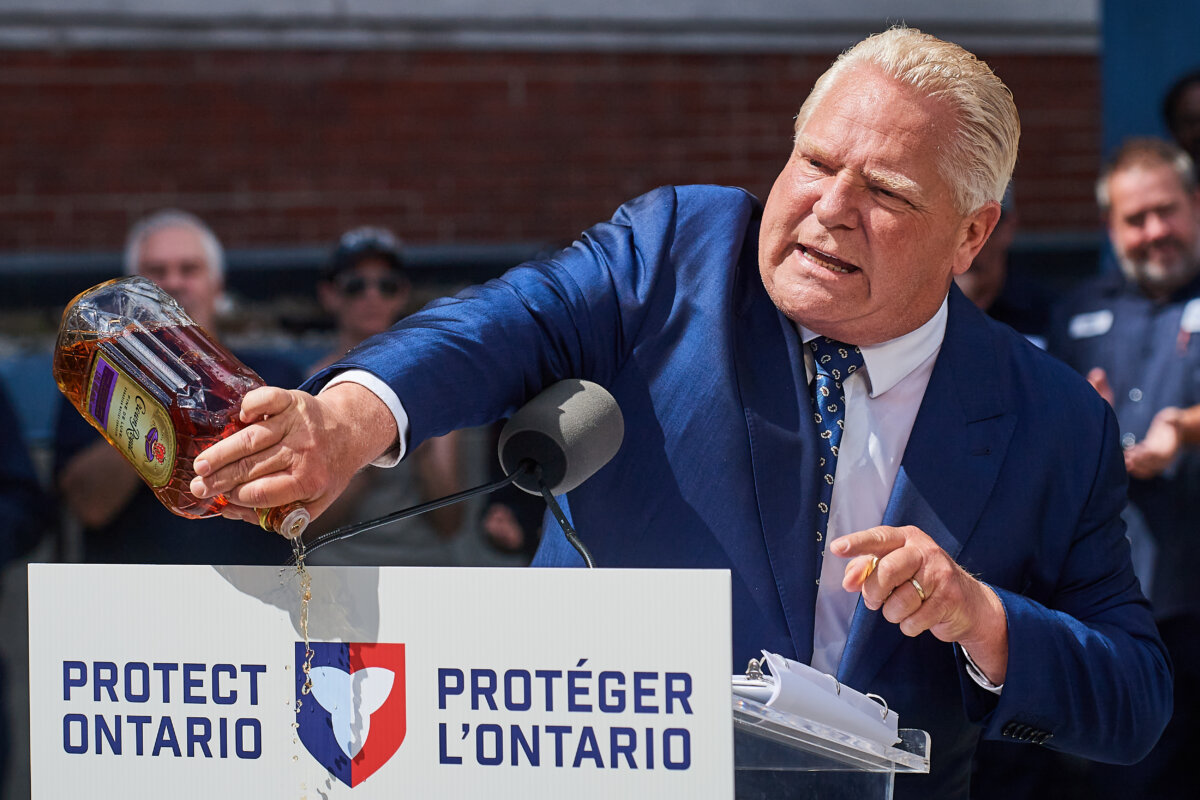

Premier Doug Ford says he will ban Crown Royal whiskey from Ontario-run liquor stores if British alcoholic beverage company Diageo proceeds with its plan to close its bottling plant in the southwestern part of the province.
Ford has been critical of Diageo since the company announced plans in late August to shutter its nearly 100-year-old bottling plant in Amherstburg next February in a bid to “increase efficiency.” The decision will impact the 170 employees who work at the facility and will also have repercussions for the local economy.
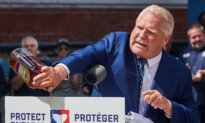
Ford made the comments at an unrelated Oct. 6 press conference in Quebec City, saying Diageo’s decision to close the plant is shortsighted. He described the LCBO as the “largest purchaser of alcohol in the entire world,” noting that the Ontario-run liquor store buys $765 million more than any jurisdiction anywhere in the United States or Canada.
“They want to close down a plant over what, $8 million of wages? They think they’re going to save?” Ford asked, before vowing to pull Crown Royal and Smirnoff Vodka off LCBO store shelves “as soon as the last person leaves that plant.”
Diageo is the owner of Crown Royal, Smirnoff, and several other well-known liquor brands, including Guinness, Baileys, and Captain Morgan. The Epoch Times contacted the company for comment about the potential boycott of its products in Ontario but did not receive a response before publication.
Diageo announced on Aug. 28 its plan to shift some bottling volume “to its many U.S. Crown Royal consumers,” a move that it said would unlock “additional productivity” for the company.
“This was a difficult decision, but one that is crucial to improving the efficiency and resiliency of our supply chain network,” Diageo president of North America supply Marsha McIntosh said in a statement.
Crown Royal, which was established in 1939, will continue to be distilled and aged in Canada, the company said, noting that all Crown Royal whisky destined for Canada and non-U.S. export markets will continue to be bottled in Canada, at Diageo’s Valleyfield, Quebec facility. The company also plans to maintain its Canadian headquarters and warehouse operations in Toronto.
The premier has previously spoken against Diageo’s decision. He dumped a bottle of its Crown Royal whiskey on the ground during a Sept. 2 press conference and encouraged Canadians to start supporting companies that make alcohol in Ontario. But it wasn’t until this month that Ford has promised to use the LCBO, a Crown agency, to hit back at the alcohol company headquartered in London, England.
Ford has often described the LCBO as the biggest buyer of alcohol globally and, while some say that title goes to UK retail chain Tesco or Costco in the United States, the Ontario-run liquor store chain holds significant purchasing power.
Ontario’s large population, combined with the LCBO’s exclusive control over alcohol distribution, positions the Crown corporation as a major international buyer of alcoholic beverages, particularly within North America.
Ford has also positioned that purchasing power as leverage in the trade dispute with the United States, ordering the LCBO in March to remove American alcohol from its store shelves. Canada is the largest buyer of American wine and spirits and Ontario represents the largest share of that market.
Ford has said American alcohol products will stay off Ontario shelves until tariffs are removed or Canada secures a trade agreement with the United States.
The union representing workers at the Amherstburg plant has asked Ford to implement a similar boycott on Crown Royal in LCBOs, saying Diageo will proceed with the closure unless the decision adversely impacts the company’s bottom line.
Unifor Local 200 President John D’Agnolo described the Amherstburg plant in an Aug. 28 press release as the “heart and soul” of the community as its largest employer.
“The decision to close the plant makes no sense and shows no loyalty to Canadian workers,” the union said.
 Friends Read Free
Copy
Facebook
Tweet
Friends Read Free
Copy
Facebook
Tweet