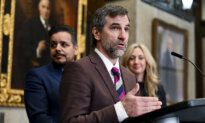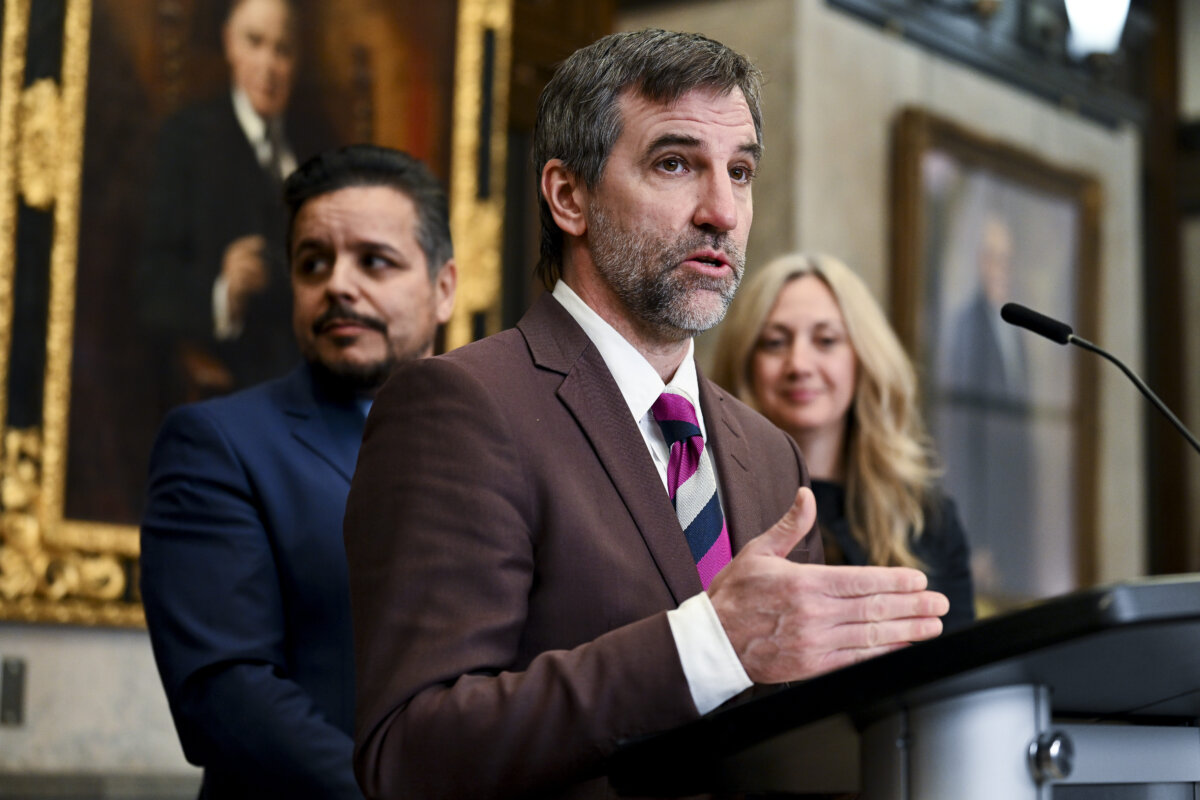

Liberal MP and former Environment Minister Steven Guilbeault has announced he will be resigning from his seat this summer, saying he wants to continue fighting against climate change in a “different way.”
In a statement released May 27, Guilbeault said he had informed Liberal caucus colleagues of his decision to step down as MP for the Montreal riding of Laurier–Sainte-Marie, though he will remain in office until “later this summer.”
Guilbeault said he reached the decision after “careful consideration” about his future.
“I have come to the conclusion that it is time for me to pursue my fight for environmental protection and the fight against climate change in a different way,” he said.
Guilbeault served as minister of environment and climate change from Oct. 26, 2021, to March 14, 2025. He subsequently served as minister of Canadian culture and identity before stepping down from cabinet late last year.
Guilbeault said Canada had demonstrated to the world “what we can accomplish with ambition and determination.” Guilbeault said he wanted to use that same conviction to continue fighting for “the generations who will inherit our precious and unique blue planet.”
Following a May 27 caucus meeting, Guilbeault told reporters it was time for him to move on after seven years in Parliament and that he was “feeling at peace” with his decision.
Prime Minister Mark Carney told reporters on May 27 that he was grateful for Guilbeault’s “many contributions” over the years. Carney said he had worked alongside Guilbeault before he became prime minister, when he was United Nations Special Representative on Climate Action and Finance.
“We worked together closely in a variety of areas, and I’ve always enjoyed working with him,” Carney said, adding that it was up to Guilbeault to “make decisions about his career.”
Industry Minister Mélanie Joly told reporters the previous day that she is a “good friend” of Guilbeault and that they both belong to the “environmentalist” wing of the Liberal Party. However, she added that Canada must also focus on “energy sovereignty,” citing the global energy crisis.
Natural Resources Minister Tim Hodgson said Guilbeault had been a “passionate advocate for the environment,” and the caucus shares his view that Canada should reach net-zero carbon emissions by 2050. “The collective view is the way we’re going to get there is not by telling people what they can’t do, but by building in a more responsible way,” Hodgson said at an unrelated press conference in Vancouver on May 27.
Guilbeault resigned from his cabinet role of culture minister in November 2025 just hours after Carney and Alberta Premier Danielle Smith signed a memorandum of understanding. The agreement paved the way for a new pipeline to be built to the B.C. coast, while overhauling net-zero emissions policies, in exchange for Alberta making certain commitments to reduce greenhouse gas emissions.
Guilbeault had said while he understood that the changes in Canada’s relationship with the United States had created a new economic reality for Canada, climate change issues remained a top priority for him.
Carney has repealed several environmental measures that were implemented during Guilbeault’s time as environment minister, such as the consumer carbon tax and electric vehicle sales mandate.
Guilbeault had a contentious relationship with oil-producing Alberta during his tenure as environment minister, with Premier Smith calling in 2023 for him to be “replaced.”
He also clashed with Saskatchewan Premier Scott Moe over federal climate policies. In 2024, Guilbeault criticized Moe for refusing to remit revenues collected under the federal carbon pricing system on natural gas after Ottawa exempted home heating oil from the levy. Moe had repeatedly criticized Guilbeault over federal emissions rules and proposed electricity regulations, arguing they would harm Saskatchewan’s economy and energy system.
Prior to becoming an MP back in 2019, Guilbeault founded an environmental organization called Équiterre to focus on climate change policies, and worked alongside Greenpeace. He gained public attention in 2001 after climbing the CN Tower in Toronto and dropping a large banner reading “Canada and Bush Climate Killers,” accusing then-U.S. President George W. Bush and the administration of then-Prime Minister Jean Chrétien of worsening climate change by not ratifying the Kyoto Protocol.
 Friends Read Free
Copy
Facebook
Tweet
Friends Read Free
Copy
Facebook
Tweet