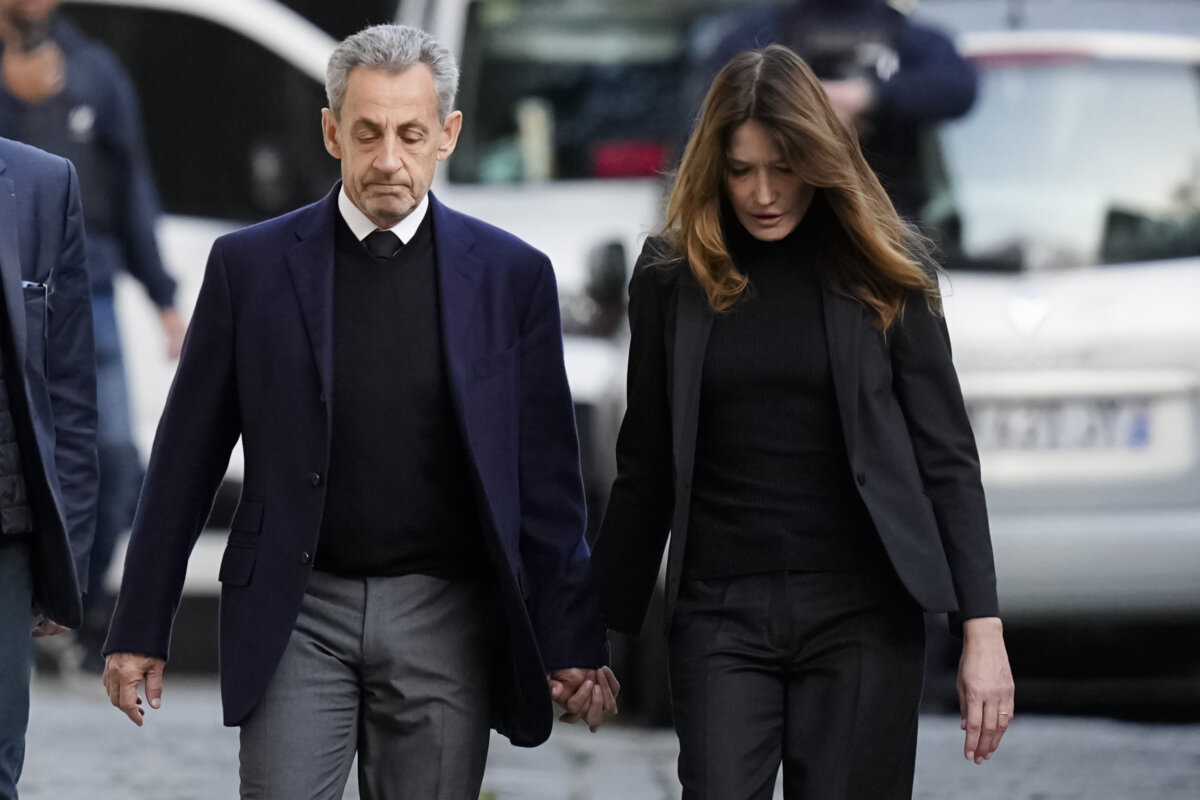

Former French President Nicolas Sarkozy was due in court on March 16 to appeal his conviction for criminal conspiracy over attempts to procure campaign funds from Libya, for which he was sentenced to five years in prison last September.
Sarkozy, 71, became the first post-war president of France to be imprisoned when he was incarcerated at La Santé prison in Paris last October, before being released pending appeal three weeks later.
A court agreed to release the conservative former president, who led France from 2007 to 2012, under judicial supervision, including a ban on him leaving the country.
Denies Libya Funding Plot
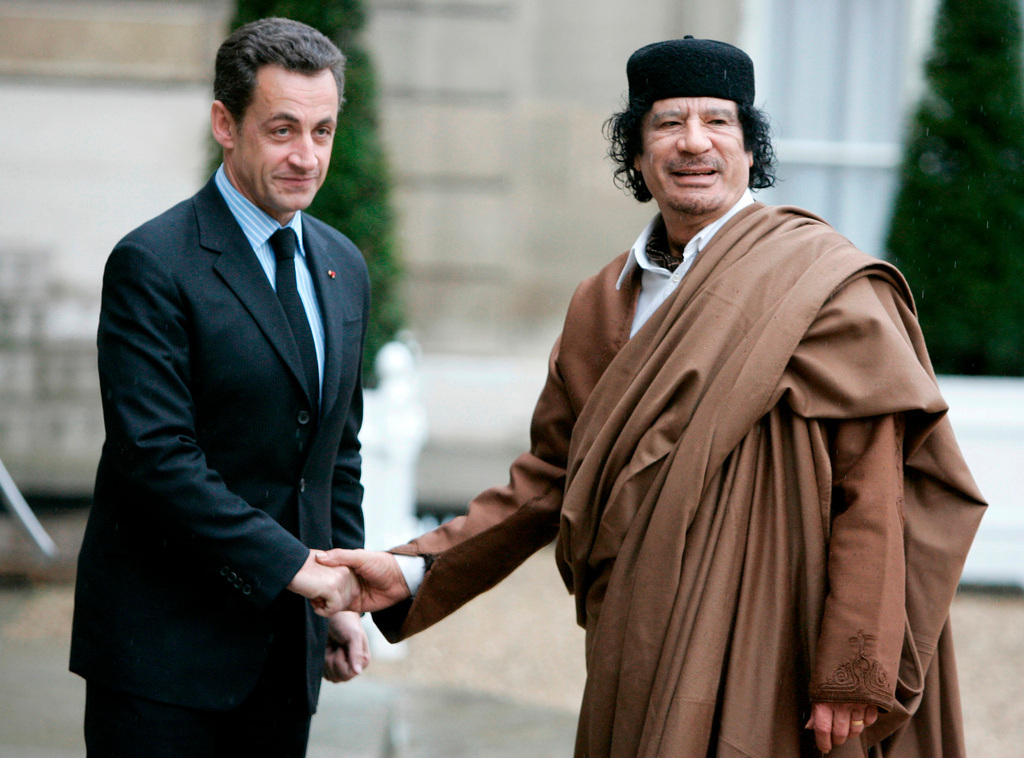
Sarkozy has consistently denied the charge of making a deal with the late Libyan dictator Muammar Gaddafi in 2005, when he was the French interior minister, to obtain financing for his presidential campaign in exchange for backing the Libyan government.
The former president’s conviction followed four years of legal battles over allegations that his successful 2007 election campaign accepted millions of Euros in cash from Libya.
Judges found Sarkozy guilty of criminal conspiracy between 2005 and 2007 for allowing close aides to seek campaign financing in Libya.
In the verdict, judges said there was no proof that Sarkozy had made a deal with Gaddafi, nor that money sent from Libya reached his campaign coffers, even if the timing was “compatible” and the money channels were “very opaque.”
Sarkozy’s lawyer declined to comment ahead of the appeal trial opening.
‘Diary of a Prisoner’
The former president used his 20-day stint in prison to write a book, “Diary of a Prisoner,” describing a harsh and noisy world of “inhuman violence,” despite the reputation of La Santé as a jail for high-profile convicts.
Sarkozy was held in solitary confinement and kept strictly away from other inmates for security reasons, but had regular visits from his wife, supermodel-turned-singer Carla Bruni-Sarkozy, and his lawyers.
Two police officers were assigned to the neighboring cell to protect the former president around the clock.
“The atmosphere was threatening. Welcome to hell!” Sarkozy wrote, describing his cell as looking like a “cheap hotel, except for the armored door and the bars.”
High-Profile Inmates
La Santé has housed some of the most famous inmates in the country since the 19th century, including Capt. Alfred Dreyfus, wrongly convicted of treason, and the Venezuelan terrorist known as Carlos the Jackal, who carried out several attacks on French soil and became a media symbol of 1970s terrorism.
More recently, Jean-Luc Brunel, the former head of a French model agency who was accused of procuring young girls for the late sex offender Jeffrey Epstein, was found hanged in his La Santé cell in February 2022.
Sarkozy said that he had reflected on his previous stance of being tough on law and order during his time in prison, telling himself that once free, his comments would be “more elaborate and nuanced than what I had previously expressed on all these topics.”
He wrote that he had declined an offer from French President Emmanuel Macron to be transferred to another prison due to security concerns about La Santé.
Sarkozy said he lost trust in Macron, with whom he previously had a friendly relationship, after the president did not intervene when he was stripped of the Legion of Honor, France’s highest distinction, in June 2025.
The former president said that during his incarceration, he received a phone call from his former political rival, Marine Le Pen, who leads the National Rally, a party regarded as further to the right than the centrist conservative party Sarkozy had led.
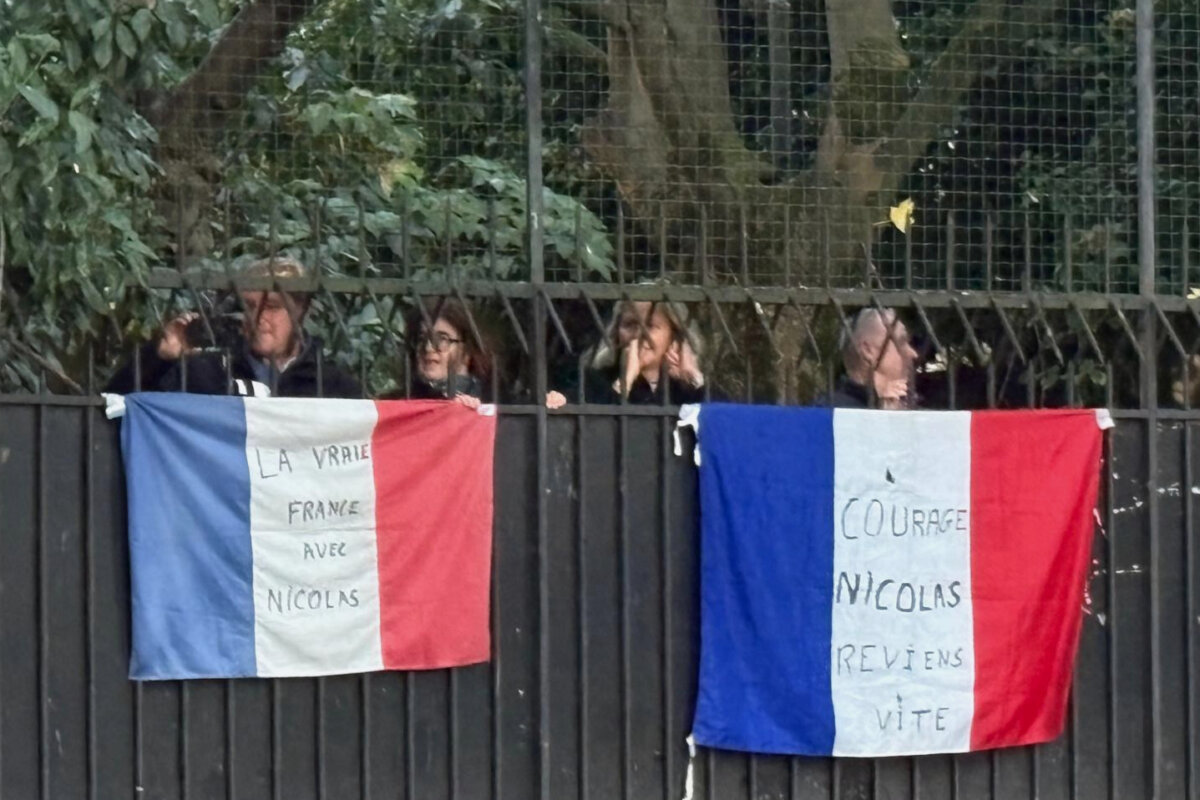
Although he has been retired from front-line politics for years, Sarkozy remains an influential figure within conservative circles.
Just before he entered prison, Sarkozy released a statement on social media declaring that “an innocent man” was being incarcerated.
“I will continue to denounce this judicial scandal,“ he wrote. ”The truth will prevail.”
The appeal, alongside 10 co-defendants, is scheduled to last until June 3.
Reuters and the Associated Press contributed to this report.
 Friends Read Free
Copy
Facebook
Tweet
Friends Read Free
Copy
Facebook
Tweet