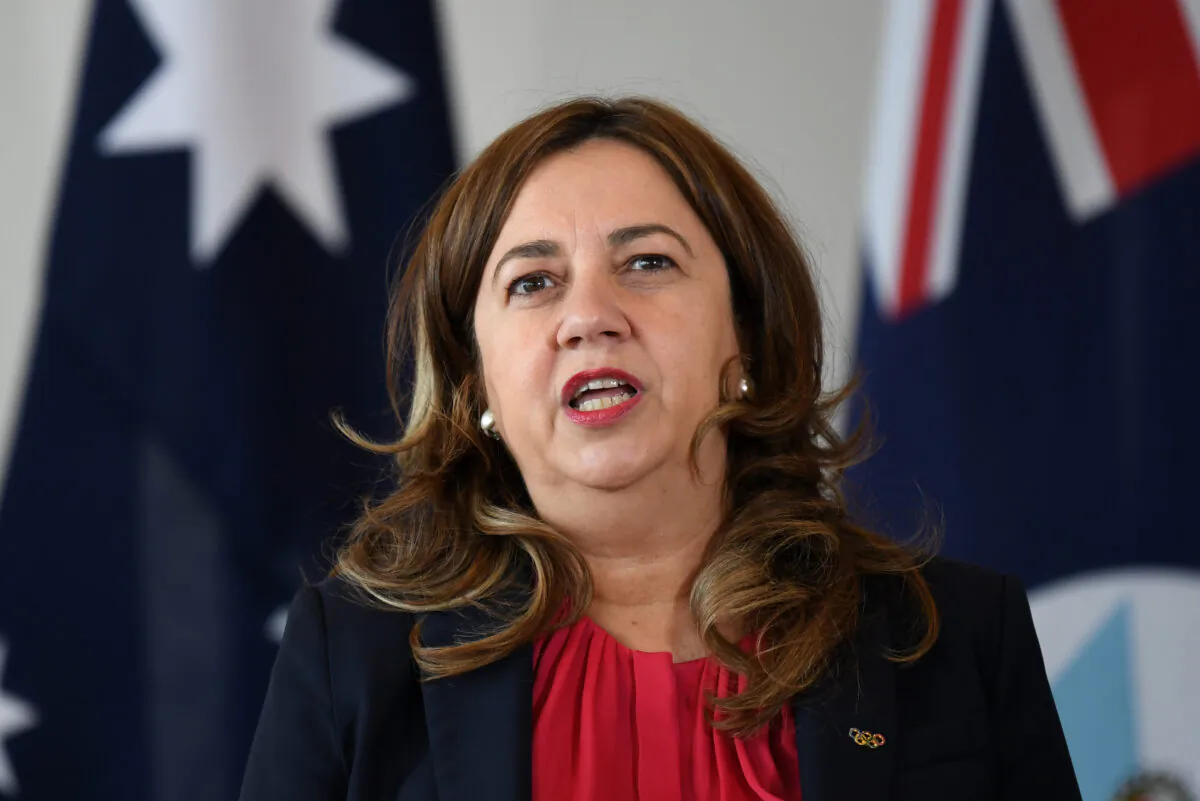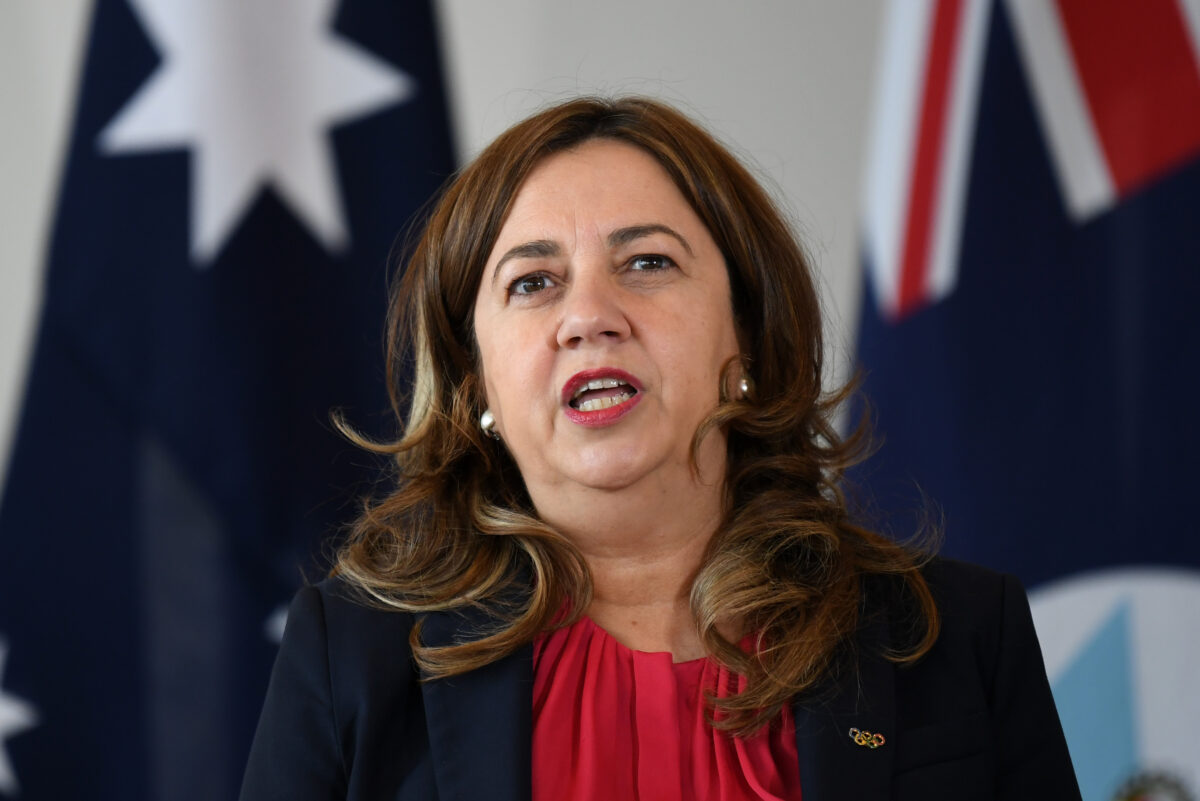

Former Queensland Labor Premier Annastacia Palaszczuk has admitted that industrial scale “green hydrogen” may not “stack up” economically following the cancellation of Australia’s largest planned project.
On June 29, the state-owned energy company Stanwell announced it would not proceed with the CQ-H2 project, a proposed $14.75 billion (US $9.6 billion) large-scale renewable hydrogen production facility at Aldoga in central Queensland.
The project was forecast to produce 200 tonnes of hydrogen daily by 2029, and 800 tonnes by the early 2030s.
The “green hydrogen” produced at the facility was earmarked for export via the Port of Gladstone to Japan and Singapore to meet their energy demands.
While Stanwell did not disclose the reason for withdrawing from the project, it was revealed in February that the newly elected Liberal National Party (LNP) government rejected the company’s plea for $1 billion in additional funding, citing a change in energy policy.
Prior to that, one of the project’s stakeholders, Japanese energy company Kansai Electric Power, decided to walk away due to cost blowouts.
Green Hydrogen ‘Too Hard’: Palaszczuk
During an interview with Sky News Australia on July 1, Palaszczuk acknowledged that green hydrogen projects were not economically feasible at this stage.
“That’s exactly what’s happening. And it’s not just here in Queensland and Australia and around the world, hydrogen is proving to be in the too-hard basket,” she said.
“The price is not right. So, people are looking at solar, [and] batteries.
“Hydrogen is just too hard at the moment. Until the prices come down, I don’t think we’ll see those projects taking off the ground.”
Palaszczuk said the collapse of CQ-H2 was disappointing, as hydrogen was high on the agenda for her former government and current federal government.
At the same time, Palaszczuk denied that her government was given inaccurate information about the project and hydrogen technologies when it provided seed funding to CQ-H2.
The former premier said it was important to be ahead of the curve on new technologies.
“You’ve got to be in it to win it. When there’s new technologies out there, whoever’s going to crack green hydrogen is going to make a lot of money,” she said.
“This was just in a too-hard basket at the moment. That’s not to say it’s not going to happen down the track, but the seed funding was necessary at the time.”
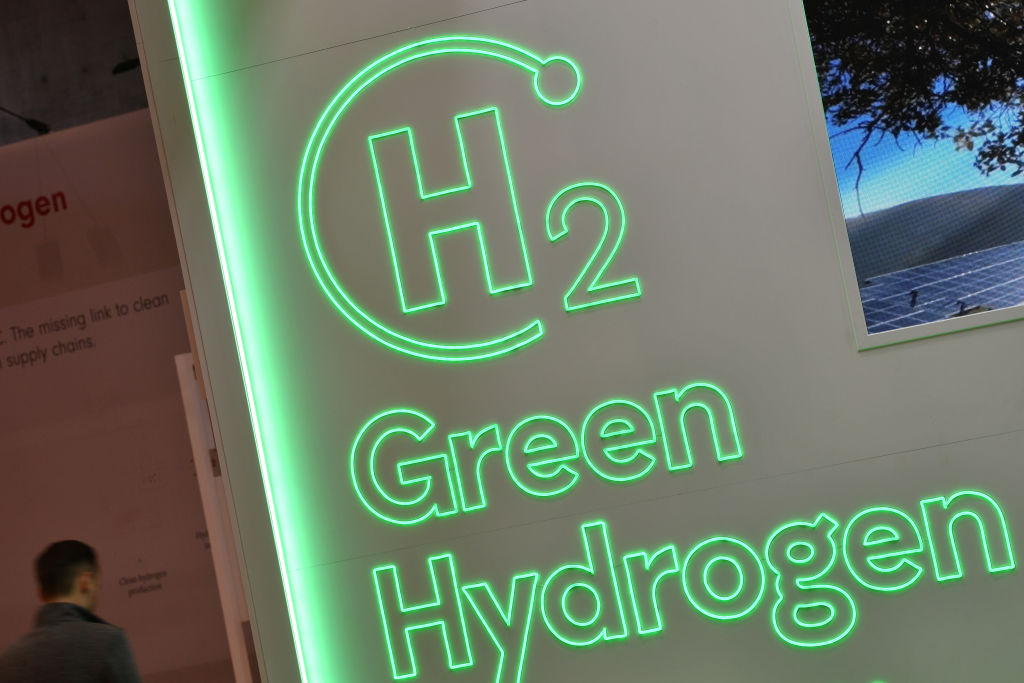
Hydrogen is a form of colourless, odourless gas found in compounds such as water and can be isolated and used as a fuel.
It is slated as a “storage” option alongside batteries to support renewable energy grids—simply put, excess power generated from wind or solar is theoretically supposed to be channeled into creating hydrogen instead of batteries via a process called electrolysis (itself an energy-intensive process).
The gas is then stored in reservoirs to be re-used as electricity or synthetic fuel later.
However, using hydrogen on an industrial scale has not been achieved yet. Besides being costly to create, the gas has the third lowest density amongst all gases, meaning it needs reinforced containers to store. Further it is highly combustible.
Green Hydrogen Important for Decarbonisation: Minister
Meanwhile, federal Energy Minister Chris Bowen considered the cancellation of the CQ-H2 project a setback, he remained optimistic about the sector’s future.
“Things don’t follow a linear line; you have progress, you have setbacks,” he told reporters.
“But green hydrogen remains very important for the decarbonisation journey, and it remains the fact that there are a relatively small number of countries around the world–Australia and a few in the Middle East, primarily–who have the capacity to develop a substantial green hydrogen industry for export.
“I’ve seen no other option to decarbonising heavy industry and moving away from gas than green hydrogen.”
In March, the minister hinted that the federal government could pump $8 billion into the renewable hydrogen industry over the next 10 years via the Hydrogen Production Tax Incentive.
 Friends Read Free
Copy
Facebook
Tweet
Friends Read Free
Copy
Facebook
Tweet