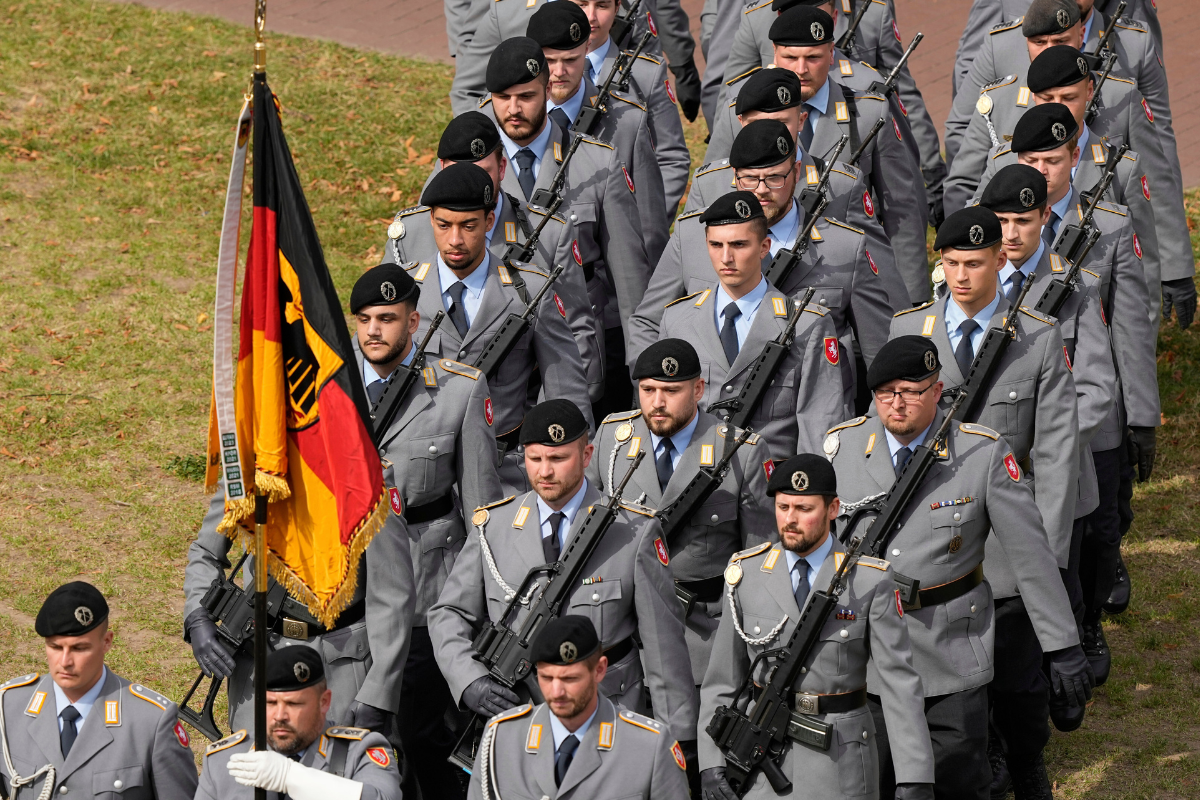

Germany’s parliament, the Bundestag, voted on Feb. 26 to give the military more powers to intercept unmanned aerial vehicles (UAVs), in response to an increase in drone sightings in the country since the start of the Russia–Ukraine war.
The Bundestag approved an amendment to the Air Security Act put forward by the federal government that allows the Bundeswehr—Germany’s military—to take direct action against drones when requested by civilian authorities.
The amendment focuses on the defense of airports and critical infrastructure, and it allows for the military to support states and state police forces by neutralizing drone threats through jamming or shooting them down, if necessary, “to avert a particularly serious incident,” according to a translation of the amendment.
Police in Germany are responsible for responding to drone incidents but often lack the necessary equipment to tackle them. Federal police powers have been expanded, and a drone defense center has been established in Berlin to help with these efforts.
Before the amendment was passed, military intervention was tightly restricted.
The governing conservative Christian Democratic Union/Christian Social Union and the Social Democratic Party voted in favor of the amendment. The government was supported by the Alternative for Germany. The Left voted against the measures, and the Greens abstained.
The amendments also strengthen ground security at airports and introduce a new criminal offense, under which those who intentionally enter secure zones to disrupt or endanger aircraft will face up to five years in prison.
Increase in Drone Sightings
“Since the start of Russia’s war of aggression against Ukraine, there has been a significant increase in reports of sightings of illegal unmanned aerial vehicles (drones) over critical infrastructure in Germany,” a draft of the amendment dated Dec. 12, 2025, states. “Due to the sometimes high capabilities of the drones, it is conceivable that the flights are being carried out on behalf of foreign state authorities.”
The Bundeswehr said in a statement that facilities such as power, water, health care systems, industrial plants, and research institutions “are increasingly targeted for espionage and sabotage by foreign powers and unknown individuals.”
European countries have experienced an increase in drone sightings, including over critical infrastructure such as airports. While some countries have said Russia is the likely source of the drones, Moscow has consistently denied intentionally entering NATO airspace.
Drones have been sighted in countries along NATO’s eastern frontier, notably Poland, and as far west as Denmark and the Netherlands.
On Feb. 26, Sweden said that its military had intercepted a suspected Russian drone off the south coast of the country on Feb. 25 while the Charles de Gaulle, a French aircraft carrier, was docked at the port of Malmo. The armed forces said that countermeasures were taken to disrupt the drone and that contact with it was lost. The Charles de Gaulle was in Swedish waters this week as part of regular NATO activities.
Swedish Defense Minister Pal Jonson told public broadcaster SVT that the suspected violation of Swedish airspace occurred while a Russian military ship was in Swedish waters.
Asked what country he thought the drone belonged to, he replied, “Probably Russia.”
Kremlin spokesman Dmitry Peskov said on Feb. 27 that he was not aware of the incident, and he said that it was “quite absurd” to claim that the drone was Russian just because a Russian ship was nearby.
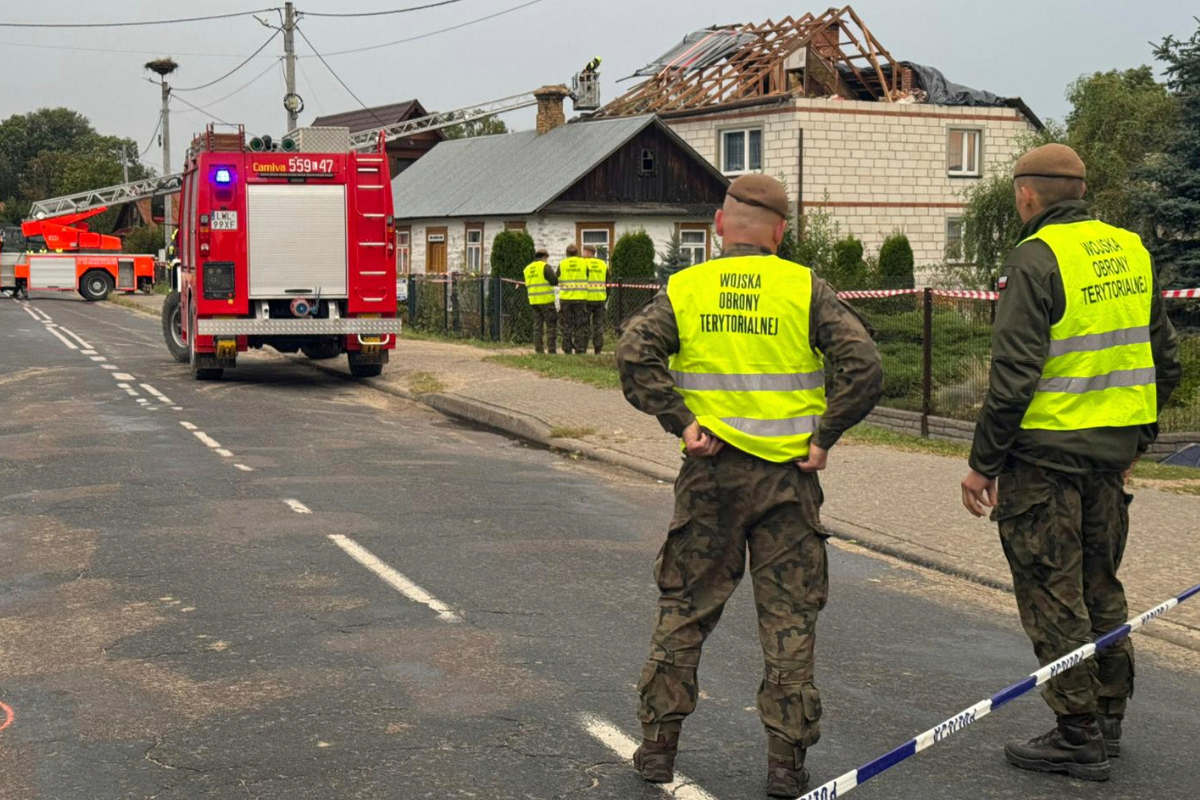
In September 2025, Poland’s Armed Forces Operational Command said air traffic restrictions had been introduced along the country’s eastern border with Belarus and Ukraine, following the downing of suspected Russian drones in the NATO member’s airspace.
Polish authorities said at the time that a home in the village of Wyryki-Wola had likely been hit by a Russian drone that entered Poland’s airspace on the night of Sept. 9.
Polish Minister for Special Services Tomasz Siemoniak told Polish television later that month that the house was likely hit by a missile fired from a Polish F-16 fighter jet.
“Everything indicates that it was a missile fired by our plane, defending Poland, defending the fatherland, defending our citizens,” Siemoniak said at the time.
Drone Warfare
In the war between Russia and Ukraine, each side has used UAVs in attacks against the other.
Ukrainian President Volodymyr Zelenskyy wrote on Telegram on Feb. 26 that Russian forces launched 420 drones and 39 missiles, including 11 ballistic missiles, to target his country’s energy sector and other critical infrastructure.
Ukraine’s Air Force said its defense units shot down 374 drones and 32 missiles, but five ballistic missiles and 46 drones hit 32 sites.
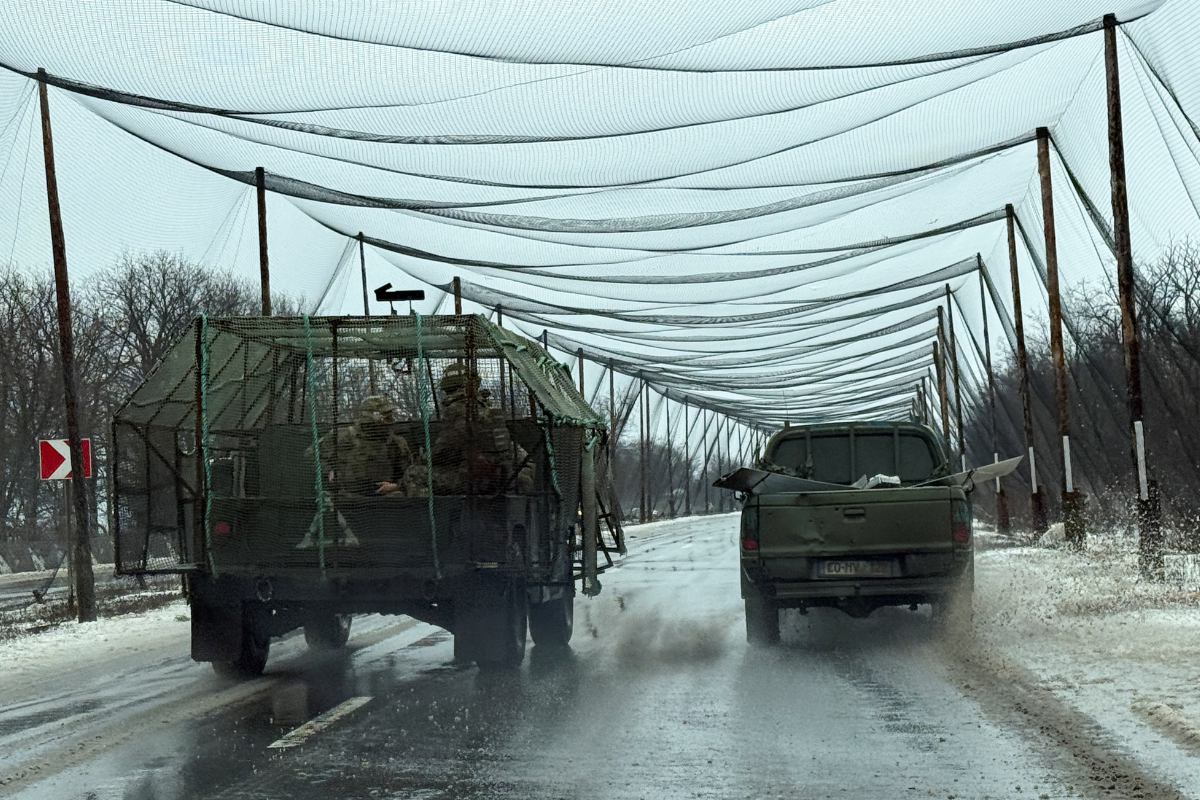
On Feb. 25, Ukrainian Defense Minister Mykhailo Fedorov said Kyiv will accelerate the placement of anti-drone nets over roads in frontline areas, in response to Russia’s use of UAVs to target military supply routes deeper into the country.
These nets can snag drone propellers, preventing them from reaching their targets. Fedorov said that a growing number of nets have been installed, but more are needed. The plans involve covering 4,000 kilometers (2,485 miles) of road in nets by the end of 2026.
Ukrainian forces launched 153 drone attacks and fired 12 munitions on Russia’s Belgorod region within a 24-hour period, the Russian regional emergency response center said in a Feb. 27 post on Telegram, according to Russia’s state-run TASS news agency.
“In the Valuisky district, the villages of Borki, Dolgoye, and Kazinka, as well as the Leonovka farmstead, came under attacks by 10 drones, eight of which were neutralized and shot down,” the response center said. “A man was wounded in a drone attack on his car on the Kazinka-Leonovka highway.”
The Associated Press and Reuters contributed to this report.
 Friends Read Free
Copy
Facebook
Tweet
Friends Read Free
Copy
Facebook
Tweet