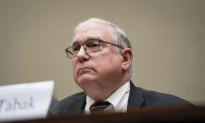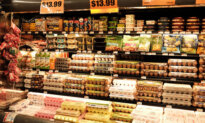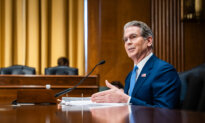

The governments of Germany and Ireland have both announced cuts to fuel taxes as energy costs continue to remain volatile because of the ongoing conflict in the Middle East.
Brent crude oil futures prices surged late on April 12 following the United States’ threat to block Iranian ports in the Strait of Hormuz after negotiations to end the conflict failed, as Iran refused to agree to U.S. terms to give up its nuclear program.
Berlin announced fuel price relief for consumers and businesses worth 1.6 billion euros ($1.9 billion), following a spike in oil prices on April 13, while Dublin’s government unveiled its cuts on April 12.
The government in Germany, led by Chancellor Friedrich Merz, said the energy tax on diesel and petrol would be reduced by about 0.17 euros per liter for a period of two months, according to a joint paper by the center-right Christian Democratic Union Party and its center-left Social Democratic Party coalition partners.
Merz, speaking at a news conference on April 13, said the coalition was doing everything it could to tackle problems caused by the Iran war.
The coalition partners also agreed to allow companies to pay a relief bonus of 1,000 euros ($1,174) per employee, free of payroll taxes and social security charges.
Merz said the measure should “very quickly improve the situation for motorists and businesses” and announced that the government explicitly expects the petroleum industry to pass on the relief to consumers, Frankfurter Rundschau reported.
In a bid to offset the costs, the government is planning antitrust or tax-protected measures against petroleum companies—a profit tax similar to the European Union energy crisis contribution of 2022 is under discussion.
In addition, the levy on tobacco is set to be increased this year.
At its peak earlier this month, diesel cost an average of more than 70 cents more per day than before the outbreak of war, and Super E10 gasoline was more than 41 cents more.
Irish Measures
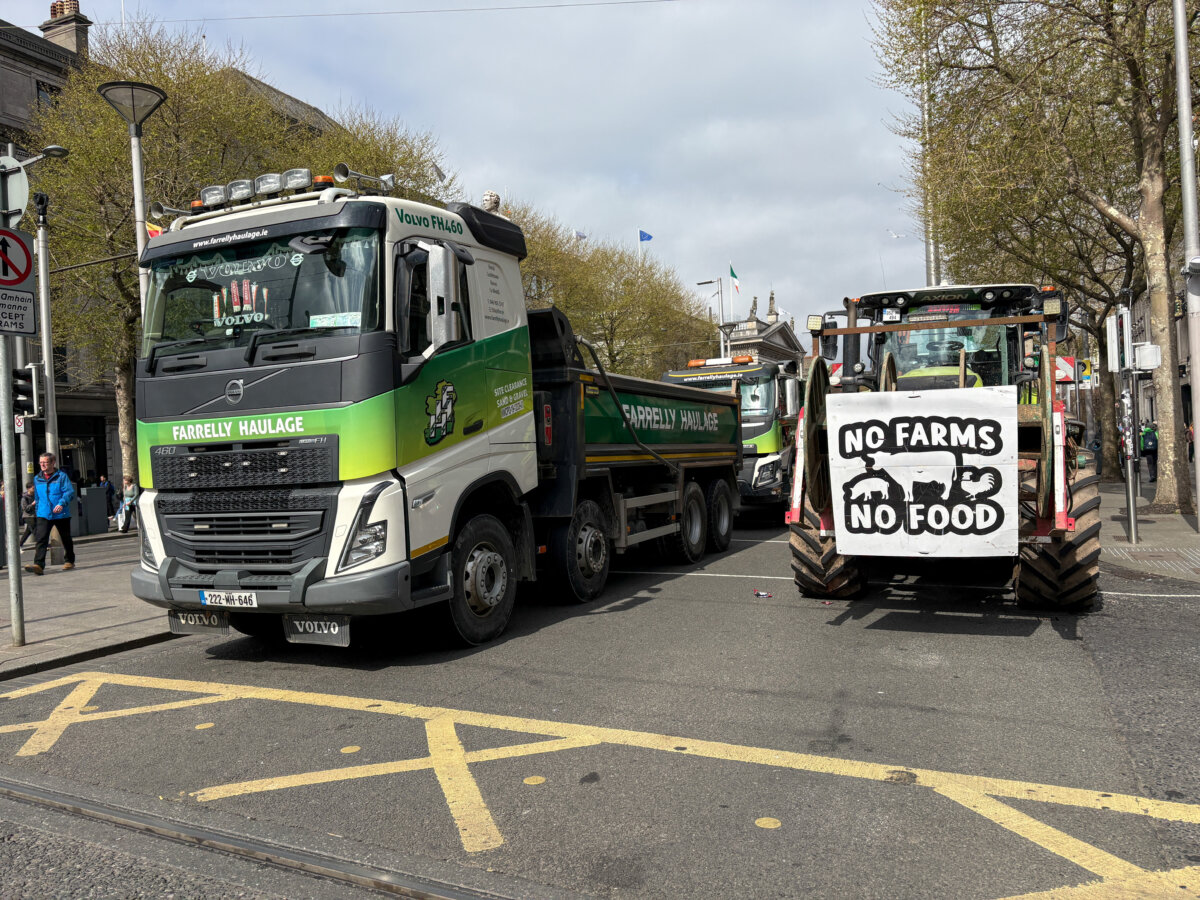
Meanwhile, in Dublin, Irish Prime Minister Micheal Martin said on April 12 that the government will offer fresh fuel tax cuts in a bid to end protests over soaring gas costs, which have gripped the country since last week.
Martin said the package, amounting to 505 million euros ($592 million), will ease some of the cost-of-living pressures that have grown since the U.S.–Israel war on Iran led to the closure of the Strait of Hormuz, Irish national broadcaster RTE reported.
The relief measure, which needs approval from the Parliament of Ireland, would come on top of a tax break of 250 million euros approved nearly three weeks ago.
“The government recognizes and understands the pressures that have arisen due to rising fuel costs as a result of war in Ukraine and the Middle East on all families and businesses,” he said.
Martin also said, “I am very conscious of the fact that we have to ensure that we support people, protect key services, and make critical investments.”
“The package we have agreed [on] today is a significant response to real pressures being felt here and globally,” he said.
He also criticized the tactics of farmers and truckers who had blocked access to the nation’s only oil refinery and several depots.
“It made absolutely no sense what was going on,” he said. “Higher fuel scarcity and higher fuel prices would actually have been the inevitable outcome of these blockades.”
Across Europe
Germany and Ireland are not the only countries in Europe to have adopted such policies in a bid to reduce the burden on consumers brought on by the war.
Hungary on March 9 introduced a price cap for gasoline and diesel in response to the rising price of energy, setting the cap for gasoline at 595 forints (about $1.80) per liter, or about $6.80 per gallon, and the cap for diesel at 615 forints (about $1.85) per liter, or about $7 per gallon.
The Czech government similarly agreed to cap fuel retailers’ margins and lower the excise tax to limit fuel price rises, Czech Prime Minister Andrej Babis said on April 2, according to local news outlets.
Poland also slashed the value-added tax on fuels to 8 percent from 23 percent on March 31 and reduced excise duties to the EU minimum through mid-April, according to Notes From Poland, an English-language website covering current affairs. Poland also introduced daily maximum retail price caps at gas stations with fines of up to 1 million Polish zlotys (about $270,000) for violations.
 Friends Read Free
Copy
Facebook
Tweet
Friends Read Free
Copy
Facebook
Tweet