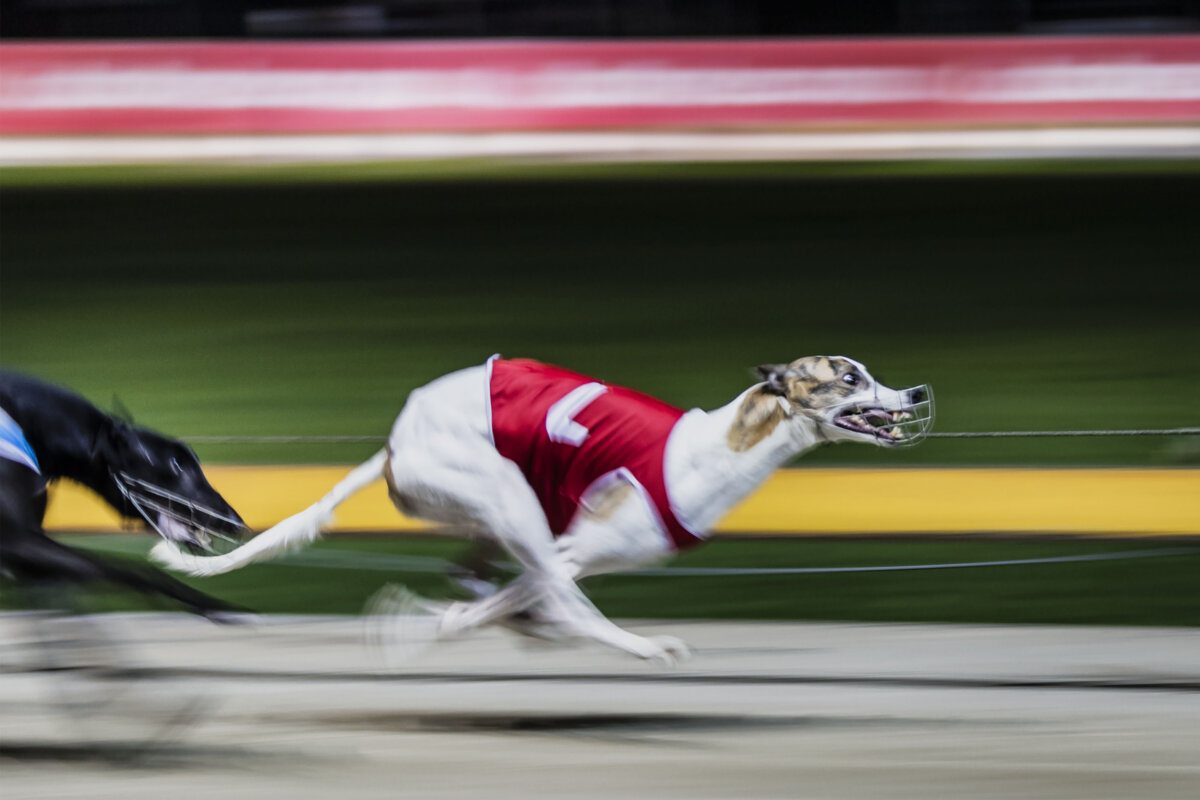

A leading former trainer says the proposed ban on greyhound racing in the Apple Isle will have a wider impact on the livelihoods of Tasmanians.
Blake Pursell, 29, now a machine operator was the handler of the 2022 Million Dollar Chase winner McInerney.
“It’s people who are employed at the track [that are at risk]. It’s people who supply kibble [dry feed for dogs]. For me, I used to use two bags of kibble a week. That’s 104 bags a year that won’t get sold,” he told The Epoch Times.
“I used to spend $500 a week on meat—that’s another person out of a job. It’s the flow-on effect that goes all the way back, even as far as a petrol station.
“If people aren’t travelling to the races it’s going to have a big effect on the economy.
“And the other thing is … I’ve got friends who have spent over $1 million on properties for dogs.
Pursell said the broader industry would also be nervous.
“It’s a definite worry for the whole racing industry’s future in Tasmania because greyhound racing is one of the biggest sources of funding for all racing,” he said.
“Horse racing and harness racing will be very worried, too. It’ll be very hard for them to survive without it.
“I’ve spoken to a couple of breeders and some good friends who still train. But they’re all the same–it’s just a shock.”
Pursell said he did not regret a “single minute of being a dog trainer.”
“I thoroughly enjoyed it, and I’ve still got family who are in it,” he said.
The Government’s Decision
Tasmanian Premier Jeremy Rockliff called time on greyhound racing on Aug. 10—as the government works to maintain power following the election—citing animal welfare concerns.
The announcement followed the death of Raider’s Guide—the state’s 2024 Greyhound of the Year who was trained by Gary Fahey—and was euthanised in July after breaking his neck following a fall during a race at Launceston.
“For many years now, there have been concerns around animal welfare, and we’re seeing an industry that is at the crossroads in decline and does not meet community expectations anymore,” Rockliff told reporters.
“That is why—with the culmination of the new racing deed to be negotiated and completed by June 30, 2029–we’ll be phasing out greyhound racing to that date.”
The Coalition for the Protection of Animals backed the decision.
“The people have said NO to cruelty, and NO to wasting public money on greyhound racing,” the organisation posted on social media.
Peita Duncan, chair of Greyhound Racing Victoria, was scathing of the decision, saying it was a political move aimed at shoring up the numbers in parliament.
“You pledged your unqualified support to all three racing codes, including greyhound racing, because you knew how much work has been done by TasRacing to make greyhound racing in your state as safe as it has ever been,” Duncan wrote in an open letter to the Premier.
“And just 21 days later, you have reneged on that promise, putting your personal ambition above the livelihoods of hundreds of greyhound racing participants in Tasmania who love and care for their greyhounds.
“To cave in and side with those who want to ban everything based on no facts is both soul-destroying and incredibly disingenuous for those who believed your previous commitments.”
Over 6,400 people are employed across greyhounds, harness and thoroughbred racing in Tasmania.
The Rockliff government had released a statement on June 28 saying it would bolster regulation of the industries.
“A re-elected majority Liberal Government will deliver the largest integrity reforms in decades through the Racing Regulation and Integrity Bill, which is based on evidence and industry best practice,” the statement said.
“The delivery of this reform will provide the Tasmanian racing industry with a modern, effective and fit-for-purpose model for regulation and integrity. This includes $1.9 million in funding to progress the new integrity model.
“This funding will help establish the independent Tasmanian Racing Integrity Commissioner with comprehensive oversight of the administration and regulation of the Tasmanian racing industry. It will also ensure TasRacing is appropriately resourced to be operationally responsible for all three codes of racing, including pre-race day and race-day management, stewards and daily animal welfare.”
TasRacing said it would “engage with all industry code (greyhounds, harness and thoroughbreds) stakeholders and other stakeholders about the decision.”
 Friends Read Free
Copy
Facebook
Tweet
Friends Read Free
Copy
Facebook
Tweet