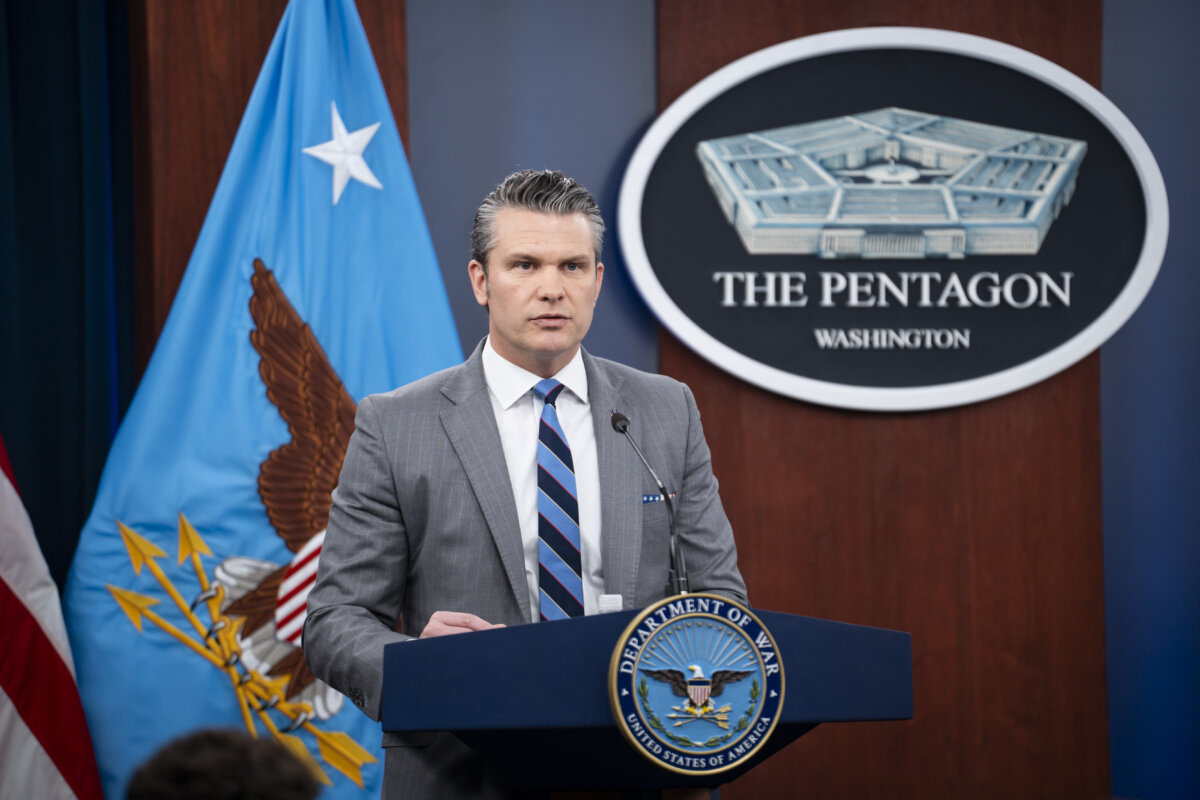

Department of War Secretary Pete Hegseth said on April 24 that a nearly two-week-long U.S. naval blockade of Iranian ports is increasing and “going global” as Washington seeks to exert economic pressure on Tehran ahead of possible negotiations.
The U.S. military blockade is “growing” and has “gone global,” he said at a morning press briefing at the Pentagon, adding that Iran “will never get a nuclear bomb.”
He added that the Iran blockade encompasses the Gulf of Oman in the Indian Ocean to the “open oceans,” while he confirmed that 34 ships have been told to turn around or return to port by the United States since the blockade was initiated on April 13.
Iranian Foreign Minister Abbas Araghchi is heading to Pakistan on Friday for talks focused on “bilateral consultations,” Iran’s state-run IRNA news agency said. Officials in Pakistan have been trying to get the United States and Iran to convene for a second round of ceasefire negotiations. Araghchi will also stop in Oman and Russia, state media said.
Meanwhile, the U.S. military is prepared to deal with any Iranian ships that “recklessly and irresponsibly” place more mines in the Strait of Hormuz,” Hegseth said, adding that “it’s a violation of the ceasefire.”
Hegseth was responding to statements from President Donald Trump, who on Thursday wrote on social media that he had ordered the military to “shoot and kill” small Iranian boats that are deploying mines in the key waterway. The U.S. military is confident it can clear any mines, the Pentagon chief said, adding he “would encourage other countries to be a part of such an effort as well.”
Iran has kept its stranglehold on traffic through the Strait of Hormuz, attacking three ships earlier this week, sending the price for a barrel of Brent crude oil above $100.
An initial 10-day ceasefire, which took effect on April 17, was due to expire on April 27, but Trump said he would extend it. At the time of the announcement, Trump said that the Iranian regime had been fragmented and needed more time to submit a proposal.
Trump wrote on April 23 that Iran doesn’t know who its actual leader is and that regime infighting has created confusion during U.S. negotiations. In the early days of the Iran war, U.S. and Israeli strikes killed many of Iran’s top leaders, including Ayatollah Ali Khamenei.
While Khamenei’s son, Mojtaba Khamenei, was named as the top leader in March, he has not made any public appearances.
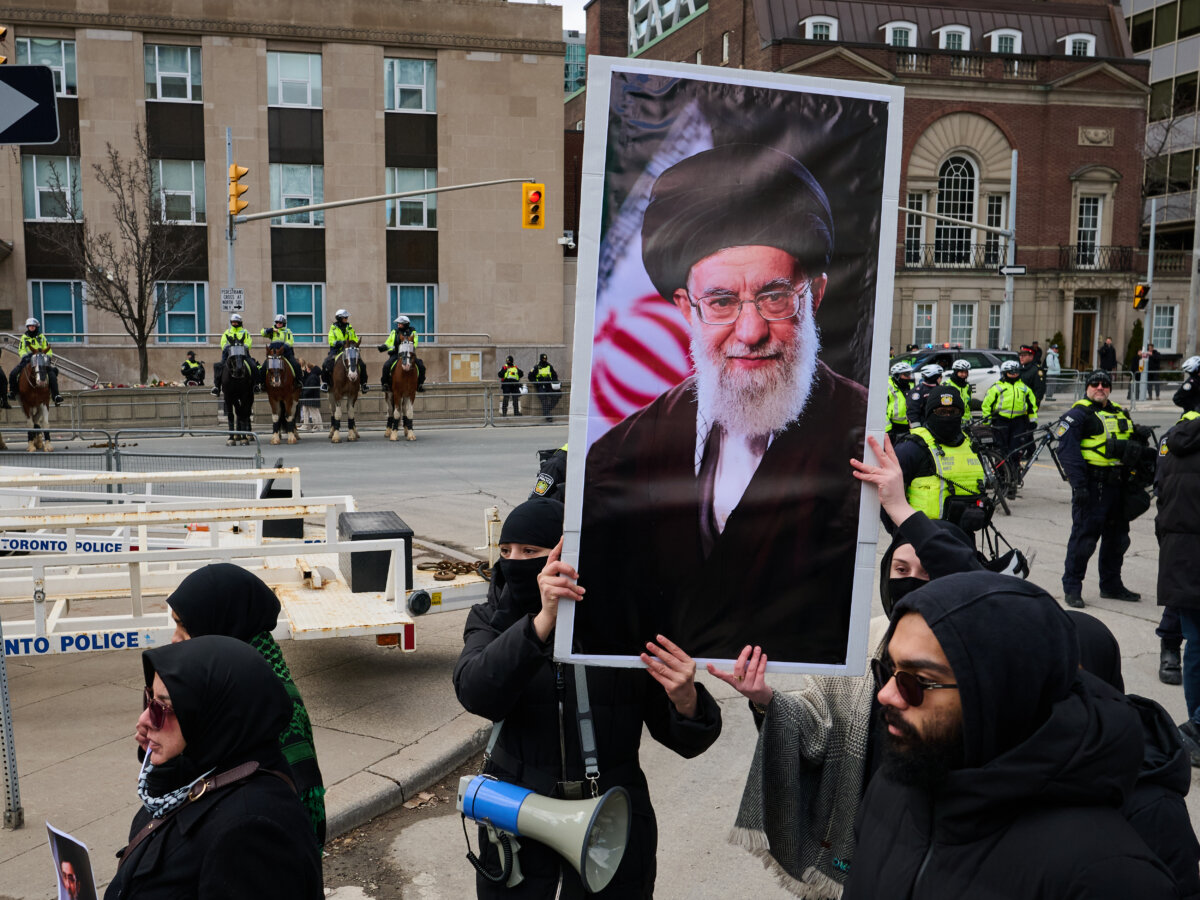
“The infighting is between the ‘Hardliners,’ who have been losing BADLY on the battlefield, and the ‘Moderates,’ who are not very moderate at all (but gaining respect!), is CRAZY!” Trump wrote in a Truth Social post.
Also, on April 23, Trump said that Israel and Lebanon had agreed to extend a ceasefire between Israel and Hezbollah by three weeks after talks at the White House. The meeting was the second high-level negotiation between the two countries since last week.
The Associated Press contributed to this report.
 Friends Read Free
Copy
Facebook
Tweet
Friends Read Free
Copy
Facebook
Tweet