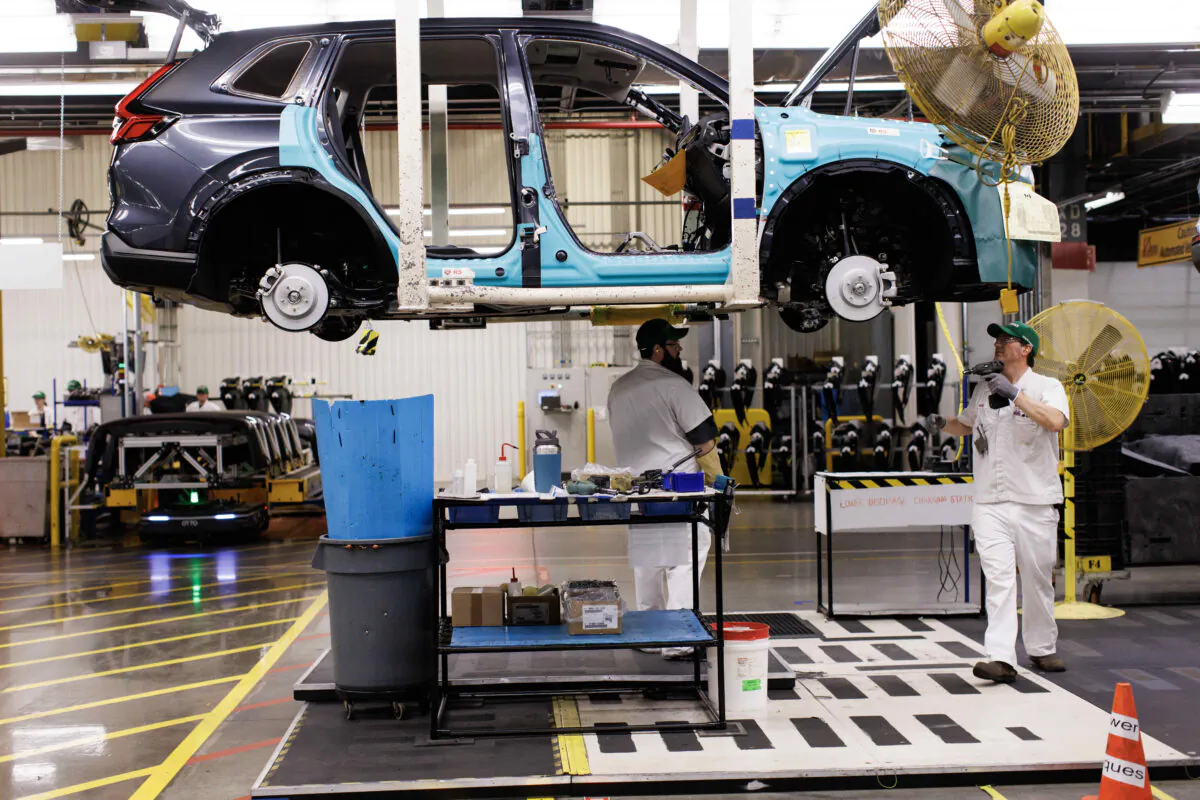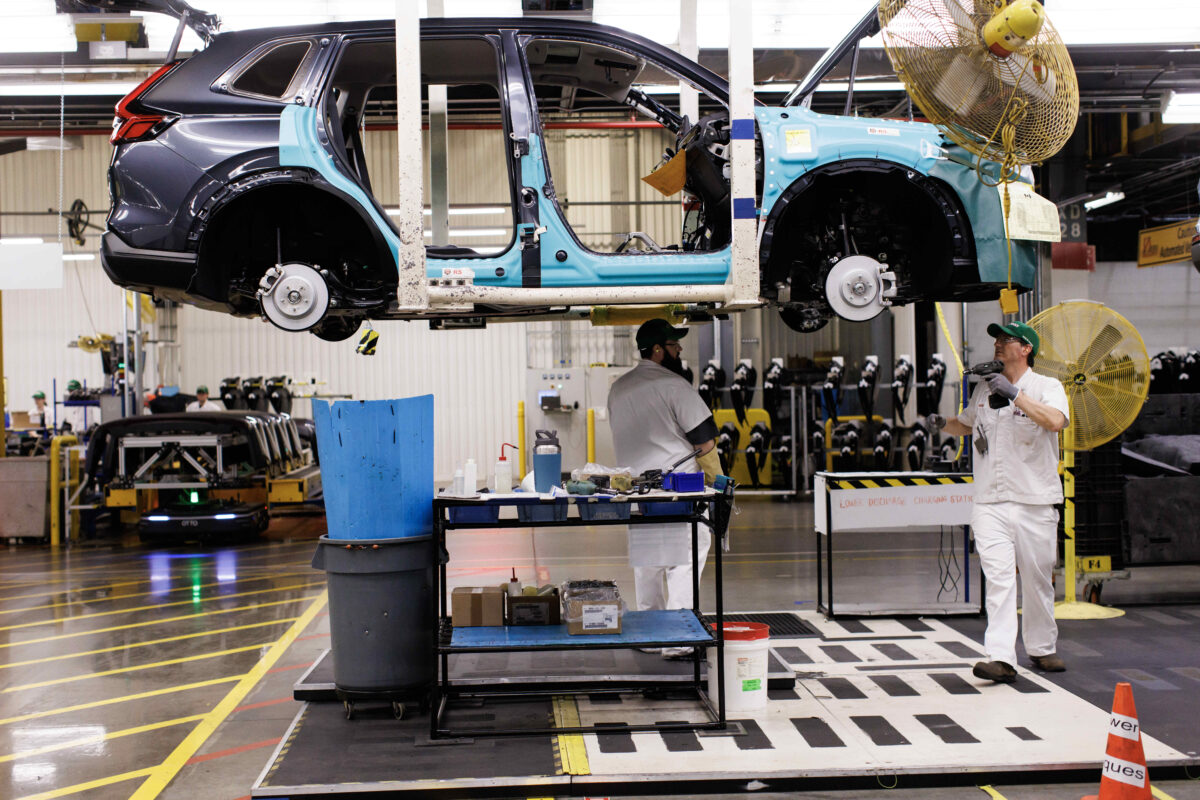

Honda Canada President and CEO Dave Jamieson says low-cost, state-subsidized cars entering the country and government policies are making Canada less competitive, while emphasizing that access to the U.S. market is essential.
His comments come as Prime Minister Mark Carney’s government signed a deal in January to allow 49,000 Chinese electrical vehicles (EVs) into Canada at a reduced tariff rate of 6.1 percent from the previous 100 percent rate.
Speaking at the 2026 Automotive Parts Manufacturers’ Association Summit on June 9, Jamieson warned that Canada is at a “crossroads” and that the decisions made in the coming months or years will determine whether the country remains a global leader in auto manufacturing or becomes a market for others to sell into.
The auto manufacturing industry is “one of Canada’s most important economic engines,” he said, but noted that the past year has been “difficult” as the industry manages a shift toward electrification, trade pressures, and challenges from foreign automakers entering the Canadian market.
Honda Canada announced in May that it was “indefinitely” suspending its plans to build a $15 billion electric vehicle plant in Ontario. The company said this would not affect current employment or production levels at its factory in Alliston.
Jamieson said that the change in plans does not constitute a cancellation and that it is a consequence of the conditions Canada has created for long-term investment.
“When trade uncertainty is looming, regulations are evolving, and government policies are misaligned to consumer demand, it becomes increasingly difficult to move forward with capital-intensive, long-term investments of this scale,” he said, adding that Canada is losing its “competitive advantage.”
Jamieson outlined three areas he said will determine whether Canada can remain competitive for future generations of auto manufacturing: access to the U.S. market, guardrails against new automakers in the Canadian market, and regulatory and emissions policy alignment.
“What we’re facing is more than change. It is a direct test of both Honda’s footprint in Canada and the long-term future of Canadian auto manufacturing,” he said.
US Market
U.S. tariffs and trade uncertainty create risks for auto manufacturing, Jamieson said, noting that 76 percent of vehicles built at Honda’s Alliston facility are shipped to the United States and are “highly sensitive” to cross-border trade dynamics.
If Canadian products are to remain competitive, he said, Canada needs “stable, predictable access” to the U.S. market.
He added that the United States has always been Canada’s “best ally” and that the economic case for large-scale auto manufacturing in Canada becomes more difficult to justify and sustain without access to the U.S. market.
Jamieson called on Ottawa to ensure the strength and renewal of the Canada–United States–Mexico Agreement on free trade, as U.S. market access is “critical for Honda Canada and the long-term viability and competitiveness of the entire sector.”
Brian Kingston, president and CEO of the Canadian Vehicle Manufacturers’ Association, told MPs at a parliamentary committee meeting on June 9 that access to the U.S. auto market is “the foundation” of Canada’s auto industry.
“Diversification is not an option for automotive, as markets in Europe and Asia are better served by assembly plants in those regions,” Kingston said. “Canada’s market alone is too small to justify large-scale manufacturing.”
State-Subsidized Producers
Jamieson also said Canadian automakers are facing “rising competition from low-cost, state-subsidized, non-market-oriented producers.”
“The concern is that large-scale imports, along with minimal assembly or knock-down operations, could create very real and obvious market imbalances,” he said.
Such business models often involve limited investment, fewer jobs, and weak supply chain development, and they also risk displacing more of Canada’s manufacturing footprint than they add to it, he added.
Ontario Premier Doug Ford has been critical of Chinese automakers building plants in Canada, saying such agreements would potentially involve the use of kits, where cars are largely built in China and then shipped overseas for final assembly, undermining Canadian autoworkers.
As new automakers look to enter Canada’s market, Jamieson called for stronger policy guardrails to prevent “long-term erosion” of Canada’s industrial base, adding that state-subsidized producers, in many cases, have no intention to build long-term value for Canada.
Emissions Policy
Jamieson said Canada’s proposed emissions regulatory framework and provincial zero-emission vehicle mandates have “major consequences” for Canadian auto manufacturing, noting such policies work against the industry.
Hybrid vehicles offer a clearer pathway to reducing transportation emissions, he said, as they require no changing infrastructure, cost less than EVs, perform reliably in Canadian winter conditions, and reduce emissions by approximately 25 percent to 30 percent compared to similar gasoline models.
Roughly 60 percent of Honda Civic and CR-V models sold in Canada are hybrids built in Alliston, but under the current regulatory framework, Honda could face hundreds of millions of dollars annually in compliance costs because hybrid vehicles are not adequately recognized by federal and provincial frameworks, Jamieson noted.
He called for a “unified, national realistic emission framework” that reflects the current consumer demand and recognizes the value of hybrids as the bridge to electrification.
Ottawa announced in February that it is eliminating its 100 percent EV mandate by 2035 and replacing it with new emissions regulations, while providing new subsidies for the purchase of EVs. The revised goal is to reach an EV adoption rate of 90 percent by 2040, achieved through stricter greenhouse gas emission standards for vehicles sold starting in 2027.
Reactions
Conservative MP Raquel Dancho reacted to Jamieson’s speech, noting she has been sounding a similar alarm about the future of Canada’s auto industry for months.
“Honda is flagging U.S tariffs, the Liberals’ emissions regulations—an EV mandate by another name—and the Chinese EV deal as driving questions on its future in Canada,” Dancho said in a June 11 post on X.
“I have been sounding this alarm for months. Unfortunately, it seems the government is incapable of listening to reason, and our auto workers will pay the price.”
Kingston also reacted to Honda Canada’s warning, saying the government’s response “should be obvious” and should include securing U.S. access, reducing regulatory burden, and eliminating the Canada-China agreement.
“‘Doubling down’ on China is not the answer,” Kingston said in a June 12 post on X. Kingston called on Ottawa to scrap its EV deal with China earlier this week.
The Liberal government says its recent move to scrap the 100 percent EV sales mandate and replace it with new emissions standards would ease the burden on the Canadian industry.
“Canada will rationalize emission reduction policies, focusing on the outcomes that matter to Canadians without placing undue burden on the Canadian industry,” the government said in February.
 Friends Read Free
Copy
Facebook
Tweet
Friends Read Free
Copy
Facebook
Tweet