
News Analysis
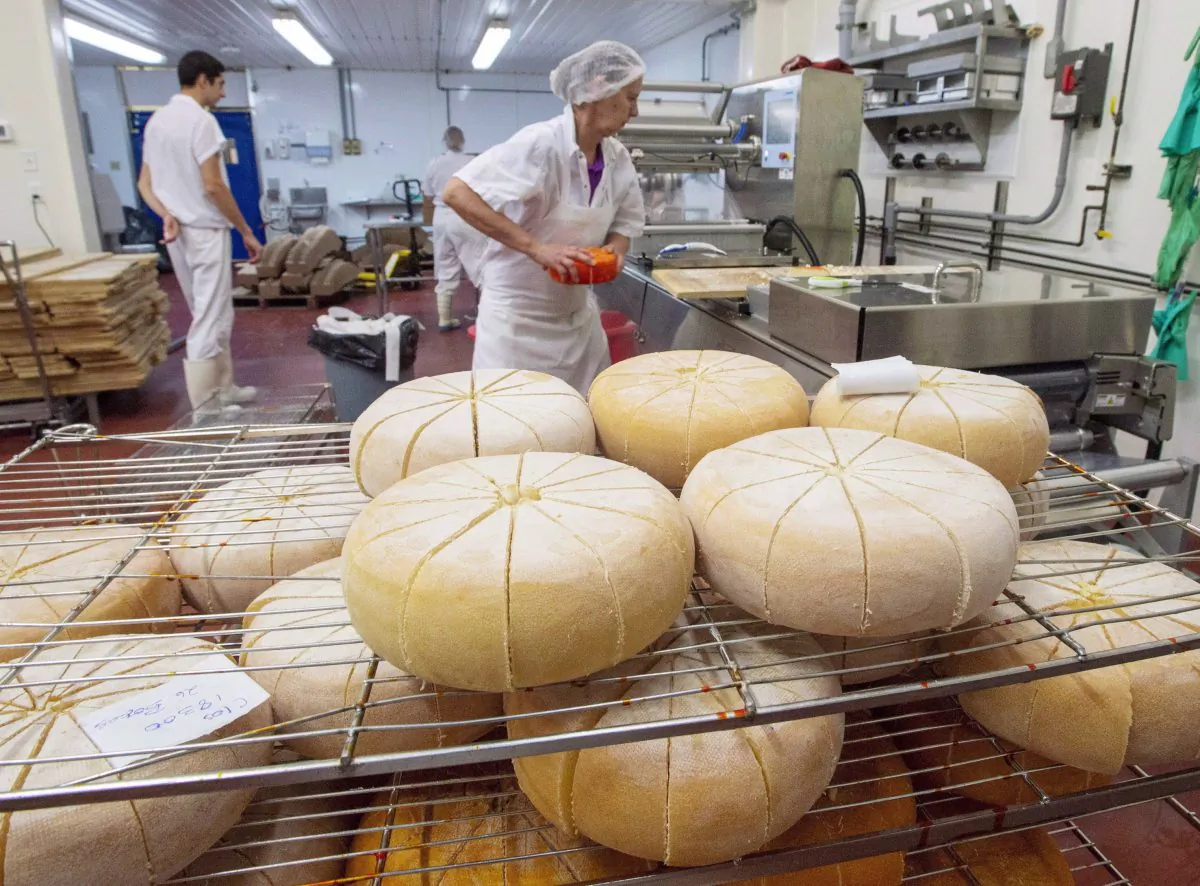
Ottawa and Wellington recently settled a years-long free trade dispute that will see increased dairy market access to New Zealand, while Canadian federal politicians have pledged to protect the local industry.
New Zealand has said the new deal will provide up to $129 million in export value for its dairy exporters.
The increased access for New Zealand came despite Parliament recently adopting Bill C-202 to protect Canada’s supply management system.
While trade issues are often complex, a key reason Bill C-202 didn’t apply in this dispute is that New Zealand was seeking access under terms that can be challenged through existing agreements—not a broader change to Canada’s supply management regime, as U.S. President Donald Trump’s administration demanded and secured during his first term. It is that type of change that Bill C-202 aims to prevent.
But there are some other considerations in play as well.
Bill C-202
Bill C-202 aims to protect in trade agreements Canada’s supply management system, which applies to dairy, eggs, and poultry. Domestic producers are required to purchase quotas under the system, while various free trade agreements establish what amount of foreign goods can enter the country before a tariff applies.
All parties in the House of Commons had supported the bill and, during the spring election campaign, all major federal party leaders had pledged to protect supply management.
The bill aims to prevent the government from making commitments in a trade agreement that would impact two aspects of supply management. One relates to increasing the tariff rate quota, which regulates the quantity of goods that can be imported under a specified tariff. The other relates to reducing the applicable tariff on those goods if they exceed the tariff rate quota.
For example, if Canada charges a tariff of 5 percent for imported butter under 3,000 metric tonnes, and a 200 percent tariff for anything above that quantity, the government cannot increase the quantity to 3,500 metric tonnes and/or reduce the tariff on excess quantity to 150 percent.
Bill C-202 is geared toward future trade agreements, given current trade deals already have the force of law. The legislation had been mentioned last year as a key demand by the Bloc Québécois to keep supply management—which is of importance in Quebec—off limits in trade negotiations, in exchange for the Bloc keeping the then-minority Trudeau Liberals in power. The Bloc’s proposal came before Trump was elected president in November, but was passed this year under the new session of Parliament as Canada is in the midst of trade negotiations with the Trump administration.
New Zealand’s Grievance
From an international agreement perspective, the key reason New Zealand gained increased access to Canada’s dairy market was that Canada was not abiding with the existing Comprehensive and Progressive Agreement for Trans-Pacific Partnership (CPTPP) rules, according to Wellington’s complaint validated by a CPTPP panel.
From a domestic legislation perspective, Bill C-202 doesn’t have provisions to override existing free trade agreements. Even if it did, the deal reached between Canada and New Zealand does not impact the established dairy tariff rate quotas or tariff rates set by the CPTPP, which predates Bill C-202.
The CPTPP, which regulates free trade between Canada, New Zealand, and nine other countries, was signed in March 2018. Parliament passed legislation to implement the agreement on Oct. 25, 2018, and ratified the CPTPP four days later.
Responding to New Zealand’s complaint, the CPTPP panel ruled in 2023 that Canada had breached several of its obligations, including that it was not allowing eligible applicants to fully use the tariff rate quotas. Under the settlement reached, Canada has to put mechanisms in place to ensure that unused quotas by some holders are made available to others who seek to import dairy products from CPTPP members.
Currently, there are 25 quota-holders for a product like butter under the CPTPP. Among the list are giants like Kraft Heinz Canada, Saputo, and Lactalis Canada. Other smaller players also hold quotas and are in the business of selling dairy products, which could lessen their appetite to fill import quotas from dairy powerhouse New Zealand.
This was a key aspect of Wellington’s complaint, according to Sylvain Charlebois, director of the Agri-Food Analytics Lab at Dalhousie University.
“We weren’t allowing products into the market because import quotas were given to companies that had no interest or any incentive to actually bring more competition into the Canadian marketplace,” he told The Epoch Times in a recent interview.
Canadians are set to benefit from increased competition, Charlebois added, with New Zealand dairy products being of high quality.
The Dairy Farmers of Canada (DFC) says that the supply management system is needed to protect Canada’s farmers, and adds that it supports a “rules-based trading system.”
“Dairy Farmers of Canada is aware that the governments of Canada and New Zealand have reached a mutual agreement using mechanisms established under the [CPTPP]. We understand that this will result in certain minor policy changes to Canada’s TRQ administration,” the organization said in a statement to The Epoch Times.
“DFC supports a rules-based trading system and expects that the Canadian government will continue to uphold our national food security and food sovereignty.”
Resolving Trade Disagreements
Another consideration is that Canada and New Zealand may be wanting to resolve any trade disputes to focus their attention on the Trump administration’s resetting of the international trade order.
Canada’s agreement to make changes to its trade policies came after Wellington had launched a dispute resolution process under the CPTPP in 2022. After the CPTPP panel found Canada in breach in 2023, Ottawa did not take action, leading New Zealand to threaten to impose retaliatory tariffs on Canada last year.
“I think Canada and New Zealand wanted to seek agreement, because they don’t want to be fighting at a time when you may need greater unity among countries vis-à-vis U.S. tariff demands,” Eric Miller, president of Rideau Potomac Strategy Group, a trade consultancy firm, told The Epoch Times in an interview.
New Zealand is not the only country to have criticized the restrictions on access to Canada’s dairy market.
It has been a recurrent theme raised by Trump when he takes aim at Canada’s protectionist policies, and the UK has complained about Canada’s supply management as well.
“Canada charges extraordinary Tariffs to our Dairy Farmers—up to 400%— and that is even assuming our Dairy Farmers even have access to sell their products to the people of Canada,” Trump wrote in a letter to Prime Minister Mark Carney on July 10.
In the letter, Trump threatened to raise tariffs on Canada from 25 percent to 35 percent on Aug. 1 if more is not done to “stop the flow” of fentanyl to the United States, the pretext the president had used to initially impose tariffs in March.
Trump did not, however, make any specific request related to supply management in his letter. Charlebois said that Canadian quotas for the import of U.S. dairy products under the United States-Mexico-Canada (USMCA) free trade deal are currently not being filled.
 Friends Read Free
Copy
Facebook
Tweet
Friends Read Free
Copy
Facebook
Tweet