
Hungary’s newly elected Prime Minister Peter Magyar began a two-day visit to Poland on May 19 in a trip aligned with his stated wish to bring his country back to the heart of the European Union.
A center-right conservative known for his pro-EU stance, Magyar won a landslide victory over long-serving eurosceptic nationalist Viktor Orban in April.
Polish Prime Minister Donald Tusk, whom Magyar was due to meet on May 20, led a pro-European coalition to power in Warsaw in 2023, taking over from the nationalist Law and Justice (PiS) party.
Tusk welcomed Magyar’s win, characterizing it as part of a shift in Central European politics away from eurosceptic populism.
The previous, populist governments of Poland and Hungary had both locked horns with the EU on matters of sovereignty, such as urging Brussels to do more to counter illegal immigration.
Tusk Clashed With Orban
Relations between Warsaw and Budapest had grown increasingly hostile as Tusk and Orban clashed over the former Hungarian leader’s approach to Ukraine and his cordial relations with Russia. Orban vetoed EU sanctions packages against Moscow and accused Ukraine of sabotaging his country’s energy system.
“We just need to go back to normality,” Magyar told journalists in Krakow on May 19. “So we need to talk to each other and seek what we have in common, and similarities, and this is not hard when it comes to Polish-Hungarian relations.”
A former member of Orban’s Fidesz party, Magyar spent years as a Hungarian diplomat in Brussels. Still regarded as a conservative, he ran on a platform that combined an anti-corruption message with a firm pledge not to allow economic migration into Hungary from outside the EU.
Magyar joked on Monday that he would take the train to Warsaw on Tuesday evening on “a high-speed rail line built with EU funding—by the ‘evil Brussels,'” alluding to Orban’s frequent criticism of the 27-nation bloc.
He said he intends to build a high-speed link between Warsaw and Budapest.
Wanted Minister Fled to US
Magyar will meet with a number of ministers on his tour. One topic for discussion might be the scandal over former Polish Justice Minister Zbigniew Ziobro, wanted by prosecutors in Warsaw on abuse of power allegations. He was granted asylum in Hungary by Orban, and then fled to the United States before Magyar’s inauguration.
Poland is seeking to prosecute Ziobro, the architect of sweeping changes to the Polish judicial system that the EU has said undermined the rule of law during the 2015–2023 tenure of the Law and Justice party.
He was nicknamed “the sheriff” and cultivated a reputation for being tough on crime as well as challenging the EU, leading to millions of pounds in funding being withheld by Brussels.
Ziobro faces 26 charges relating chiefly to his alleged misuse of money for political gain from a crime victims fund, including to purchase the Pegasus spyware system, which was allegedly used against domestic political opponents.
Ziobro, who was diagnosed with throat cancer in 2023, denies any wrongdoing and maintains that he is the victim of a politically motivated campaign by Poland’s ruling coalition.
Magyar said he would tell the Polish government what he knows about the former minister, after saying on Monday that Ziobro did not fly to the United States directly from Hungary. The new prime minister had said that he would extradite him to Poland on his first day in office.
The Trump administration says European conservatives are often targeted by “lawfare,” a term describing the weaponization of the judicial system against them.
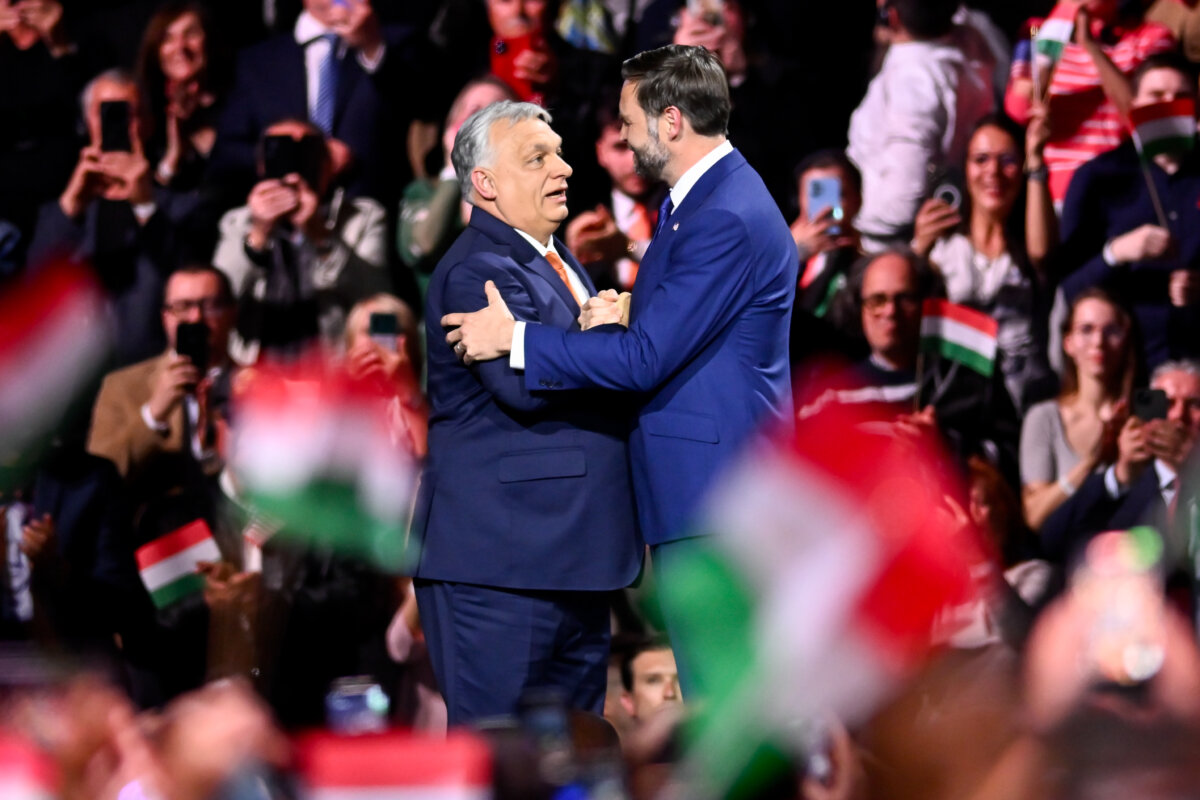
U.S. Vice President JD Vance visited Hungary in April to campaign on behalf of Orban, alleging there had been “disgraceful” interference by the EU against the long-serving leader, whose 16 consecutive years in power were defined by resistance to EU pressure over migration, gender ideology, and aid to Ukraine.
The U.S. State Department and the White House have not yet commented on whether the Trump administration assisted with a visa for Ziobro.
Russian Energy Dependence
Energy will likely be up for discussion in Poland, after Magyar said he will end Hungary’s dependence on Russian energy by 2035, adding that this is “a priority issue for both countries.”
Warsaw plans to discuss support for Ukraine and the future direction for the Visegrad group of central European nations—Poland, Hungary, the Czech Republic, and Slovakia.
“Our aim is that the Visegrad Four should possibly be expanded with other countries, Austria and others,” Magyar said on May 19.
Reuters contributed to this article
 Friends Read Free
Copy
Facebook
Tweet
Friends Read Free
Copy
Facebook
Tweet