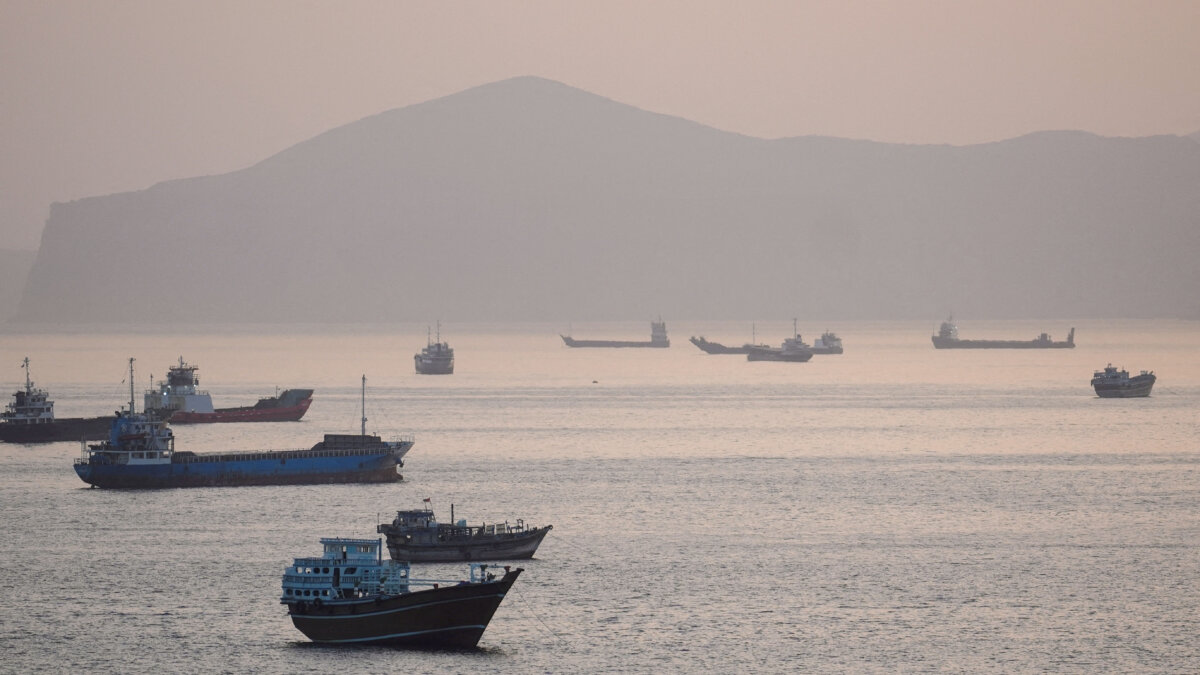

A coalition of predominantly European countries has assembled forces for a mission to sweep the Strait of Hormuz and remove sea mines placed there by Iranian forces amid their multimonth standoff with the United States and Israel.
The strait creates a choke point along a key artery for the global supply of oil, fertilizer, and other oceangoing commodities.
After U.S. and Israeli forces commenced attacks on Iran on Feb. 28, Iranian forces began attacking commercial ships in the region, slowing traffic through the passage and straining global markets.
For weeks, U.S. President Donald Trump has been pressuring the international community to take a more proactive approach to securing the waterway, often stating that the United States has far less commercial use for the strait than the rest of the world.
Although they have felt the economic effects of Iran’s wartime strategy and have called for restoring freedom of navigation in the waterway, many of these countries have sought to avoid becoming directly entangled in the fighting.
More recently, Trump has signaled progress toward a lasting peace with Iran.
A deal could create the conditions for the international coalition to step in.
Talk of a multinational effort to secure the waterway began to gain momentum in April, as the UK and France took the lead with planning.
The coalition may have seen its critical breakthrough on May 12, when defense ministers and representatives of more than 40 countries joined a virtual summit to discuss how to support an effort to clear the strait.
Out of the May 12 call, representatives of 27 nations signed a joint statement affirming support for a multinational military mission to secure safe passage in the Strait of Hormuz.
The signatories included 21 European countries, as well as Canada, Australia, Japan, South Korea, Bahrain, and Qatar.
Those who signed affirmed their commitment to “using collective diplomatic, economic, and military capabilities to support freedom of navigation through the Strait of Hormuz.”
However, for now, the signatories are still waiting for their ideal opening.
The joint statement includes the caveats that the multinational mission is strictly defensive and “will only commence in a permissive environment.”
Those permissive conditions have yet to emerge.
Although the United States and Iran entered into a ceasefire on April 7, they have since traded shots on multiple occasions.
The U.S. military said the latest flare-up came on May 25, when U.S. forces fired on Iranian missile launch sites and on vessels attempting to place mines near the Strait of Hormuz.
The confrontation came just two days after Trump announced that U.S. and Iranian negotiators had nearly completed talks on a memorandum of understanding to peacefully resolve the standoff.
Speaking with reporters on May 26, U.S. Secretary of State Marco Rubio said the negotiations with Iran were ongoing, and vowed that the Strait of Hormuz would reopen one way or another.
Minesweepers, Drone Boats, and More
Of the 27 countries that signified their support for securing the Strait of Hormuz on May 12, six have either specifically pledged military assets or otherwise directed equipment closer to the Middle East in anticipation of the joint mine clearance effort.
When talk of the multinational coalition began to emerge in April, Belgian Defense Minister Theo Francken announced that he had rerouted the Tripartite-class minehunting vessel Primula from the Baltic Sea to the Mediterranean Sea.
“We are ready to take our responsibility in the Strait of Hormuz when needed,” Francken said at the time.
Belgium’s contribution, and each additional asset pledged to help find and remove mines, could help to restore the confidence needed to bring traffic through the strait back to pre-conflict levels.
Salvatore Mercogliano, a professor at Campbell University who analyzes the maritime industry, recently told The Epoch Times: “It takes zero mines to create a minefield. Just a threat of mines is always enough.”
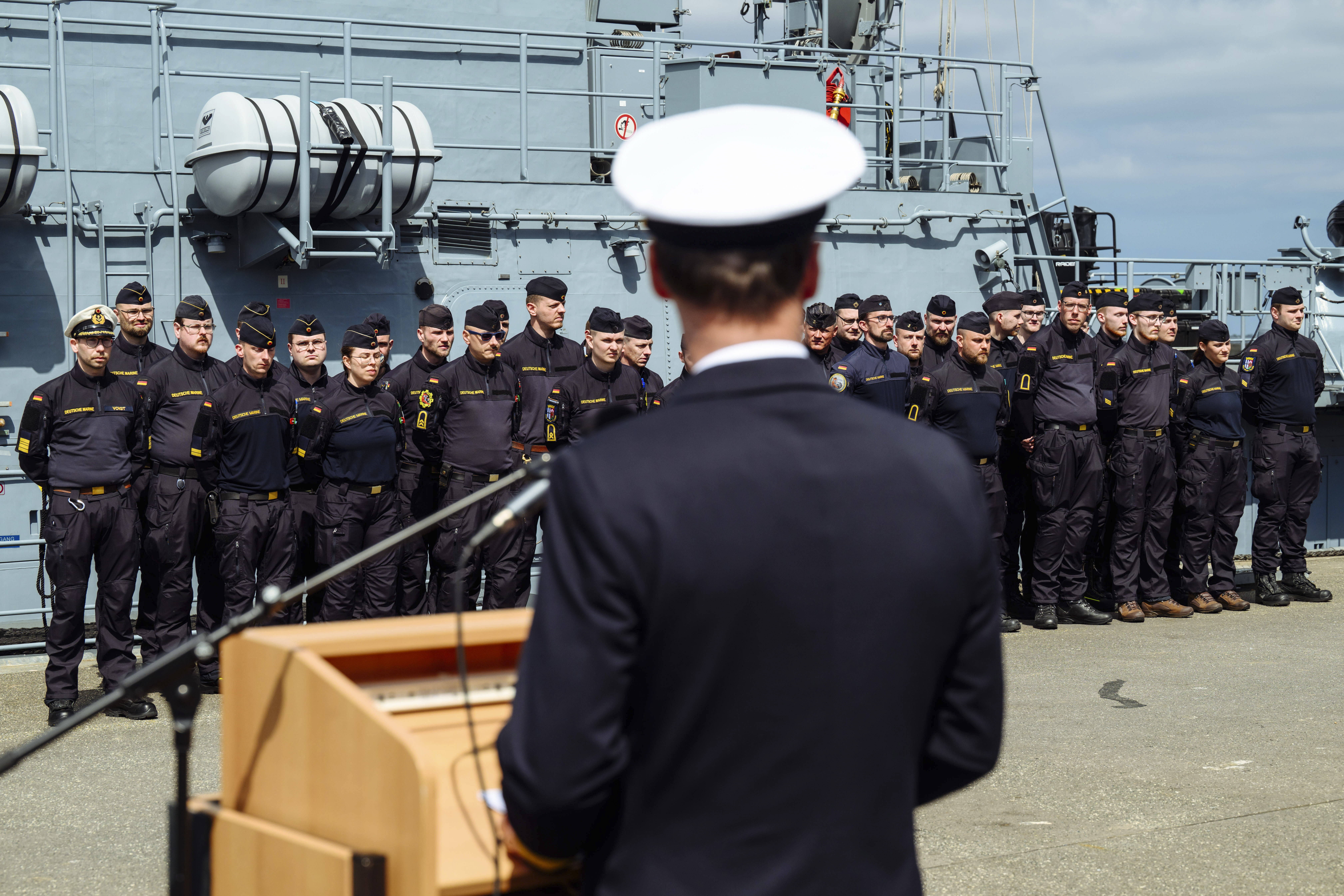
On May 5, the German military announced that its Frankenthal-class minehunting vessel Fulda had departed the German port city of Kiel, with an initial plan to reach the Mediterranean Sea.
In its announcement, the German military noted the emerging multinational mission to clear the Strait of Hormuz of mines.
French President Emmanuel Macron on May 6 announced that the French aircraft carrier Charles de Gaulle was repositioning in anticipation of the emerging mission in the waterway.
The carrier’s air wing includes fighter jets and helicopters.
Following the May 12 call, the UK defense ministry announced that it would send unmanned systems, including Kraken drone boats, to search for and track sea mines.
Further, the ministry pledged to deploy Daring-class air-defense destroyer HMS Dragon and an unspecified number of Eurofighter Typhoon fighter jets to help defend the multinational mine-clearing mission.
The Australian defense ministry pledged to contribute an E-7A Wedgetail airborne early warning and control aircraft to the effort, outfitting the mission with a capability for detecting potential threats.
On May 19, Italy’s navy announced that its Gaeta-class MLU minesweeping vessels Rimini and Crotone were sailing through the Mediterranean Sea, en route to the Suez Canal.
Some Countries Weighing Options
Other signatories of the May 12 joint statement are still evaluating what they can contribute to a mission to demine the Strait of Hormuz.
In March, as Trump raised pressure for NATO member nations to assist U.S.-led military operations in the Middle East, the Finnish defense ministry told state-owned broadcaster Yle that its three minehunter vessels were designed specifically for operations in the Baltic Sea and could not leave the region to assist in the Strait of Hormuz.
Despite this, Finland was among those countries that pledged to support the Hormuz security mission.
After the Netherlands signed on to the May 12 pledge, Dutch Defense Minister Dilan Yesilgoz-Zegerius announced that the Dutch security Cabinet was evaluating what capabilities the Netherlands could contribute.
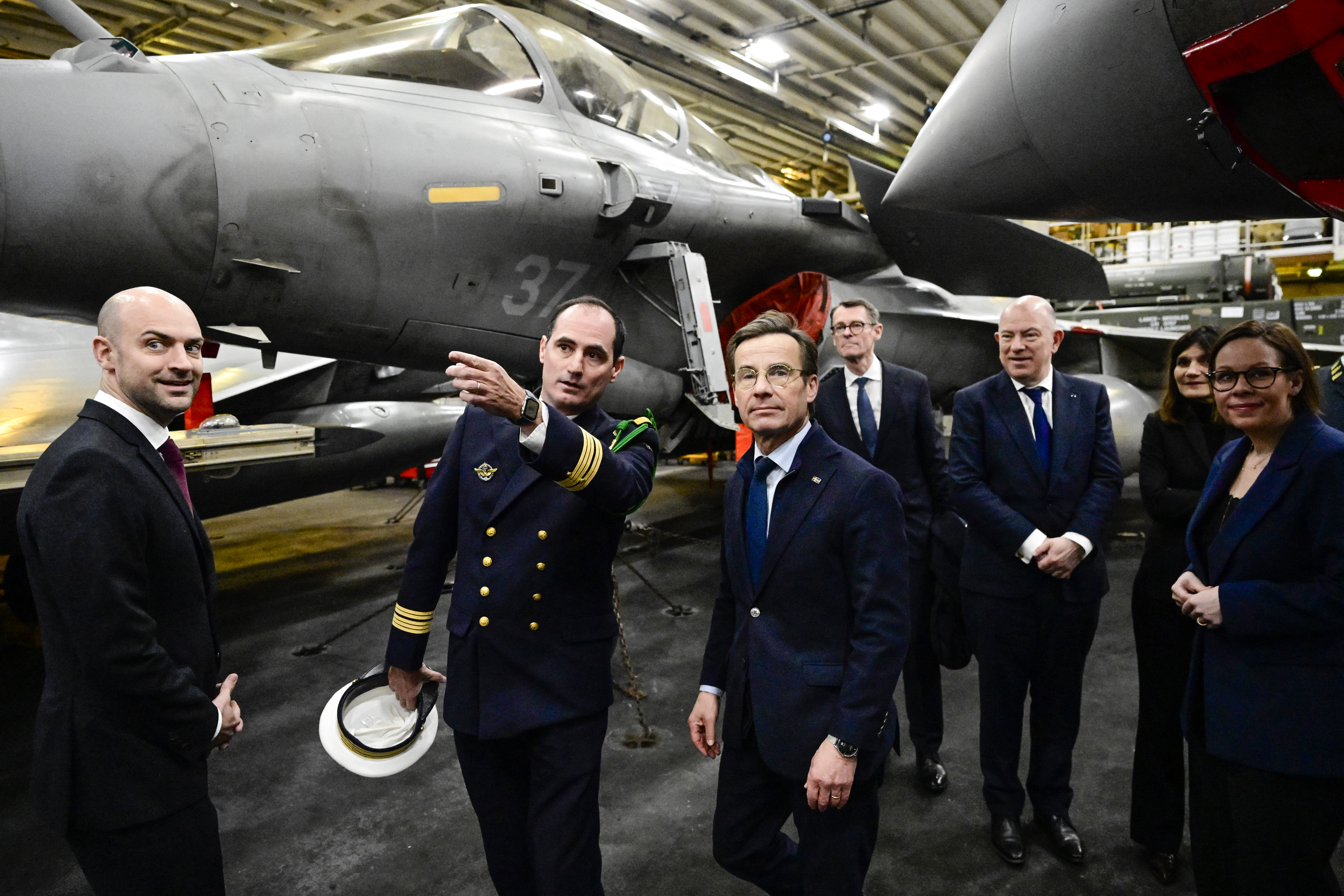
Several military assets from various European countries are already operating in the nearby Red Sea as part of a European Union-led effort known as Operation Aspides.
At a May 12 news conference, EU High Representative for Foreign Affairs and Security Policy Kaja Kallas said the operation could be extended to cover the Strait of Hormuz, but that the bloc would have to adjust the mandate of the current mission.
The U.S. military briefly conducted its own mission, dubbed Project Freedom, to clear a path free of Iranian sea mines and support safe passage through the Strait of Hormuz.
At a news conference the day after the launch of the U.S. mission, U.S. Secretary of War Pete Hegseth reiterated a call for other international actors to step up their efforts in the key waterway.
“To our partners, allies, and the rest of the world, this is a temporary mission for us,” Hegseth said.
“As I’ve said before, the world needs this waterway a lot more than we do. We’re stabilizing the situation so commerce can flow again, but we expect the world to step up. At the appropriate time and soon, we will hand responsibility back to you.”
Project Freedom came to a halt after about two days.
John Haughey contributed to this report.
 Friends Read Free
Copy
Facebook
Tweet
Friends Read Free
Copy
Facebook
Tweet