
The international atomic watchdog on Wednesday reported Iran to the U.N. Security Council for the first time in 20 years over breaches of its nuclear safeguards obligations, as inspectors remain unable to verify the status of Tehran’s enriched uranium stockpile.
The referral opens the door to possible sanctions and asset freezes, although new punitive measures face a major obstacle as Iran’s allies Russia and China hold veto power on the council. Beijing and Moscow have already issued a statement voicing their opposition to the referral, as has Tehran, which denounced it as an unjustified “exercise of political pressure.”
Iran’s referral to the U.N. Security Council came in the form of a Sept. 9 resolution approved in Vienna by 23 member countries on the International Atomic Energy Agency’s (IAEA’s) board, with three voting against and eight abstentions.
The resolution, proposed by the United States, the UK, France, and Germany, reaffirms earlier findings that Iran has failed to meet its nuclear safeguards obligations and calls on Tehran to urgently address those breaches.
It directs IAEA Director General Rafael Grossi to refer the resolution, two earlier measures, and his latest findings to the U.N. Security Council and U.N. General Assembly.
Uranium Stockpile Unverified
The resolution highlighted the findings in Grossi’s latest report on Iran, citing Tehran’s continuing refusal to grant inspectors access to nuclear sites and the agency’s inability to obtain information about the country’s stockpile of enriched uranium, describing these as issues of “grave concern.”
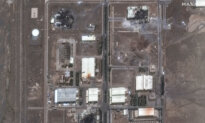
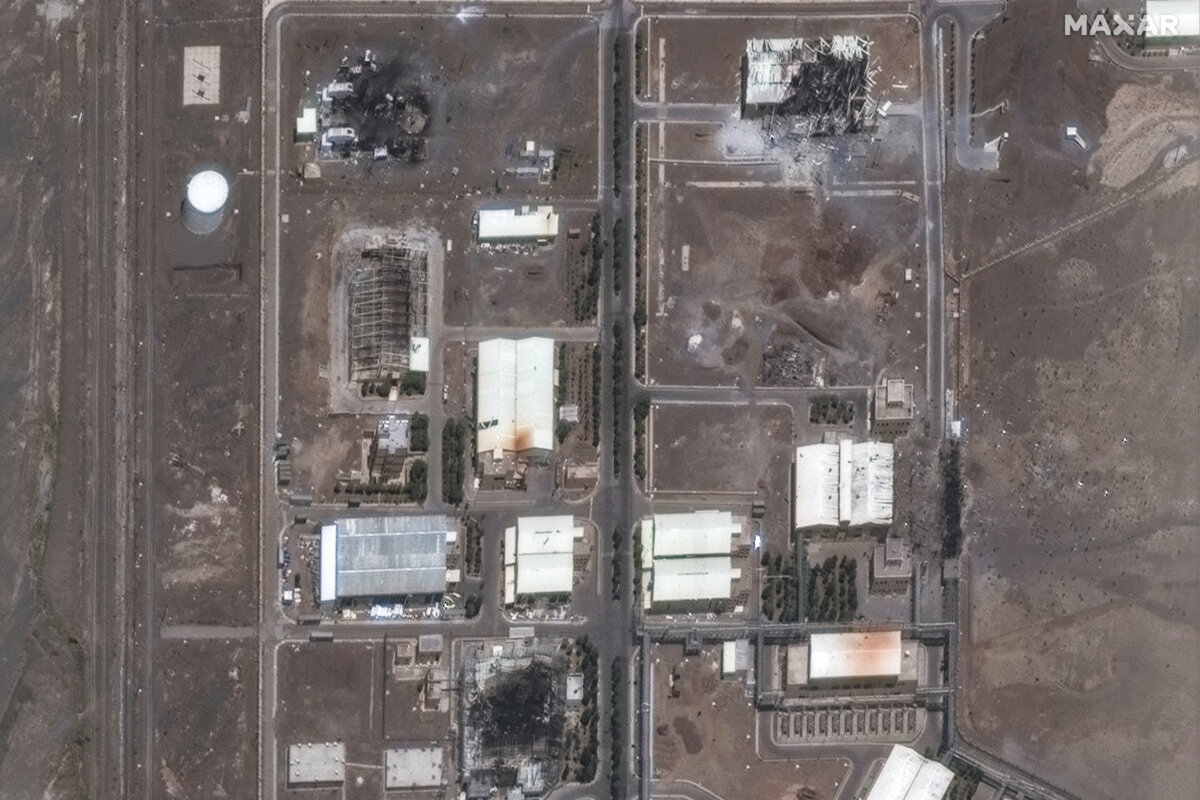
Grossi said earlier this week that inspectors have been unable to receive information about Tehran’s uranium and have been unable to gain access to Iranian nuclear facilities since the United States and Israel bombed three Iranian nuclear sites in a June 2025 operation dubbed Midnight Hammer. The operation buried much of the material—which U.S. President Donald Trump has referred to as “nuclear dust” since the bombing—deep underground.
The fate of the uranium has been a key focus of the Trump administration as part of its diplomatic and military efforts to prevent Iran from ever obtaining a nuclear weapon.
Iran has long maintained that its nuclear program is peaceful and intended for civilian use.
In its resolution, the IAEA voiced support for “continued support for a diplomatic solution to the Iranian nuclear issue” while calling on Iran “to engage seriously and without preconditions in talks aimed at building international confidence in the exclusively peaceful nature of its nuclear program.”
The resolution also reaffirms noncompliance findings adopted in June 2025 and June 2026, which included citing Iran for failure to cooperate with a long-running investigation into uranium traces detected at undeclared sites.
Iran Rejects Resolution
Iran rejected the resolution as politically motivated, saying U.S. and Israeli attacks had made safe access for inspectors impossible.
“Accusing Iran of non-cooperation while disregarding the fact that the current situation has been created by the aggressions of the U.S.-Israeli regime is a perfect example of presenting a half-truth,” Iran’s ambassador to the IAEA, Reza Najafi, said in a statement. “And, as we know, sometimes a half-truth can be the most dangerous form of a lie.”
Najafi said that Iran had neither stopped nor suspended its nuclear safeguard obligations, adding that Tehran is “simply unable to perform them under current unprecedented conditions” created by U.S.–Israeli attacks.
China and Russia joined Iran in a statement opposing the referral. They argued in a statement that the security situation had prevented normal inspections and called for disputes over Iran’s nuclear program to be resolved through diplomacy, while alleging that earlier findings of Tehran’s nuclear noncompliance were a “politically motivated and far-fetched” pretext for strikes against Iran’s atomic facilities.
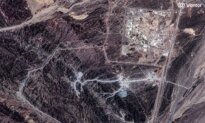
Trump, meanwhile, renewed his threat to strike Iran’s underground Pickaxe Mountain complex, citing reported activity at the site.
“We may have to give them a shot there, too, because somebody said there was a little movement at the site,” Trump said in Dallas on Wednesday, adding that the United States can closely monitor activity there through its space-based capabilities.
The Center for Strategic and International Studies (CSIS), which on Wednesday said that construction activity at Pickaxe Mountain has clearly accelerated this year, described the site as a “deeply buried granite fortification” that would be difficult to destroy even with the heaviest non-nuclear U.S. munitions.
Unlike several other Iranian nuclear facilities, Pickaxe Mountain has not been inspected by the IAEA. It is located in central Iran, about 140 miles south of Tehran.
 Friends Read Free
Copy
Facebook
Tweet
Friends Read Free
Copy
Facebook
Tweet