
Iran said on Tuesday it had not agreed to inspections of bomb-damaged nuclear facilities, after U.S. Vice President JD Vance said Tehran had agreed to allow International Atomic Energy Agency (IAEA) inspectors back into the country as part of negotiations aimed at ending the war.
Speaking at a weekly press briefing in Tehran on June 23, Iranian Foreign Ministry spokesman Esmail Baghaei said Iran had neither met with IAEA Director General Rafael Grossi during talks in Switzerland nor agreed to inspections of nuclear facilities damaged in U.S. and Israeli attacks.
“The short answer to both questions is no,” Baghaei said when asked by reporters whether the Iranian delegation had met Grossi and whether Iran would grant inspectors access to sites struck during the conflict.
“We have no plans for the agency to inspect Iran’s damaged nuclear facilities resulting from the military aggression of the United States and the Zionist regime. Fundamentally, there is no framework or protocol for such inspections,” he said.
Baghaei’s remarks appeared aimed at clarifying the scope of any renewed IAEA presence in Iran rather than rejecting inspections altogether. He said Iran would continue to fulfill its obligations under the Nuclear Non-Proliferation Treaty and existing safeguards agreements.
The comments came a day after Vance hailed what he described as a breakthrough in U.S.–Iran talks held at the Bürgenstock resort near Lake Lucerne in Switzerland.
“The Iranians have agreed to invite IAEA inspectors back into their country,” Vance told reporters at a briefing in Switzerland on Monday.
“That is a major milestone for the American people, and the first step in permanently denuclearizing or permanently ending a nuclear weapons program in Iran.”
Vance did not specifically say Iran had agreed to inspections of nuclear facilities damaged during the conflict.
IAEA Chief Was in Switzerland
The fate of Iran’s nuclear program is a key focus of the Trump administration, which has long sought to permanently block Tehran from ever obtaining nuclear weapons.
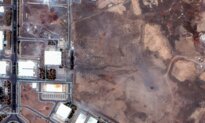
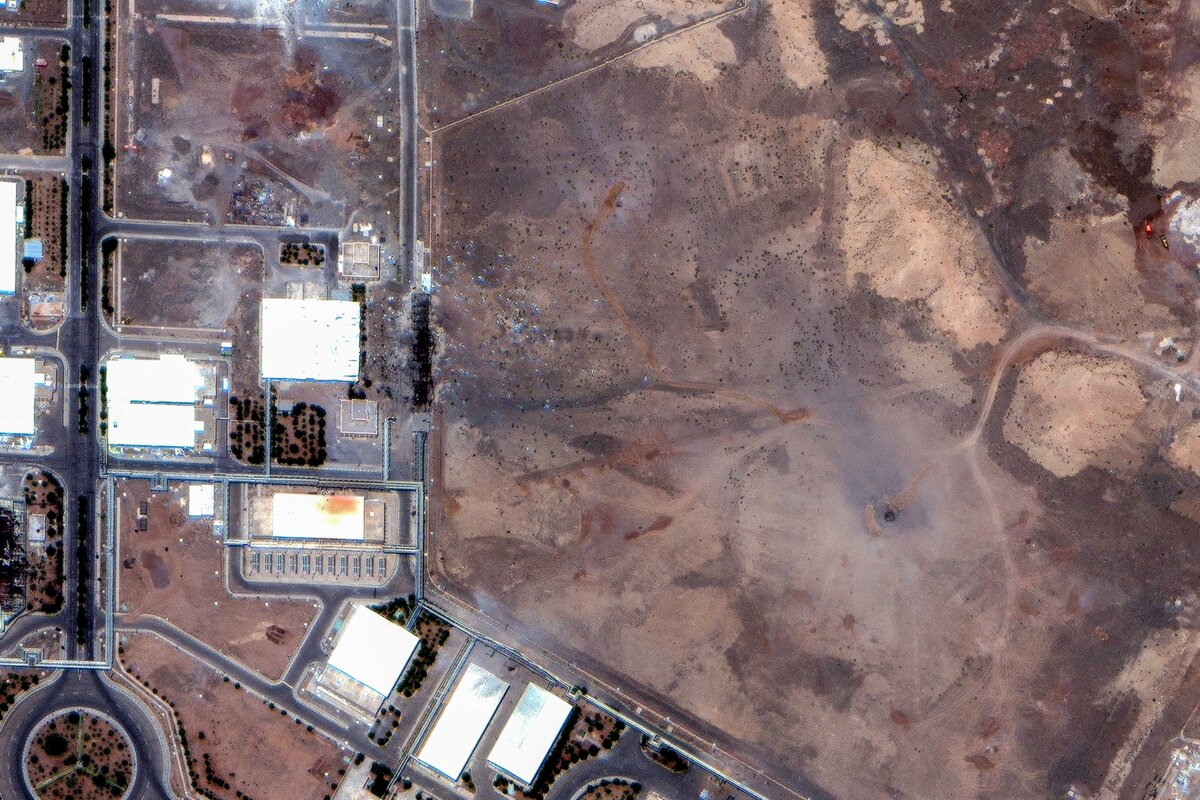
Last year, a joint U.S.–Israeli operation dubbed Midnight Hammer bombed Iran’s nuclear facilities, burying deep underground the country’s stockpile of highly enriched uranium, which U.S. President Donald Trump has referred to as “nuclear dust.”
Trump has repeatedly said that Iran’s uranium stockpile would have to be neutralized and removed from the country as part of any lasting peace deal.
Iranian officials have opposed such calls, insisting on the country’s right to enrich uranium as part of a peaceful, civilian nuclear program, whose contours and fate are to be discussed during a 60-day negotiating window initiated by a June 17 memorandum of understanding (MoU) between Washington and Tehran. The MoU extended a ceasefire and reopened the Strait of Hormuz.
Iran’s nuclear program—and the role IAEA inspectors might play in monitoring it—drew additional attention in recent days because the IAEA chief traveled to Switzerland to meet with Swiss officials while U.S.–Iran negotiations were underway.
Grossi said on June 21 he met Swiss Foreign Minister Ignazio Cassis in Bürgenstock to discuss recent developments involving Iran and the role of the U.N. nuclear watchdog in the diplomatic process.
“At this critical moment, it’s important to give diplomacy every opportunity to succeed,” Grossi wrote on social media.
But while Grossi met with Swiss officials in the background, Iran’s foreign ministry spokesman ruled out suggestions that Grossi had participated directly in talks with the Iranian delegation.
The ongoing dispute over Iran’s nuclear program comes against the backdrop of heightened tensions between Tehran and the IAEA. Iran has sharply criticized a recent IAEA Board of Governors resolution backed by the United States and three European countries.
The U.N. nuclear watchdog on June 10 passed a resolution telling Iran to declare its remaining enriched uranium stockpile and let inspectors verify it.
“Not only do Iran’s actions raise urgent concerns regarding the nature of its nuclear programme, they also threaten the very integrity of the global nuclear safeguards regime,” the four Western powers—the UK, France, Germany, and the United States—said in a statement to the IAEA board.
Iran’s ambassador to the IAEA, Reza Najafi, said at the time that the resolution made “excessive demands” on Iran while ignoring “the root causes of the present situation.”
Najafi added that nuclear inspectors had access to the bombed sites before last year’s U.S.–Israeli strikes and so the resolution’s call for renewed inspections was misguided, amounting to “whitewashing military aggression” on the part of Israel and the United States.
During his June 23 press briefing, Baghaei praised Russia, China, and Niger for voting against the resolution. He also thanked countries that abstained, saying they had declined to support what he described as a political initiative.
Baghaei added that Tehran was “deeply disappointed” with several unspecified regional countries that voted in favor of the resolution.
“We have seen how they react if even a small firecracker explodes near one of their own nuclear facilities,” he said. “Therefore, such double standards are certainly unacceptable.”
 Friends Read Free
Copy
Facebook
Tweet
Friends Read Free
Copy
Facebook
Tweet