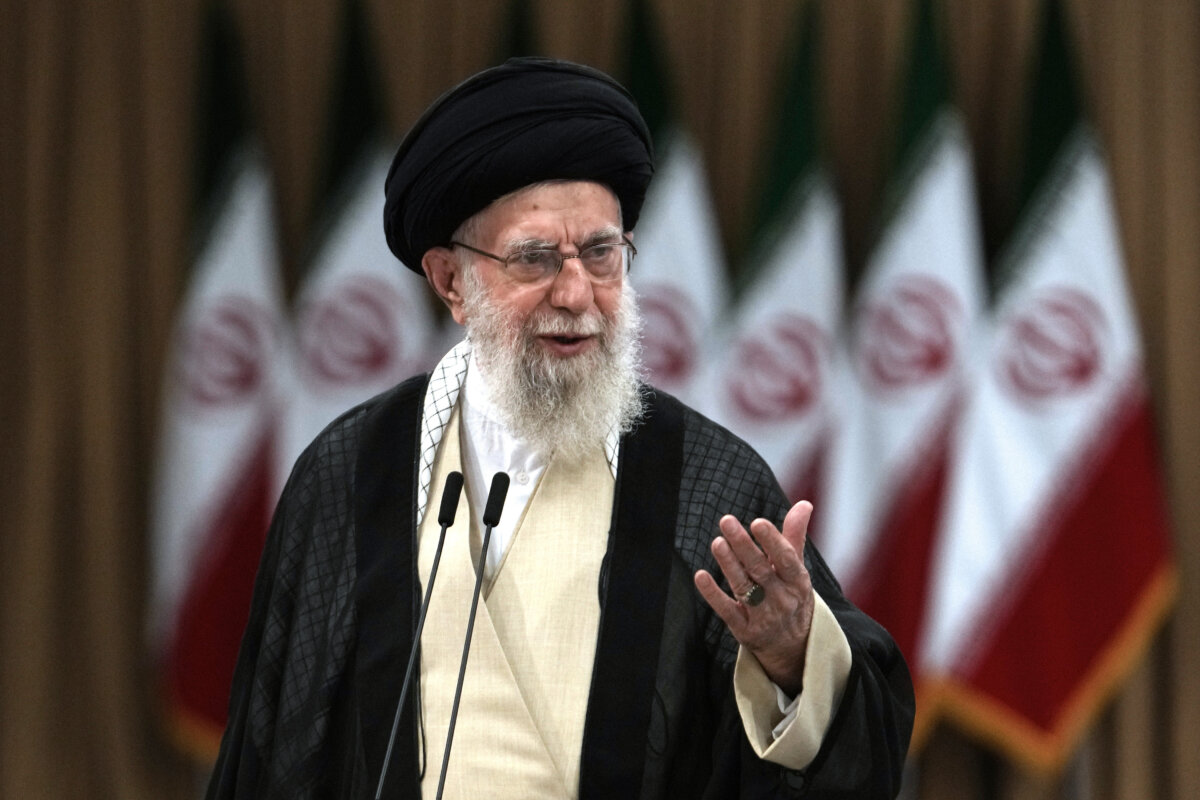
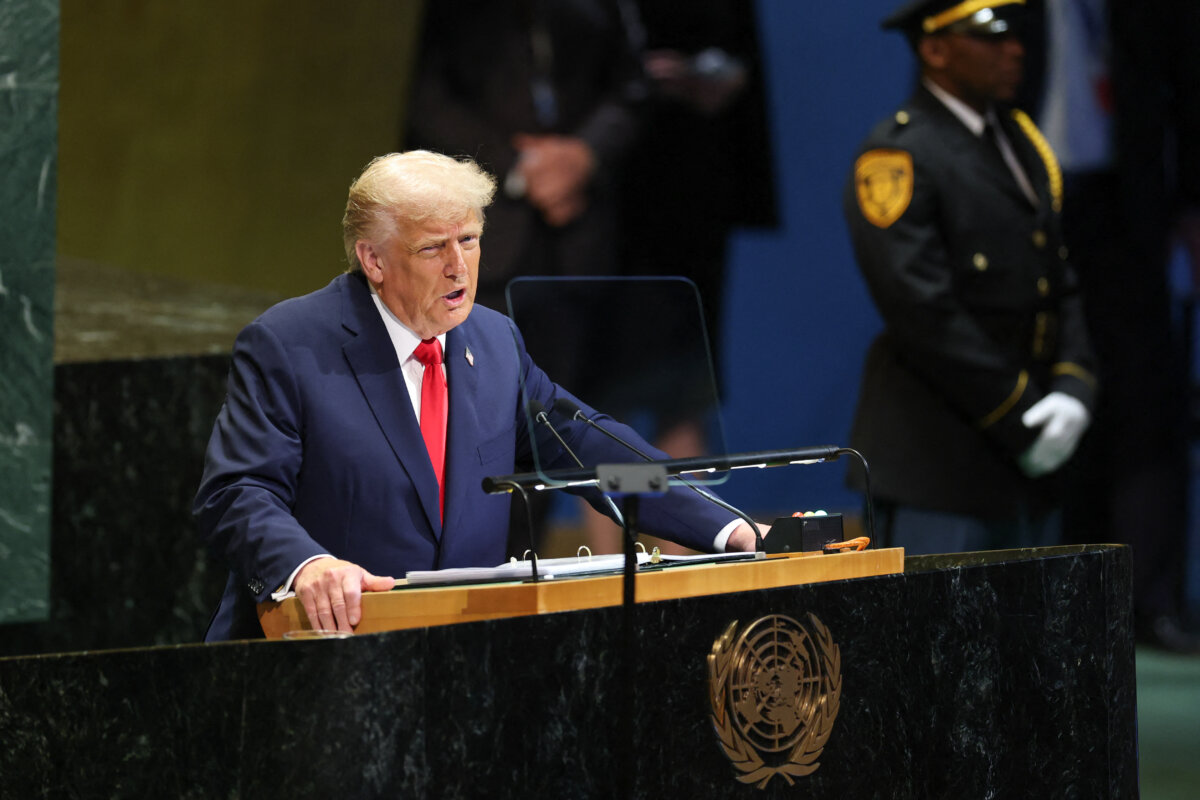
Iranian leader Ali Khamenei on Sept. 23 again rejected direct negotiations with the United States over his country’s nuclear program, in a speech that coincided with U.S. President Donald Trump’s address of the United Nations General Assembly in New York City.
Khamenei said talks with the United States represent “a sheer dead end.”
“The U.S. has announced the results of the talks in advance,” Khamenei said. “The result is the closure of nuclear activities and enrichment. This is not a negotiation. It is a diktat, an imposition.”
“We do not have a nuclear bomb and we will not have one, and we do not plan to use [a] nuclear weapon,” the 86-year-old Iranian leader added.
Resolution 2231 was passed unanimously by the U.N. Security Council in July 2015, in support of the Joint Comprehensive Plan of Action (JCPOA) agreement with Iran. It provides for a snapback mechanism, which would restore full U.N. sanctions against Iran in the event of Tehran failing to fully comply with the terms of the agreement.
Khamenei’s speech, broadcast on Iranian state television, made it clear that Iranian President Masoud Pezeshkian, who is in New York for the U.N. General Assembly, has scant wriggle room for negotiations, with sanctions set to resume after the Sept. 27 deadline, following the triggering of the snapback mechanism.
Iranian Foreign Minister Abbas Araghchi held separate meetings in New York City with diplomats from France, Germany, and the UK, who make up the so-called E3.
The three European countries invoked the snapback mechanism on Aug. 28 to reinstate sanctions when they sent a letter to the Security Council saying that “based on clear factual evidence,” Iran was in “significant non-performance” of its commitments under JCPOA.
Khamenei’s speech this week reiterated a position he made clear last month.
Khamenei said in an Aug. 24 speech that he refused to negotiate directly with the United States, according to the Iranian state-run news agency IRNA.
On June 12, the 35-member board of governors of the International Atomic Energy Agency (IAEA) passed a resolution declaring Iran noncompliant and in breach of its obligations under the Nuclear Nonproliferation Treaty.
Within hours of the passage of that resolution, Israel began bombing nuclear sites and other targets within Iran, which continued for 12 days.
Iran said on June 20 it would not discuss the future of its nuclear program while under attack by Israel.
Araghchi said at the time that there was no room for negotiations with the United States “until Israeli aggression stops.”
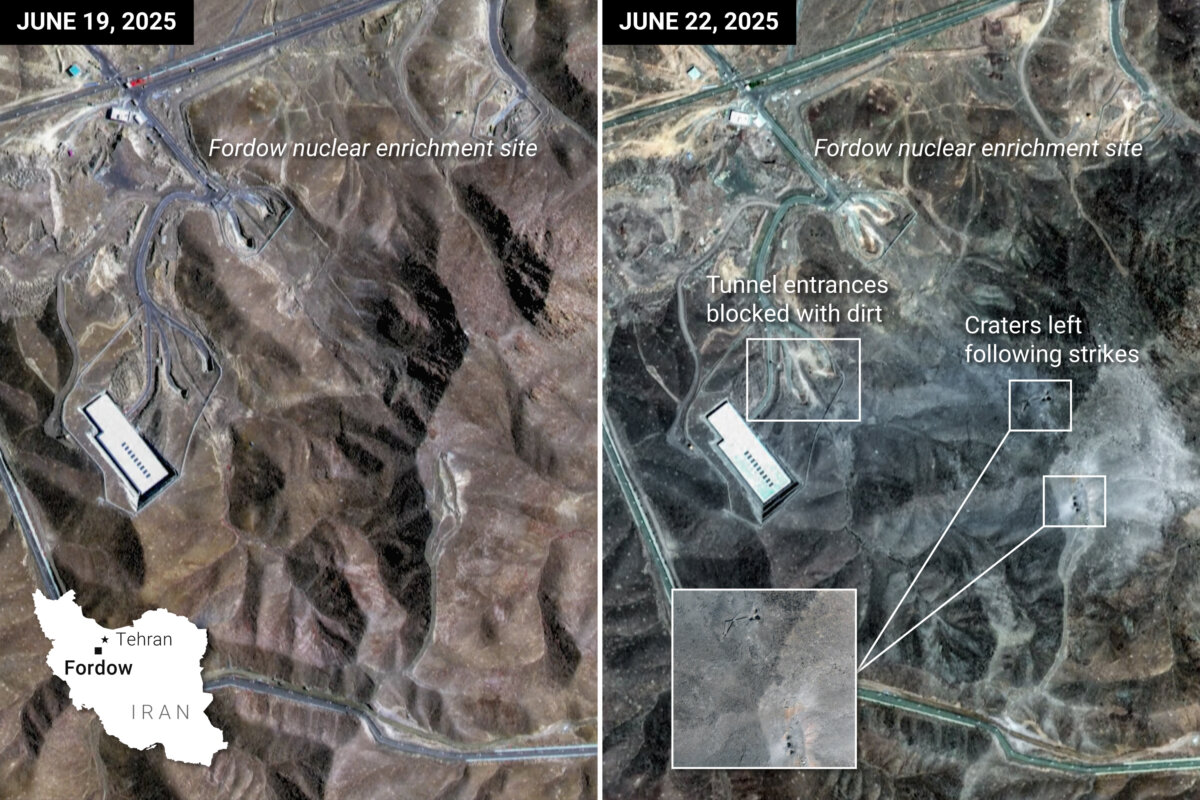
Tehran suspended negotiations with Washington after U.S. Air Force B-2 Spirit stealth bombers dropped 30,000-pound bunker-busting bombs on Fordow, a nuclear site deep underground, on the night of June 21–22.
That site, Iran’s Natanz enrichment facility, and its Isfahan nuclear technology center were hit in a series of strikes intended to destroy, or otherwise significantly set back, Iran’s nuclear program.
A cease-fire was agreed on June 24, hours after the Iranians launched a symbolic missile strike against a U.S. military base in Qatar in retaliation for the bombing of Fordow.
Iran, which has among the largest oil and gas reserves in the world, has always said it seeks only to develop nuclear power and is not making weapons.
‘No More Serious Danger’
In his speech to the General Assembly on Sept. 23, Trump said, “There is no more serious danger to our planet today than the most powerful and destructive weapons ever devised by man, of which the United States, as you know, has many.”
He said the “world’s number one sponsor of terror can never be allowed to possess the most dangerous weapon.”
The German Foreign Ministry said in a Sept. 23 statement posted on X: “The E3 and EU urged Iran to take practical steps within the next days, if not hours to address longstanding concerns around its nuclear program. These include resuming direct talks with the US and access to all Iranian nuclear sites for the IAEA, in line with its obligations.”
Speaking on behalf of the E3, the ministry said in a follow-up post, “We are prepared to complete the snapback process if necessary, but that will not mark the end of our engagement. We will remain committed to finding a diplomatic solution to Iran’s nuclear program.”
Araghchi met with IAEA Director General Rafael Grossi on Sept. 23, and later, French President Emmanuel Macron offered to meet Pezeshkian.
Macron said the Middle East region can only be at peace if Iran’s nuclear program “is once again fully under control.”
The Associated Press contributed to this report.
 Friends Read Free
Copy
Facebook
Tweet
Friends Read Free
Copy
Facebook
Tweet