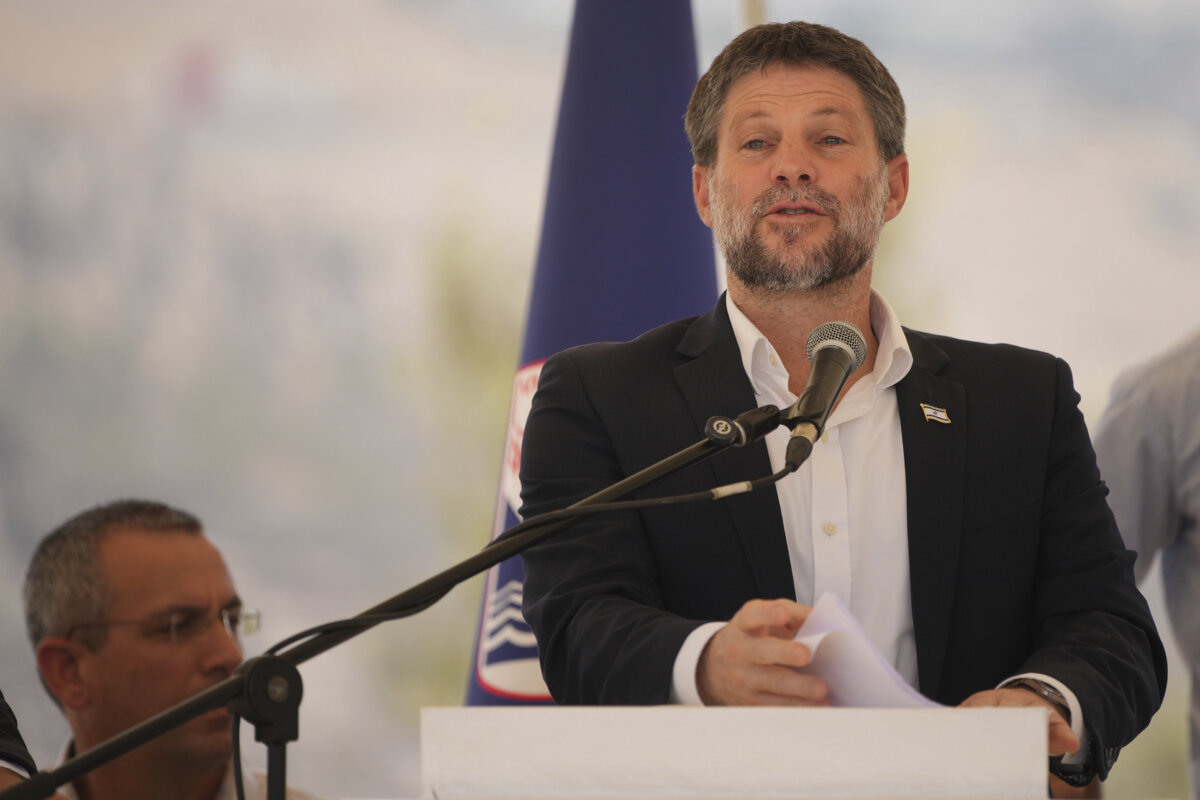

Israel’s government has finalized the legalization of 19 previously unauthorized settler outposts in the West Bank, undoing the evacuation of several Israeli settlements 20 years ago.
The move was announced on Dec. 21 by Israeli Finance Minister Bezalel Smotrich, who described the decision as correcting what he called a historic “injustice” for those striving for a Zionist cause and as a step to block the establishment of a Palestinian state.
“We will continue to develop, build, and settle the inherited land of our ancestors, with faith in the righteousness of our path,” Smotrich wrote on X. Smotrich grew up in a West Bank settlement and has long advocated expanding Israeli presence there and in other contested territories.
Among the newly authorized outposts are Ganim and Kadim, two former settlements that border the Palestinian city of Jenin. The area has been flagged by the Israeli military as a hotbed of terrorist activity and has been the focus of repeated raids, including an operation in April in which Israeli security forces said they killed the head of a local Hamas terrorist network.
The decision completes the rollback of the evacuation of four northern West Bank settlements: Ganim, Kadim, Homesh, and Sa-Nur, dismantled as part of Israel’s 2005 “disengagement” policy. At the time, these settlements were surrounded by Palestinian population centers and were deemed by previous Israeli governments to require more security resources than their strategic value would have justified.
In 2005, then-Prime Minister Ariel Sharon ordered the unilateral withdrawal of Israeli forces and settlers from Gaza, along with the evacuation of the four isolated West Bank settlements. The process involved Israeli troops bulldozing homes and forcibly evicting Jewish settlers who refused to leave.
Efforts to reverse the disengagement began in March 2023, when Israel’s unicameral parliament, the Knesset, passed an amendment to the Sharon-era disengagement law. The change allowed Israelis to access areas previously evacuated and restored certain land rights that had been revoked under the original legislation.
Two months later, in May 2023, the Israeli military canceled enforcement of the disengagement law around Homesh, effectively allowing Israelis to reenter the site. In May 2024, then-Defense Minister Yoav Gallant extended access to the former settlement areas of Sa-Nur, Ganim, and Kadim.
According to Smotrich, the current government under Prime Minister Benjamin Netanyahu has approved 69 settlement outposts over the past three years.
The reestablishment of the settlements would likely require increased Israeli military deployments to secure the area, which is largely administered by Palestinian authorities.
The announcement drew condemnation from the United Kingdom.
“The UK condemns the Israeli government’s approval of 19 new settlements in Palestine. These are illegal under international law,” Hamish Falconer, British minister for the Middle East, wrote in a Dec. 21 post on X.
“This risks undermining the 20 Point Plan and prospects for the long-term peace and security that only a two-state solution can deliver,” he said, referring to the peace plan brokered by U.S. President Donald Trump to stop the fighting in Gaza between Israel and terrorist group Hamas.
In September, while presenting his Middle East peace proposal at the United Nations General Assembly in New York, Trump said he would oppose Israeli annexation of the West Bank.
“I will not allow Israel to annex the West Bank,” Trump told reporters. “No, I will not allow it. It’s not going to happen.”
 Friends Read Free
Copy
Facebook
Tweet
Friends Read Free
Copy
Facebook
Tweet